

Your First Step After Detox: Understanding Aftercare
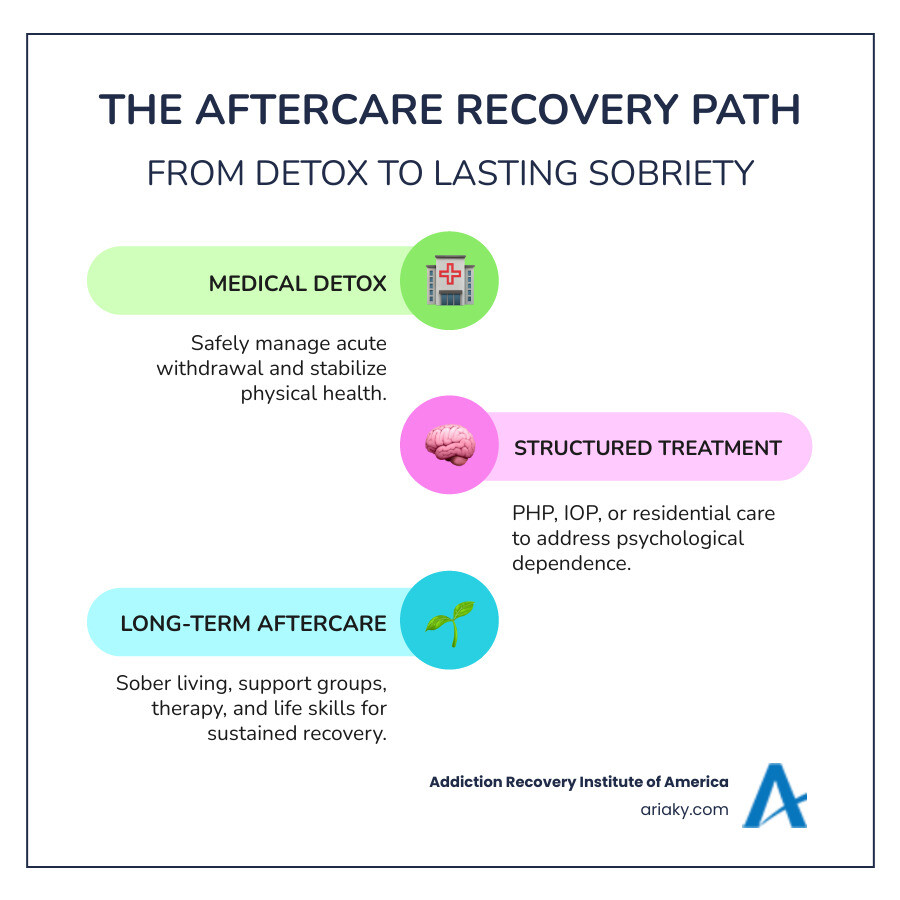
Alcohol detox aftercare is the ongoing support you receive after completing medical detoxification. While detox stabilizes you physically, it’s only the first step. Addiction is a chronic condition affecting both body and mind, and aftercare addresses the psychological dependence, triggers, and behaviors that led to drinking.
Think of aftercare as a personalized roadmap for maintaining sobriety. It’s the bridge from a structured treatment environment to everyday life, requiring continuous support much like managing any chronic health condition. People who participate in continuing care have a significantly higher chance of staying abstinent, making aftercare essential for long-term recovery.
Key Components of Aftercare:
- Therapy and Counseling – Individual, group, and family sessions
- Support Groups – 12-step programs like AA or alternatives
- Structured Programs – Outpatient treatment (PHP, IOP, OP)
- Sober Living Homes – Safe, alcohol-free housing
- Life Skills Development – Relapse prevention and stress management
- Medical Follow-up – Ongoing health monitoring
Your aftercare journey is unique, combining these elements to help you build a life you don’t need to escape from.
Important alcohol detox aftercare terms:
Why is alcohol detox aftercare so critical?
Completing detox is a monumental achievement, but it primarily addresses the physical side of dependence. The underlying psychological and behavioral patterns that fuel addiction require ongoing attention, which is why alcohol detox aftercare is so critical.
Addiction is a chronic condition with relapse rates similar to other chronic diseases like diabetes or hypertension. Without continued support, studies show the risk of returning to alcohol use can be as high as 80%. Aftercare is not an option; it’s a necessity.
The brain needs time and support to heal and function without alcohol. Our aftercare programs support this journey by addressing the mental and emotional aspects of recovery. Understanding What Happens After Quitting Alcohol is key to this process.
Aftercare provides the tools to:
- Address psychological dependence: Dig into the mental cravings and triggers.
- Build a foundation for sobriety: Develop new, healthy coping mechanisms.
- Steer real-world challenges: Practice new skills in everyday situations.
- Prevent relapse: Identify and manage potential relapse triggers.
Without dedicated aftercare, the chances of sustaining sobriety diminish significantly. It’s the essential phase that transforms a temporary break from alcohol into a lasting, sober lifestyle.
What are the goals of an aftercare plan?
An effective alcohol detox aftercare plan is about building a healthier, more fulfilling life, not just avoiding alcohol. Our approach at Addiction Recovery Institute of America focuses on these key objectives:
- Sustaining Sobriety: The foundational goal. Aftercare provides the structure, support, and accountability needed to maintain abstinence and reinforce lessons learned in treatment.
- Preventing Relapse: A proactive strategy to minimize risk. This involves identifying triggers, developing healthy coping skills, and creating a personalized relapse prevention plan.
- Improving Quality of Life: Sobriety is a means to a better life. Aftercare promotes overall well-being by improving physical and mental health, emotional stability, and helping you find purpose.
- Addressing Underlying Issues: Alcohol use often co-occurs with mental health conditions like anxiety or depression. Aftercare provides a therapeutic environment to address these crucial root causes.
- Rebuilding Relationships: Addiction strains relationships. Aftercare helps mend trust and improve communication with family and friends through counseling and therapy.
- Developing Life Skills: Aftercare offers guidance on practical skills like job counseling, financial planning, and time management to help you build a stable, sober future.
Our Addiction Recovery Journey Ultimate Guide further elaborates on these goals, emphasizing that recovery is a continuous process of growth.
The Core Components of a Successful Alcohol Detox Aftercare Plan

A successful alcohol detox aftercare plan is a personalized roadmap that bridges the gap between structured treatment and independent sober living. It’s a dynamic strategy that adapts to your evolving needs. At Addiction Recovery Institute of America, we emphasize this approach, as research confirms that plans must differ based on individual circumstances. Developed with professional guidance, our focus on Individualized Addiction Treatment ensures your aftercare plan is custom precisely to you.
The core components of this plan work synergistically to provide comprehensive support:
Therapy and Counseling: The Cornerstone of Recovery
Therapy and counseling are the bedrock of an effective alcohol detox aftercare program. While detox clears the body, therapy addresses the mental and emotional roots of addiction, helping you understand triggers and develop coping skills.
- Individual Therapy: One-on-one sessions provide a confidential space to explore personal challenges and develop healthy coping mechanisms with a qualified therapist.
- Group Therapy: Sharing with peers fosters community, reduces isolation, and offers diverse perspectives on recovery, reminding you that you are not alone.
- Family Counseling: This helps mend strained relationships, improve communication, and educate loved ones, creating a supportive home environment vital for recovery.
- Cognitive Behavioral Therapy (CBT): CBT is a highly effective therapy that helps you identify and change negative thought patterns and behaviors related to alcohol use.
- Motivational Interviewing: This collaborative therapy strengthens your internal motivation for change, making you an active participant in your recovery.
- Addressing Co-occurring Disorders: Many people with AUD also have conditions like depression or anxiety. Our programs treat these simultaneously (dual diagnosis), as integrated care significantly improves outcomes.
Our Alcoholism Treatment Programs integrate these modalities for comprehensive support.
Support Systems: You Are Not Alone
A robust support system is a lifeline in recovery, providing encouragement, understanding, and accountability.
- Peer Support Groups: These groups offer a safe space to share experiences with others who understand. The sense of camaraderie is invaluable, with millions attending such meetings annually.
- 12-Step Programs (AA): Alcoholics Anonymous (AA) is a well-known group offering a spiritual path to recovery. It emphasizes mutual support and total abstinence and is free to attend.
- Alternative Groups (SMART Recovery): For a non-12-step approach, SMART Recovery uses science-based tools for self-empowerment to manage thoughts and behaviors.
- Sponsorship: In 12-Step programs, a sponsor is a mentor who guides a newcomer, providing personal support and accountability.
- Building a Sober Social Network: Aftercare encourages building friendships with others committed to sobriety, creating a new, healthy support network.
- Al-Anon: Addiction affects loved ones, too. Al-Anon provides support for friends and relatives, helping them cope and understand the disease.
Continuing Education and Life Skills Development
Recovery is about learning to live a full life without alcohol. Alcohol detox aftercare helps you acquire the practical skills for long-term sobriety.
- Relapse Prevention Techniques: Learn to identify personal triggers and develop proactive strategies to cope with them, including recognizing early warning signs.
- Stress Management: Since stress is a major trigger, aftercare teaches effective techniques like meditation, yoga, and mindfulness to manage it healthily.
- Communication Skills: Improve how you steer relationships, set boundaries, and express your needs, which is vital for rebuilding connections.
- Job Counseling and Vocational Training: Aftercare can provide resources for resume building, interview skills, and vocational training to help you regain financial stability.
- Financial Planning: Learning to budget and manage finances reduces stress and provides a sense of stability crucial for sustained recovery.
- Finding New Hobbies and Pastimes: Finding healthy interests and activities helps fill the void left by alcohol, building a fulfilling life that doesn’t revolve around it.
Exploring Your Aftercare Program Options

Recovery is a progressive journey, often called a Continuum of Care. After detox, you step down through levels of care that offer increasing independence while maintaining support. This personalized approach ensures your alcohol detox aftercare plan matches your needs, helping you transition back to daily life with confidence. As treatment looks different for everyone, our Addiction Treatment Options Complete Guide offers more insight into these pathways.
Structured Outpatient Programs
Structured outpatient programs offer flexible, intensive care, allowing you to live at home or in a sober living facility while attending treatment. They are ideal for those who need significant support without 24/7 supervision.
- Partial Hospitalization Programs (PHP): Also known as “day treatment,” PHPs offer a high level of structured care (5-7 days/week for several hours) without an overnight stay. It’s an intensive step-down from inpatient care.
- Intensive Outpatient Programs (IOP): IOPs are less intensive than PHPs, typically involving treatment a few days a week for a few hours per day. This flexibility helps balance recovery with work or family commitments.
- Outpatient Programs (OP): OPs offer the lowest level of structured care, with fewer therapy hours per week. They serve as a long-term maintenance step for those who have completed more intensive programs.
Here’s a comparison of PHP and IOP:
| Program Type | Hours/Week (Approx.) | Days/Week (Approx.) | Duration (Approx.) | Intensity |
|---|---|---|---|---|
| Partial Hospitalization Program (PHP) | 25-35 hours | 5-7 days | Several weeks | High |
| Intensive Outpatient Program (IOP) | 9-16 hours | 3-5 days | 8-12 weeks | Medium |
These programs are available at our Addiction Recovery Institute of America locations, providing essential support through our Kentucky Substance Abuse Treatment Center.
Sober Living Homes: A Bridge to Independent Living
Sober living homes provide a crucial, structured environment for those transitioning from intensive treatment. These alcohol-free residences foster peer support and are an excellent option for those in outpatient programs or returning to unstable home environments.
Key benefits include:
- Structured Environment: House rules, curfews, and mandatory meetings help instill the discipline needed for sobriety.
- Peer Accountability: Living with others committed to recovery creates a powerful support network for encouragement and accountability.
- Drug-Free Housing: A safe, substance-free environment removes temptations and provides a stable foundation for recovery.
- Improved Abstinence Rates: Studies show sober living homes improve abstinence rates, reduce legal issues, and increase employment after rehab.
- Life Skills Practice: Residents are encouraged to work, manage chores, and attend meetings, developing essential life skills.
These homes are a vital bridge to independent living, providing support and structure for lasting sobriety.
Finding the Right Level of Alcohol Detox Aftercare
Choosing the right alcohol detox aftercare program is a critical decision for long-term recovery. It’s about finding the perfect fit for your unique situation.
Key factors include:
- Personal Needs: Your history with alcohol, severity of dependence, and any co-occurring conditions will dictate the level of care needed.
- Work and Family Obligations: Outpatient programs offer flexibility, while more intensive options like PHP may be better if you can step away from daily responsibilities.
- Severity of Addiction: A long history of severe dependence may require more structured, long-term programs.
- Financial Considerations: Treatment is an investment. We work with insurance providers and can help you explore options for Paying for Treatment.
- Professional Assessment: The best way to determine the right level of care is through an evaluation by addiction professionals. Our team at Addiction Recovery Institute of America will work with you to create a successful, individualized plan.
Your aftercare plan will evolve as you progress. We are here to guide you every step of the way.
Navigating Challenges and Preventing Relapse
The path to sobriety is rarely a straight line; it’s a journey with challenges. Relapse is not a failure but a common part of recovery, similar to a flare-up in other chronic diseases. Our goal in alcohol detox aftercare is to equip you with tools to steer these challenges, identify triggers, and develop strong coping strategies. Our Addiction Recovery Challenges guide offers more insight.
Recognizing Relapse Warning Signs
Recognizing early warning signs is a powerful tool for preventing relapse. Relapse is a process, and being aware of subtle shifts in thoughts and behaviors allows you to take corrective action.
Common warning signs include:
- Negative Attitude: Becoming irritable, defensive, or negative about recovery.
- Social Isolation: Withdrawing from your support system.
- Romanticizing Past Use: Fondly remembering drinking while forgetting the consequences.
- Poor Self-Care: Neglecting hygiene, diet, exercise, or sleep.
- Unmanaged Stress: Feeling overwhelmed without using healthy coping skills.
- Returning to Old Habits: Reconnecting with people or places from your past alcohol use.
- Belief in Controlled Use: Thinking you can have “just one drink.”
If you notice these signs, act immediately by reaching out to your support system (sponsor, therapist, group). You may need to re-engage with more intensive aftercare to get back on track.
Transitioning Back to Daily Life
Transitioning from structured treatment back to daily life has its own challenges. Responsibilities can feel overwhelming, so it’s vital not to take on too much too soon. Our alcohol detox aftercare programs help you steer this phase smoothly.
Key aspects include:
- Managing Responsibilities: Gradually reintegrate into work, school, and home duties to prevent overwhelm.
- Setting Boundaries: Learn to say “no” to people or situations that could jeopardize your sobriety.
- Navigating Social Situations: Develop strategies to attend events without feeling pressured to drink, like having an exit plan or a sober friend.
- Rebuilding Trust with Family: Through counseling and consistent sober behavior, you can mend damaged relationships and improve communication.
- Celebrating Milestones: Acknowledging your progress at 30 days, six months, or a year is vital for motivation and reinforcing positive change.
Our aftercare services provide ongoing support to help you confidently face these real-world scenarios.
Frequently Asked Questions about Alcohol Aftercare
We understand that you might have many questions about alcohol detox aftercare. Here, we address some of the most common inquiries to provide clarity and reassurance.
How long does aftercare last?
Recovery is a lifelong process, but the intensity of aftercare changes over time. Initially, an intensive phase may last several months to a year, involving frequent therapy and support group meetings. Research shows that participating for “six months or more” is beneficial for long-term success.
After this, you transition to a maintenance phase. This might involve weekly meetings, occasional therapy, or staying connected with a sober community. As continuing care research highlights, ongoing support is key to long-term success. The duration and intensity of aftercare evolve as you grow in your recovery.
What happens if I relapse during aftercare?
A relapse is not a failure; it’s a common part of recovery from a chronic disease. The most important thing is to respond quickly and without judgment.
- Contact Your Support System Immediately: Reach out to your sponsor, therapist, or support group.
- Re-evaluate Your Plan: Work with a professional to understand what led to the relapse and adjust your plan accordingly.
- Increase Support: You may need to temporarily increase therapy or meeting frequency.
- Consider a Higher Level of Care: Sometimes, a relapse indicates a need for a more structured program like PHP to regain stability.
A relapse is a learning opportunity to strengthen your recovery plan. It’s a bump in the road, not the end of the journey. We are here to help you get back on track.
Can I create an aftercare plan on my own?
While personal commitment is vital, creating an effective alcohol detox aftercare plan should be a collaborative process with qualified addiction professionals. Going it alone can leave you vulnerable to relapse.
Professional collaboration is key because:
- Expertise: Professionals understand the complexities of addiction and can identify potential pitfalls.
- Objective Assessment: A therapist provides an objective assessment of your needs, helping create a truly personalized plan and address co-occurring disorders.
- Personalized Strategies: Professionals help integrate therapy, support groups, and life skills into a cohesive strategy.
- Accountability: A professional relationship provides essential accountability and support.
At Addiction Recovery Institute of America, our experts work with you to craft a comprehensive, individualized aftercare plan. This collaborative approach is fundamental to lasting sobriety. For more on available options, explore our Substance Abuse Treatment Complete Guide.
Your Journey to Lasting Sobriety Starts Now
Starting on recovery is a courageous step. While detox is a major achievement, alcohol detox aftercare is the ongoing commitment that builds a sustainable, sober life.
Recovery is possible, and you don’t have to face it alone. At Addiction Recovery Institute of America, we are dedicated to providing the guidance you need through every phase of your unique journey.
We offer a full Continuum of Care, from detox to robust, individualized aftercare programs. Our accredited, AODE-certified rehab centers in Kentucky and West Palm Beach are committed to helping you achieve lasting sobriety.
Take the next step toward a healthier future. Explore our Kentucky Alcohol Detox Program and learn how we can help you build a life beyond the bottle.