
Navigating Your Path to Recovery in Lexington, KY
Drug rehab Lexington KY offers comprehensive addiction treatment programs designed to guide individuals from detox through long-term recovery. Whether you’re seeking help for yourself or a loved one, understanding the available options is the first step toward lasting sobriety.
Quick Guide: Finding Drug Rehab in Lexington, KY
Types of Treatment Available:
- Medical Detox – Safe, supervised withdrawal management
- Partial Hospitalization Program (PHP) – Intensive daily treatment with flexibility
- Intensive Outpatient Program (IOP) – Structured therapy while living at home
- Outpatient Program (OP) – Ongoing support for sustained recovery
Key Services to Expect:
- Individual, group, and family therapy
- Medication-Assisted Treatment (MAT)
- Dual diagnosis care for co-occurring mental health disorders
- Specialized programs for veterans and trauma survivors
How to Get Started:
- Contact a treatment center for a free assessment
- Verify your insurance coverage
- Choose a program level that fits your needs
- Begin treatment, often with same-day admission available
Kentucky faces a serious challenge with substance use. The state ranks 7th in the nation for overdose death rates, with over 7,000 lives lost to overdose in the past six years. In Fayette County alone, which includes Lexington, 209 overdose-related deaths were reported in 2020.
Yet there is hope. Lexington offers 28 drug and alcohol rehab centers providing evidence-based treatment that addresses both addiction and the underlying conditions that drive it. From medically supervised detox to intensive outpatient programs, these facilities offer a full continuum of care designed to meet each person where they are.
“I was absolutely terrified to go to rehab,” shared one Lexington treatment center client. “But it has been such a warm and welcoming experience. The staff made sure all of my needs were met.”
Recovery is not just about stopping substance use. It’s about rebuilding lives, healing relationships, and finding a path forward. With the right support and professional guidance, lasting sobriety is possible.
This guide will walk you through everything you need to know about drug rehab in Lexington, KY—from understanding different levels of care to navigating insurance coverage and building a foundation for long-term recovery.
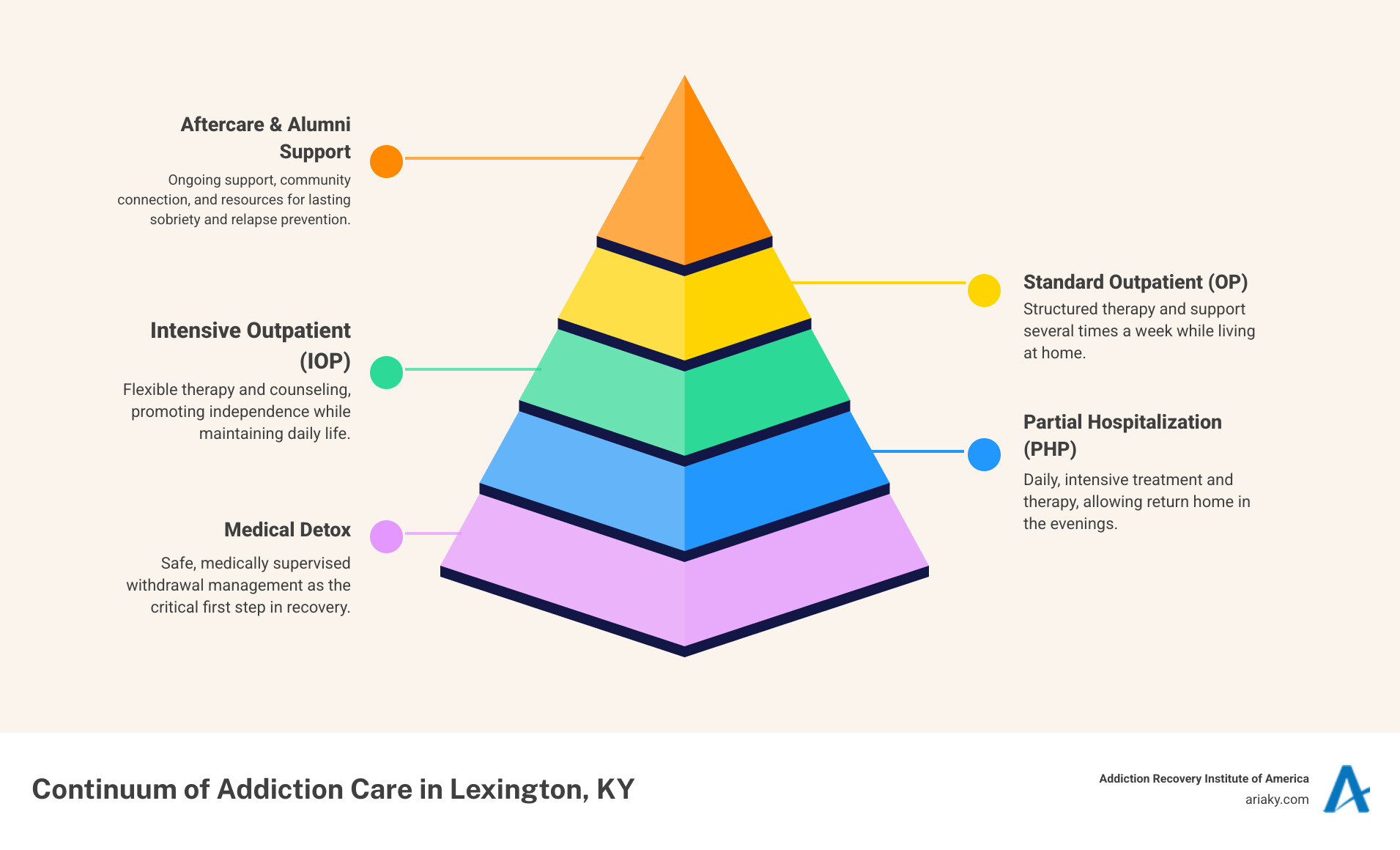
Drug rehab Lexington KY terminology:
Understanding Addiction Treatment Programs in Lexington
When considering drug rehab Lexington KY, understand the different types of programs available. Addiction is a complex condition, and effective treatment often requires a personalized approach. We believe in tailoring treatment to individual needs, ensuring that each person receives the most appropriate level of care.

Our programs, and those of other reputable centers in Lexington, are designed to guide individuals through various stages of recovery, from the initial withdrawal phase to long-term sobriety. This journey typically involves a continuum of care, where the intensity of treatment gradually decreases as you develop stronger coping mechanisms and reintegrate into daily life.
Medical Detox: The Foundation for a Safe Start
The first critical step for many individuals entering drug rehab Lexington KY is medical detoxification. This process involves safely clearing drugs or alcohol from the body while managing potentially dangerous withdrawal symptoms. Withdrawal can be uncomfortable and, in some cases, life-threatening, making medical supervision crucial.
During medical detox, our team of medical professionals provides 24/7 monitoring and support. We use physician-directed detox protocols, which may include individualized medication tapers to alleviate discomfort and prevent complications. This approach ensures safety and makes the withdrawal process as comfortable as possible. For instance, detox services are often available for withdrawal from alcohol, benzodiazepines, opiates, and other substances. Medication-assisted detox, sometimes including buprenorphine, can be particularly beneficial for opiate use disorder, helping to reduce cravings and withdrawal symptoms.
A safe detox creates a stable foundation for the therapeutic work that follows. To learn more about this vital first step, explore our resources on Medical Detox and Drug Detox Kentucky.
Inpatient vs. Outpatient: What’s the Difference?
Once detox is complete, or if detox isn’t necessary, individuals transition into a structured treatment program. The primary distinction among these programs lies in the level of intensity and living arrangements: inpatient (residential) versus outpatient care. Understanding these differences is key to choosing the right drug rehab Lexington KY program for your needs.
Here’s a comparison to help clarify:
| Feature | Inpatient (Residential) Treatment “`
Navigating Your Path to Recovery in Lexington, KY
Drug rehab Lexington KY offers comprehensive addiction treatment programs designed to guide individuals from detox through long-term recovery. Whether you’re seeking help for yourself or a loved one, understanding the available options is the first step toward lasting sobriety.
Quick Guide: Finding Drug Rehab in Lexington, KY
Types of Treatment Available:
- Medical Detox – Safe, supervised withdrawal management
- Partial Hospitalization Program (PHP) – Intensive daily treatment with flexibility
- Intensive Outpatient Program (IOP) – Structured therapy while living at home
- Outpatient Program (OP) – Ongoing support for sustained recovery
Key Services to Expect:
- Individual, group, and family therapy
- Medication-Assisted Treatment (MAT)
- Dual diagnosis care for co-occurring mental health disorders
- Specialized programs for veterans and trauma survivors
How to Get Started:
- Contact a treatment center for a free assessment
- Verify your insurance coverage
- Choose a program level that fits your needs
- Begin treatment, often with same-day admission available
Kentucky faces a serious challenge with substance use. The state ranks 7th in the nation for overdose death rates, with over 7,000 lives lost to overdose in the past six years. In Fayette County alone, which includes Lexington, 209 overdose-related deaths were reported in 2020.
Yet there is hope. Lexington offers 28 drug and alcohol rehab centers providing evidence-based treatment that addresses both addiction and the underlying conditions that drive it. From medically supervised detox to intensive outpatient programs, these facilities offer a full continuum of care designed to meet each person where they are.
“I was absolutely terrified to go to rehab,” shared one Lexington treatment center client. “But it has been such a warm and welcoming experience. The staff made sure all of my needs were met.”
Recovery is not just about stopping substance use. It’s about rebuilding lives, healing relationships, and finding a path forward. With the right support and professional guidance, lasting sobriety is possible.
This guide will walk you through everything you need to know about drug rehab in Lexington, KY—from understanding different levels of care to navigating insurance coverage and building a foundation for long-term recovery.
Drug rehab Lexington KY terminology:
Understanding Addiction Treatment Programs in Lexington
When considering drug rehab Lexington KY, understand the different types of programs available. Addiction is a complex condition, and effective treatment often requires a personalized approach. We believe in tailoring treatment to individual needs, ensuring that each person receives the most appropriate level of care.
Our programs, and those of other reputable centers in Lexington, are designed to guide individuals through various stages of recovery, from the initial withdrawal phase to long-term sobriety. This journey typically involves a continuum of care, where the intensity of treatment gradually decreases as you develop stronger coping mechanisms and reintegrate into daily life. To explore the full spectrum of options, our Addiction Treatment Options Complete Guide provides further detail.
Medical Detox: The Foundation for a Safe Start
The first critical step for many individuals entering drug rehab Lexington KY is medical detoxification. This process involves safely clearing drugs or alcohol from the body while managing potentially dangerous withdrawal symptoms. Withdrawal can be uncomfortable and, in some cases, life-threatening, making medical supervision crucial.
During medical detox, our team of medical professionals provides 24/7 monitoring and support. We use physician-directed detox protocols, which may include individualized medication tapers to alleviate discomfort and prevent complications. This approach ensures safety and makes the withdrawal process as comfortable as possible. For instance, detox services are often available for withdrawal from alcohol, benzodiazepines, opiates, and other substances. Medication-assisted detox, sometimes including buprenorphine, can be particularly beneficial for opiate use disorder, helping to reduce cravings and withdrawal symptoms.
A safe detox creates a stable foundation for the therapeutic work that follows. To learn more about this vital first step, explore our resources on Medical Detox and Drug Detox Kentucky.
Inpatient vs. Outpatient: What’s the Difference?
Once detox is complete, or if detox isn’t necessary, individuals transition into a structured treatment program. The primary distinction among these programs lies in the level of intensity and living arrangements: inpatient (residential) versus outpatient care. Understanding these differences is key to choosing the right drug rehab Lexington KY program for your needs.
Inpatient, or residential, treatment offers the highest level of care, where individuals live at the facility 24/7. This immersive environment removes them from triggers and distractions, allowing for complete focus on recovery. Programs like these often provide structured daily schedules, including group therapy, individual counseling, educational sessions, and recreational activities. Some residential programs, such as those that extend up to 28 days, aim to facilitate a smoother transition from initial stabilization to rehabilitation.
Outpatient programs, on the other hand, allow individuals to live at home while attending scheduled therapy sessions and treatments. This option offers more flexibility, enabling clients to maintain work, school, or family responsibilities. While less restrictive, outpatient programs still provide essential support and therapeutic interventions.
Here’s a comparison to help clarify the nuances between these two crucial approaches:
| Feature | Inpatient (Residential) Treatment “`