

Understanding Alcohol Addiction and Treatment Options in Kentucky
Kentucky alcohol treatment offers multiple pathways to recovery, from medical detox to outpatient care, with over 530 rehab facilities across the state providing specialized support for individuals struggling with alcohol use disorder.
Quick Guide to Kentucky Alcohol Treatment Options:
- Medical Detox – Supervised withdrawal management (average cost: $140,607)
- Residential/Inpatient Programs – 24/7 structured care (average cost: $50,328)
- Partial Hospitalization (PHP) – Intensive daily treatment while living at home
- Intensive Outpatient (IOP) – Flexible therapy several days per week
- Standard Outpatient – Weekly sessions for ongoing support (average cost: $8,363)
- Medication-Assisted Treatment (MAT) – Combines medication with therapy
- Dual Diagnosis Care – Treats addiction and mental health together
If you or a loved one is facing alcohol addiction, you’re not alone. In 2023, over 15% of Kentucky residents reported unhealthy drinking, and over 53% of alcohol-related deaths are linked to chronic Alcohol Use Disorder (AUD).
The good news is that recovery is possible. This guide covers the types of programs available, the admissions process, payment options, and where to find immediate help. Kentucky has a robust network of resources, including 382 facilities that accept Medicaid and 190 offering free or low-cost treatment. Let’s explore how to access the compassionate care that leads to lasting recovery.
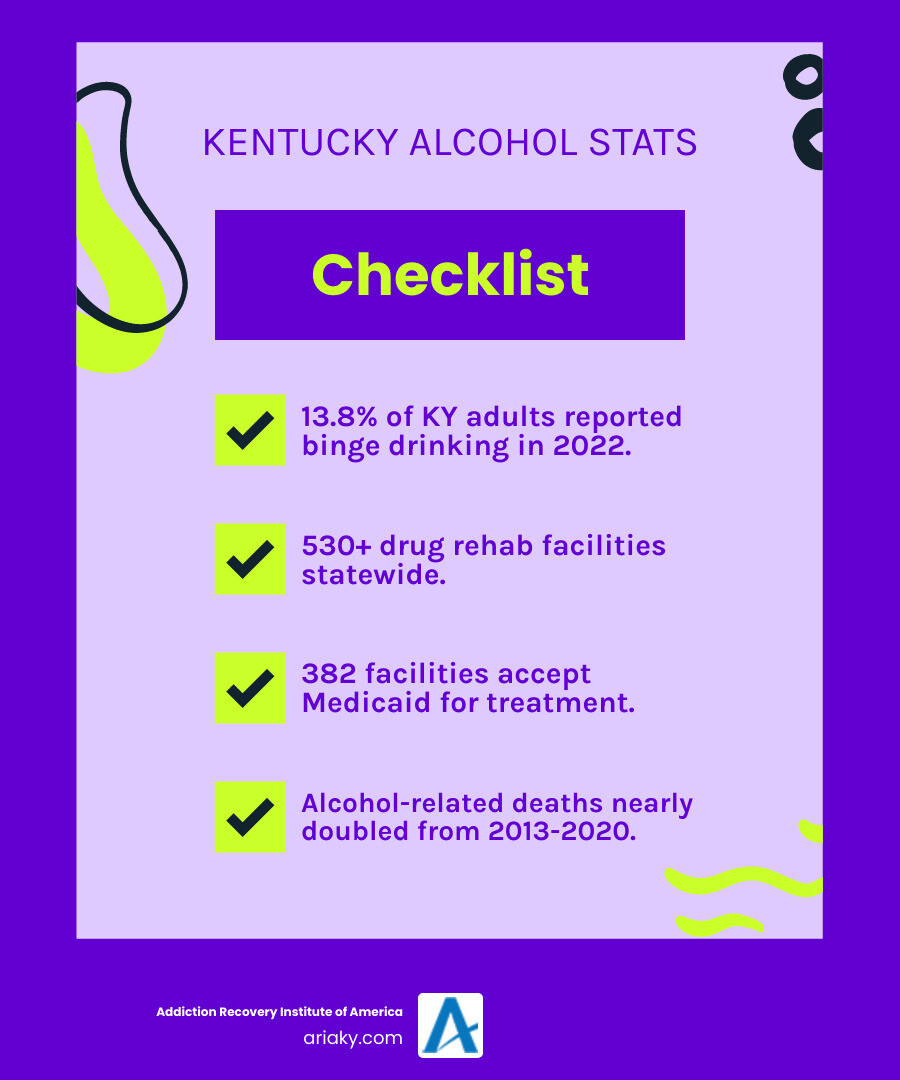
Kentucky alcohol treatment terms to remember:
The Scope of Alcohol Addiction in Kentucky
Alcohol’s impact on the Bluegrass State is significant, highlighting the critical need for effective Kentucky alcohol treatment solutions.
Statistics reveal the depth of the issue. According to SAMHSA, nearly 30% of adults in treatment in 2019 were there for both alcohol and drug abuse. More recently, in 2023, over 15% of Kentuckians reported unhealthy drinking behaviors, and national data shows over half of the state’s alcohol-related deaths are due to chronic conditions like Alcohol Use Disorder (AUD).
Furthermore, an estimated 266,000 adults in Kentucky met the criteria for a substance use disorder in 2019. Heavy drinking or binge drinking rates also remain a concern, with 13.8% of adults reporting these behaviors in 2022. These numbers represent lives and communities affected by addiction, underscoring the importance of accessible treatment.
Recognizing the Signs of Alcohol Use Disorder (AUD)
Identifying Alcohol Use Disorder (AUD) is crucial for seeking timely help. AUD is a chronic medical condition characterized by an impaired ability to control alcohol use despite negative consequences. Key signs fall into three categories:
Behavioral Symptoms:
A primary sign is an inability to control drinking, such as drinking more than intended or failing to cut down. Individuals may neglect responsibilities at home, work, or school, and give up important activities. Continuing to drink despite social or relationship problems is another red flag.
Physical Symptoms:
Physical signs include increased tolerance (needing more alcohol for the same effect) and experiencing withdrawal symptoms when not drinking. Withdrawal can involve sweating, trembling, and nausea. In severe cases, it can lead to seizures, which require immediate medical attention. Long-term health issues like liver or heart disease are also common.
Psychological Signs:
Psychological symptoms include strong cravings, drinking to cope with stress or depression, and experiencing mood swings or irritability. A significant amount of time may be spent obtaining, using, and recovering from alcohol, even when it worsens mental or physical health.
If you or a loved one exhibit these signs, it indicates that professional help from a Kentucky alcohol treatment program may be necessary. Recognizing these symptoms is the first step toward recovery.
Navigating Your Path to Recovery: Types of Kentucky Alcohol Treatment Programs
Finding the right Kentucky alcohol treatment program can feel overwhelming, but a wide spectrum of care is available to meet diverse needs. This “continuum of care” provides appropriate support at every stage of recovery.

Since there is no one-size-fits-all solution, individualized treatment plans are paramount. At ARIA Kentucky, we emphasize personalized plans that combine evidence-based therapies with compassionate care. Professional treatment provides a safe, structured environment with medical supervision, experienced clinicians, and the opportunity to develop coping skills for whole-person healing.
The First Step: Medically Supervised Detoxification
For many with significant alcohol dependence, medically supervised detoxification is the critical first step in Kentucky alcohol treatment. Detox safely manages the acute physical symptoms of withdrawal, which can be uncomfortable and even life-threatening without medical oversight. Patients receive 24/7 care to monitor vital signs and administer medications for symptoms like nausea, tremors, and seizures, preventing serious complications. Detox is not a cure for addiction but a preparatory phase that stabilizes the body for rehabilitation. We prioritize a safe and comfortable detox process as a crucial bridge to comprehensive rehab.
Levels of Care for Kentucky Alcohol Treatment
The journey through Kentucky alcohol treatment is often structured through various levels of care, allowing for flexibility and progression as an individual’s needs change. Our facilities, located in Kentucky cities like Ashland, Bowling Green, Covington, Florence, Lexington, Louisville, Morehead, Newport, Owensboro, and Paducah, offer a full spectrum of these programs.
-
Residential/Inpatient Rehab: This is the highest level of care, providing 24/7 structured support in a live-in facility. Patients reside at the treatment center, focusing solely on recovery away from external triggers and distractions. This intensive environment is ideal for those with severe AUD, unstable home environments, or co-occurring mental health issues. Programs typically last 30, 60, or 90 days, offering daily therapy, group sessions, and medical care.
-
Partial Hospitalization Programs (PHP): Often referred to as “day treatment,” PHP offers intensive daily therapy and support, similar to inpatient care, but patients return home or to a sober living environment in the evenings. This level of care is suitable for individuals who need significant structure but have a stable and supportive living situation. It serves as an excellent step-down from residential treatment or for those needing more than standard outpatient care.
-
Intensive Outpatient Programs (IOP): IOP provides a flexible yet structured approach, requiring patients to attend therapy sessions several days a week for a few hours. This allows individuals to maintain work, school, or family responsibilities while receiving substantial therapeutic support. IOP is ideal for those transitioning from PHP or residential care, or for individuals with mild to moderate AUD who require consistent, focused treatment.
-
Standard Outpatient Programs: This is the least intensive level of care, involving weekly therapy sessions and support groups. It’s designed for individuals with mild AUD, those who have completed higher levels of care and need ongoing support, or those seeking preventative measures. Standard outpatient programs offer flexibility and autonomy while reinforcing coping mechanisms and relapse prevention strategies.
-
Sober Living Support: While not a formal treatment program, sober living homes provide a supportive, alcohol-free environment for individuals transitioning from more intensive levels of care. These homes foster community, accountability, and a sense of belonging, helping residents practice newly learned coping skills in real-world settings and build a strong foundation for long-term sobriety.
Specialized Treatment Approaches in Kentucky
Beyond the various levels of care, Kentucky alcohol treatment centers, including our own, often incorporate specialized approaches to address the multifaceted nature of addiction. These programs are designed to provide comprehensive care that goes beyond simply stopping alcohol consumption.
-
Dual Diagnosis Treatment: Many people with AUD also have co-occurring mental health disorders like anxiety or depression. Dual diagnosis simultaneously treats both the addiction and the mental health condition, as treating one without the other often leads to relapse. Our programs provide integrated mental health and addiction recovery care.
-
Medication-Assisted Treatment (MAT): MAT combines FDA-approved medications (like naltrexone or acamprosate) with therapy to reduce cravings and prevent relapse. This evidence-based approach is a key component of modern Kentucky alcohol treatment and significantly improves outcomes.
-
Holistic Therapies: We integrate holistic therapies like yoga, meditation, and nutrition education to promote overall well-being. These practices address the physical, emotional, and spiritual aspects of recovery, helping individuals reduce stress and develop healthy coping skills for long-term sobriety.
-
Trauma-Informed Care: Since many individuals with addiction have experienced trauma, this approach integrates that understanding into all aspects of treatment. It creates a safe environment that avoids re-traumatization and helps individuals process past trauma in a healthy way.
-
Family Therapy: Addiction affects the entire family. Family therapy involves loved ones to help them understand addiction, improve communication, and heal relationships. This strengthens the individual’s support network and improves family dynamics.
-
Cognitive Behavioral Therapy (CBT): This effective therapy helps individuals identify and change negative thought patterns and behaviors related to alcohol use. Patients learn new coping skills to manage triggers, cravings, and high-risk situations.
These specialized approaches ensure that individuals receive comprehensive, custom care, addressing not just the addiction but also the underlying factors that contribute to it, paving the way for sustainable recovery.
How Long Does Treatment Typically Last?
The duration of Kentucky alcohol treatment is highly individualized, depending on the severity of the AUD, co-occurring conditions, and personal circumstances. Inpatient programs are often 30, 60, or 90 days; longer stays are generally associated with better long-term outcomes.
Outpatient timelines are more flexible. PHP may last several weeks, while IOP can extend for months. Standard outpatient care provides ongoing support as individuals reintegrate into daily life.
Treatment doesn’t end with a formal program. Aftercare planning is crucial for sustained recovery and includes support groups, ongoing therapy, and sober living homes. We emphasize building a robust aftercare plan to equip individuals for a lifetime of recovery.
The Financial Side of Recovery: Costs and Payment Options
Concerns about the cost of Kentucky alcohol treatment are common, but numerous options make recovery accessible. Costs vary by program type, but quality care is within reach.
Many individuals use private health insurance to cover a significant portion of their treatment expenses. Across Kentucky, 357 facilities accept private health insurance, and we can help verify your benefits and explain your plan’s coverage.
For those with limited income, Medicaid coverage is a vital resource, accepted at 382 facilities in Kentucky for various levels of Kentucky alcohol treatment. Additionally, 225 facilities accept state-funded insurance coverage, further expanding options.
If you don’t have insurance or need additional financial assistance, there are still avenues to explore:
- Sliding-scale fees: 264 facilities in Kentucky offer sliding-scale fees, adjusting the cost of treatment based on an individual’s income and ability to pay.
- UNITE Treatment Vouchers: Operation UNITE provides a toll-free Treatment Referral & Help Line and offers UNITE Treatment Vouchers for low-income individuals living in their 32-county service area. These vouchers can help cover treatment costs.
- Free or low-cost options: Across the state, 190 facilities offer free or low-cost treatment, with 8 facilities even providing free treatment for all clients. Resources like Find Help Now KY can help you locate these options.
We understand that navigating payment can be complex, and our admissions team is dedicated to helping you explore all available options to ensure you can access the Kentucky alcohol treatment you need.
How to Find and Access Alcohol Treatment in Kentucky
Taking the first step toward recovery is courageous, and knowing where to look for help can make all the difference. Finding the right Kentucky alcohol treatment program involves a few key steps to ensure you connect with a facility that meets your needs.
First, understand that professional help is readily available. Whether you’re seeking immediate crisis support or exploring long-term treatment options, Kentucky has a robust network of resources. When evaluating potential facilities, we always recommend verifying their credentials. Look for centers that are licensed by the state and accredited by recognized bodies, ensuring they uphold national standards and ethical compliance. Our own facilities are accredited and AODE-certified, reflecting our commitment to high-quality care.

Kentucky-Specific Resources and Helplines
Kentucky has developed a comprehensive network of state and non-profit resources specifically designed to help individuals access Kentucky alcohol treatment and recovery services:
-
Find Help Now KY: This online resource (
https://findhelpnowky.org/?utm_source=Vimarc&utm_medium=display&utm_term=&utm_content=office-of-drug-control-policy&utm_campaign=office-of-drug-control-policy) is a centralized platform to find treatment and recovery openings. It also includes the KY HELP Statewide Call Center (1-877-318-1871), available Monday through Friday from 7:00 am to 10:00 pm, and Saturday and Sunday from 8:30 am to 5:30 pm EST/EDT, to connect you with screening and referral specialists. For after-hours assistance, you can call the Kentucky Opioid Assistance and Resource Hotline (KY-OAR) at 1-800-854-6813. -
Operation UNITE Help Line: Operation UNITE provides a toll-free Treatment Referral & Help Line at 1-866-90-UNITE (1-866-908-6483). This line is answered by a UNITE treatment team member during normal business hours (8 a.m. to 5 p.m., Monday through Friday) to assist with substance use disorders or inquiries about UNITE Treatment Vouchers.
-
KSP Angel Initiative: This unique program (
https://www.kentuckystatepolice.ky.gov/angel-initiative) allows individuals to walk into any of the 16 Kentucky State Police Posts across the Commonwealth and ask for help. An “Angel” will meet them and connect them with treatment centers and health professionals. -
Get Help Lex: For those in or around Lexington, Get Help Lex is an online resource specifically designed to help find substance use disorder facilities and services in that area.
-
SAMHSA National Helpline: The Substance Abuse and Mental Health Services Administration (SAMHSA) offers a confidential and anonymous National Helpline (1-800-662-HELP (4357)) and a Behavioral Health Treatment Services Locator (
https://www.samhsa.gov/find-treatment) for finding treatment facilities nationwide. -
Recovery Kentucky housing programs: These programs (
https://www.kyhousing.org/Programs/pages/recovery-kentucky.aspx) were created to help Kentuckians recover from substance abuse, which often leads to chronic homelessness. There are 13 Recovery Kentucky centers across the Commonwealth that provide housing and recovery services, including peer support and daily living skills.
These resources provide multiple entry points to access the support and treatment necessary for recovery.
The Admissions Process: What to Expect
Once you’ve identified a potential Kentucky alcohol treatment program, understanding the admissions process can help alleviate any anxiety. Our process, like many reputable centers, is designed to be straightforward and supportive:
-
Initial Phone Call: Your journey begins with a confidential call to our admissions team to ask questions and discuss your needs.
-
Confidential Assessment: Next is a comprehensive assessment where our clinical team learns about your alcohol use, mental health, and medical history to develop an individualized treatment plan.
-
Insurance Verification: We will verify your insurance, communicating with your provider to clarify what your plan covers for Kentucky alcohol treatment, including deductibles and out-of-pocket costs.
-
Personalized Treatment Planning: Based on your assessment, our clinical experts will collaborate with you to create a personalized plan outlining the recommended level of care and specific therapies.
-
Arrival and Intake: Once logistics are handled, you’ll be ready for admission. Our staff will guide you through intake, help you settle in, and introduce you to your care team so you can focus on recovery.
We strive to make this process as smooth as possible, ensuring that you feel supported and informed every step of the way as you start on your path to lasting sobriety.
Frequently Asked Questions about Kentucky Alcohol Treatment
We understand you likely have many questions when considering Kentucky alcohol treatment. Here are answers to some of the most common inquiries we receive:
What is the most effective type of alcohol treatment?
The most effective treatment is highly individual, depending on a person’s specific needs, addiction severity, and any co-occurring mental health disorders. Generally, comprehensive programs combining various therapies (individual, group, family, CBT) are most effective. A continuum of care that allows movement between support levels (e.g., from detox to residential to outpatient) also improves long-term outcomes. A professional assessment by addiction specialists is crucial to determine the best treatment path.
Can I be forced to go to rehab in Kentucky?
While voluntary treatment is always preferred, there are legal mechanisms in Kentucky that allow for involuntary commitment to Kentucky alcohol treatment under certain circumstances. This is often referred to as Casey’s Law (formally known as the “Assisted Outpatient Treatment” or “Involuntary Treatment for Substance Use Disorder” law). This law allows a family member or friend to petition the court for involuntary treatment for someone suffering from a substance use disorder who poses a danger to themselves or others.
Additionally, individuals may be ordered to attend treatment through the legal system as part of their sentencing or probation, often through programs like Kentucky Drug Court. While these situations involve external pressure, the ultimate success of treatment still heavily relies on the individual’s willingness to engage and commit to the recovery process.
What happens after completing a rehab program?
Completing rehab is a major step, but aftercare is crucial for maintaining sobriety. A strong aftercare plan supports long-term recovery. Key components include:
- Support Groups: Participation in peer support groups like Alcoholics Anonymous (AA) or SMART Recovery is highly recommended. These groups provide a community of individuals who share similar experiences, offering ongoing encouragement and accountability. Many facilities, including those supported by Operation UNITE, emphasize the importance of After-Care Support Groups.
- Sober Living Homes: For many, transitioning directly from residential treatment to independent living can be challenging. Sober living homes offer a structured, alcohol-free environment that bridges this gap, providing peer support and accountability while individuals reintegrate into daily life.
- Ongoing Therapy: Continuing individual or group therapy sessions can help reinforce coping skills, address new challenges, and provide consistent professional support.
- Relapse Prevention Strategies: Aftercare plans typically include specific strategies to identify triggers, manage cravings, and respond effectively to high-risk situations to prevent relapse.
- Building a Sober Community: Developing a strong network of sober friends and support systems is vital for sustained recovery. This involves engaging in healthy activities and fostering relationships that promote a substance-free lifestyle.
Our commitment to Kentucky alcohol treatment extends to robust aftercare planning, ensuring that each individual leaves our programs with a clear roadmap and a strong support system for their journey ahead.
Your Journey to a Sober Future Starts Today
We understand that seeking help for alcohol addiction can feel like navigating uncharted waters. The path to recovery requires courage, commitment, and the right support system. But we want you to know that recovery is not just a possibility; it’s a reality we see every day. Hope and healing are within reach for everyone struggling with Alcohol Use Disorder.
Taking the first step is often the most important, and sometimes the hardest. But you don’t have to do it alone. Professional support is key to safely and effectively addressing alcohol addiction, building resilience, and developing the tools needed for lasting sobriety.
At ARIA Kentucky, we are an accredited, AODE-certified addiction rehab center dedicated to providing comprehensive, compassionate, and individualized Kentucky alcohol treatment. Our programs, available in locations like Ashland, Bowling Green, Covington, Florence, Lexington, Louisville, Morehead, Newport, Owensboro, and Paducah, are designed to meet you where you are and guide you toward a healthier, fulfilling life. We offer a full continuum of care, including detox, residential, PHP, and IOP, all focused on your unique journey to lasting sobriety.
Your journey to a sober future starts today. We are here to help you or your loved one find the path to recovery.
Find lasting sobriety at a Kentucky substance abuse treatment center