

Understanding the Challenge of Adderall Detox
The Adderall detox process is the medically supervised procedure for safely removing Adderall from your body while managing withdrawal symptoms. It typically begins within 24 hours of the last dose, peaks around days 3-7, and can last from one week to several months, depending on usage history.
Quick Overview of the Adderall Detox Process:
- Initial Crash (24-72 hours) – Severe fatigue, increased appetite, depression, and intense cravings
- Peak Withdrawal (Days 3-7) – Most intense symptoms including mood swings, anxiety, and sleep disturbances
- Gradual Improvement (Week 2+) – Physical symptoms ease, but psychological symptoms like brain fog and cravings may linger
- Medical Supervision – Professional monitoring helps manage complications and reduces relapse risk
Adderall is a prescription stimulant for ADHD and narcolepsy that increases dopamine and norepinephrine in the brain. With regular use, the brain adapts to these higher chemical levels. When you stop suddenly, your brain struggles to function without the drug.
As one former user described withdrawal: feeling “slow and mentally foggy,” unable to focus or think clearly, and “out of it.”
This is why 87.6% of people with amphetamine dependence report six or more withdrawal symptoms when they try to quit. Your body isn’t broken–it’s readjusting. This process can be uncomfortable and sometimes dangerous, often leading people back to using just to feel normal.
The good news is that with proper medical support, you can get through this safely. Professional detox provides the monitoring and support that dramatically improves your chances of a successful recovery.
Understanding Adderall Withdrawal: Symptoms and Causes
When you stop taking Adderall after developing a dependence, you enter withdrawal. This isn’t a sign of failure–it’s your brain working to rebalance itself.
Here’s what’s happening: Adderall floods your brain with dopamine and norepinephrine, the chemicals for motivation and focus. With regular use, your brain reduces its own production. When the medication is gone, it takes time for your brain’s natural production to restart, causing a chemical imbalance that leads to withdrawal symptoms.
Stimulants heighten the function of the central nervous system, boosting energy. When you stop taking them, your central nervous system crashes, leading to a withdrawal syndrome.

Common Physical and Psychological Symptoms
Withdrawal symptoms often feel like the opposite of Adderall’s effects. Where the drug gave you energy, withdrawal brings crushing fatigue. Where it sharpened focus, withdrawal brings difficulty concentrating and brain fog.
Physical symptoms include profound tiredness and sluggishness. You may experience sleep disturbances like insomnia or hypersomnia (excessive sleeping), intense hunger, headaches, and muscle aches.
The psychological symptoms are often harder to manage. These include sudden and severe depression, irritability, anxiety that can trigger panic attacks, and significant mood swings. Strong cravings for Adderall are almost universal as your brain remembers the drug’s effects.
In severe cases, withdrawal can trigger suicidal thoughts or psychosis. This is why detox should never be attempted without medical support.
Factors Influencing Withdrawal Severity
Your withdrawal experience depends on several factors.
Dosage and duration of use are significant–higher doses and longer use typically lead to more intense symptoms. Your individual metabolism affects how quickly the drug clears your body, while your overall health can impact how overwhelming symptoms feel.
Co-occurring disorders like depression or anxiety can worsen during withdrawal, as the medication may have been masking them. This is another critical reason for medical supervision during detox.
The method of use also matters. Snorting or injecting Adderall leads to more severe dependence and withdrawal. Even your age can be a factor.
The type of Adderall also plays a role:
| Feature | Adderall IR | Adderall XR |
|---|---|---|
| Peak in Body | Around three hours | Around seven hours |
| Onset of Withdrawal | Potentially quicker (within 6-24 hours) | Potentially slightly delayed (12-36 hours) |
| Intensity of Withdrawal | May cause more acute initial symptoms | Potentially smoother but longer initial phase |
| Duration of Withdrawal | Acute phase might resolve faster | May lead to longer-lasting psychological symptoms |
Adderall IR (immediate-release) leaves your system faster, potentially triggering withdrawal more quickly. Adderall XR (extended-release) stays in your body longer, which may create a more gradual but prolonged withdrawal. Regardless of the type, professional medical guidance is key to a safe and successful withdrawal.
The Adderall Withdrawal Timeline: A Phased Approach
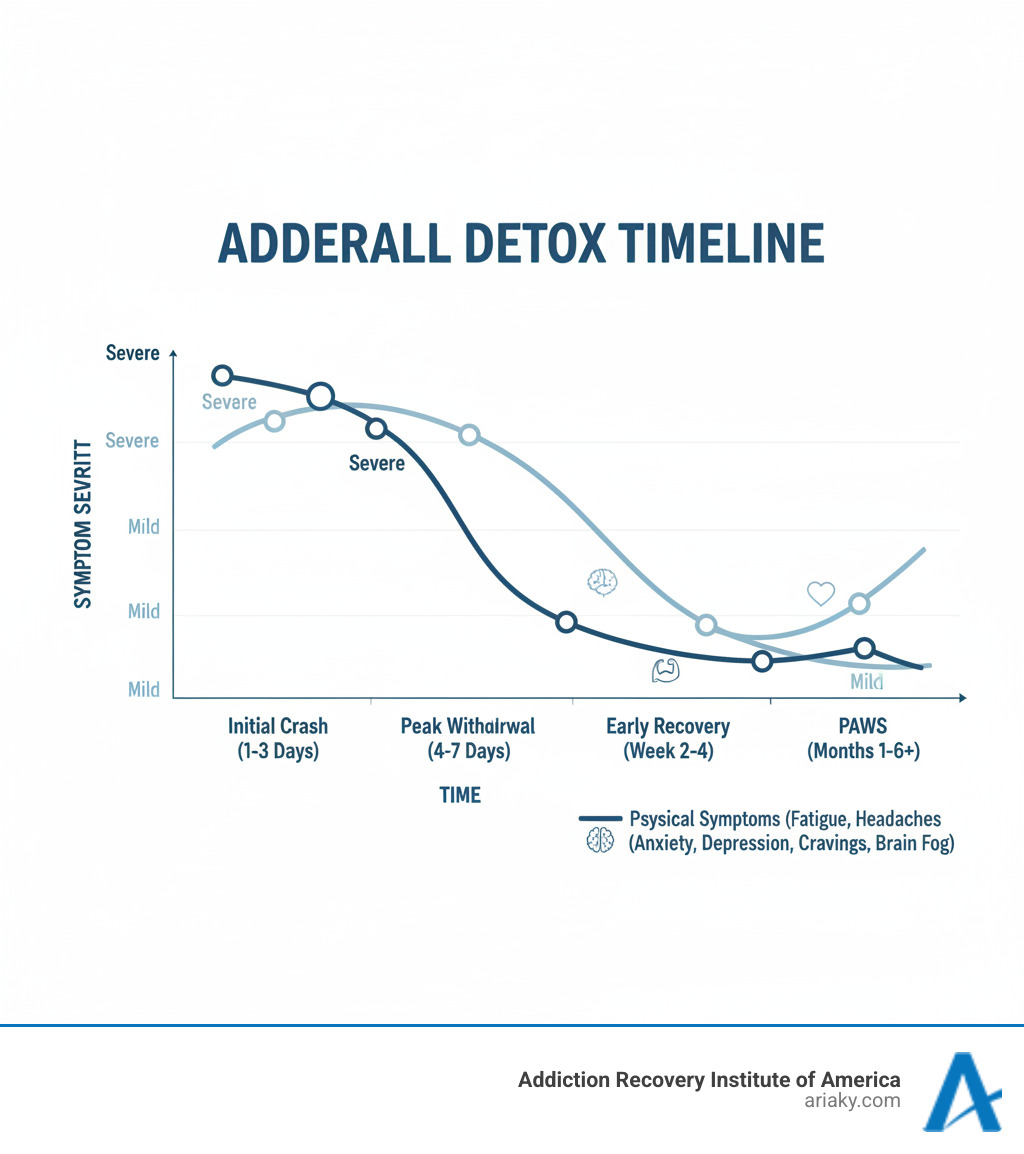
Knowing the timeline for detox from Adderall can make the journey feel less overwhelming. While everyone’s experience is unique, withdrawal symptoms typically present within 24 hours of the last dose and unfold in phases. The acute period usually lasts one to two weeks, but psychological symptoms can linger for months in what is known as post-acute withdrawal syndrome (PAWS).
The Initial “Crash” (First 24-72 Hours)
The first 24 to 48 hours after stopping Adderall typically involve a ‘crash’. This phase begins within hours of your last dose as your body slams on the brakes after running at high speed.
Severe fatigue is the most prominent symptom; you may sleep for extended periods and still feel exhausted. Depression can set in quickly, creating a profound sense of emptiness as your brain’s dopamine levels drop. Your appetite may return with a vengeance, and you might feel intense irritability. The cravings for Adderall can be powerful, making it risky to attempt detox alone.
Peak Withdrawal (Days 3-7)
Withdrawal often intensifies after the initial crash. Days 3 through 5 are when withdrawal symptoms tend to reach their peak, especially the psychological ones.
During this phase, depression and anxiety can become overwhelming. Mood swings may be dramatic, shifting from tearful to angry within hours. Sleep becomes a battleground, with some experiencing insomnia and vivid, disturbing dreams, while others sleep excessively. Physical symptoms like headaches and muscle aches often worsen, and brain fog makes simple tasks feel monumental. The cravings can be especially dangerous during this peak, which is why professional monitoring during detox is so important.
Gradual Improvement and PAWS (Week 2 and Beyond)
Around the two-week mark, most physical symptoms resolve within two weeks. The crushing fatigue lightens, and your appetite and sleep patterns begin to normalize. However, the psychological symptoms often persist.
Post-Acute Withdrawal Syndrome (PAWS) refers to lingering effects that can last for weeks or months. It’s characterized by intermittent symptoms. You might have a few good days, then suddenly feel foggy, irritable, and experience cravings again.
PAWS symptoms include intermittent cravings, persistent fatigue, difficulty concentrating, and waves of mood swings, anxiety, and depression. The unpredictability of PAWS is why detox is just the first step in recovery. Your brain is slowly healing, a biological process that takes time.
This is also why comprehensive treatment beyond detox, including therapy and support systems, is crucial for long-term recovery. The acute phase gets you through the storm, but PAWS is the long journey afterward, and you don’t have to do it alone.
The Adderall Detox Process: Safety and Treatment Options
Deciding to stop using Adderall is a courageous first step. However, detox should not be attempted alone. Withdrawal can be severe and even dangerous, making professional medical supervision essential for your safety and success.

At Addiction Recovery Institute of America (ARIA) Kentucky, we guide individuals through stimulant withdrawal safely and comfortably. Our prescription drug detox services are custom to your unique needs, because no two people experience withdrawal the same way.
Dangers of At-Home Detox
Detoxing at home might seem comfortable, but it carries serious risks. Quitting “cold turkey” without medical oversight can lead to escalating complications.
The most concerning danger is severe depression and suicidal ideation. The plummet in dopamine can create profound depression that requires immediate intervention. There is also a risk of psychosis, where a person may experience delusions and hallucinations. Detoxing from Adderall isn’t typically dangerous. However, a patient can develop psychosis, which is a medical emergency.
Many also struggle with dehydration and malnutrition during withdrawal. Perhaps the most common outcome of at-home detox is relapse. Overwhelming cravings and discomfort make it incredibly difficult to resist using again without support.
Adderall detox should only be attempted under the careful supervision of a healthcare professional. This is about being smart and giving yourself the best chance at success.
The Professional Adderall Detox Process
A professional program for Adderall detox provides a safe, structured environment managed by experts. At ARIA Kentucky, we offer this care across our locations in Ashland, Bowling Green, Covington, Florence, Lexington, Louisville, Morehead, Newport, Owensboro, and Paducah.
Our process includes:
- 24/7 medical monitoring to track vital signs and manage any complications immediately.
- A safe and supportive environment away from triggers and daily stressors.
- Medication management to ease symptoms. While no specific drug is approved for Adderall withdrawal, we may use antidepressants, anti-anxiety medications, or sleep aids to keep you comfortable and safe.
- A tapering schedule, gradually reducing your Adderall dose to make withdrawal more manageable.
- Nutritional support and hydration to provide your body with the fuel it needs to heal.
- Emotional support from our compassionate staff, which may include early counseling sessions.
Life After Detox: Long-Term Recovery
Detox is just the beginning. It clears the drug from your system, but long-term recovery addresses the root causes of addiction.
The transition from detox to comprehensive treatment is critical for preventing relapse. At ARIA Kentucky, we guide you into therapies that build a foundation for lasting sobriety.
- Cognitive Behavioral Therapy (CBT) helps you identify and change negative thought patterns and behaviors related to drug use. A systematic review of cognitive and behavioural therapies for methamphetamine dependence shows how effective these approaches are.
- Individual and group therapy provide safe spaces to explore personal issues and connect with peers who understand your struggle.
- Family involvement helps heal relationships and builds a strong support system at home.
- Building coping skills provides healthy ways to manage stress and cravings without turning to Adderall.
We work with you to create a detailed aftercare plan that may include ongoing therapy, support groups, and regular check-ins. This continued support is what sustains sobriety long-term.
Frequently Asked Questions about Adderall Detox
It’s natural to have questions about Adderall detox. Here are answers to the most common ones.
How long does Adderall withdrawal last?
Acute physical symptoms typically peak around days 3-5 and begin to ease within 5 to 7 days. Most physical discomfort resolves in about two weeks. However, psychological symptoms like depression, fatigue, and cravings can linger for weeks or months. This extended period is sometimes called Post-Acute Withdrawal Syndrome (PAWS), where symptoms can come and go. The exact duration depends on factors like dosage, length of use, and individual health.
Is Adderall withdrawal dangerous?
While not typically life-threatening in the way alcohol withdrawal can be, Adderall withdrawal carries severe psychological risks. The profound drop in dopamine can trigger intense depression and suicidal thoughts. In rare cases, a person can develop psychosis, experiencing hallucinations and delusions. These risks are why medical supervision during detox is essential for your safety. Professional support also significantly reduces the risk of relapse during the most difficult moments.
Are there medications to help with Adderall withdrawal?
There are no FDA-approved medications specifically for Adderall withdrawal. However, medical professionals can prescribe “comfort medications” to manage specific symptoms, making the process safer and more bearable. These may include:
- Antidepressants to combat severe depression.
- Anti-anxiety medications to reduce agitation and restlessness.
- Sleep aids to help regulate disrupted sleep patterns.
- Blood pressure medications to keep vital signs stable.
- Antipsychotics in the rare event of psychosis.
These medications are prescribed and monitored under strict medical supervision at a facility like ARIA Kentucky to provide symptom relief during the acute detox phase.
Begin Your Recovery Journey Today
Detoxing from Adderall is challenging, but recovery is absolutely possible, and you don’t have to face it alone. Detox is the first step–it clears the fog and stabilizes your body. Lasting sobriety comes from the work you do afterward, through therapy and building new coping skills.
At ARIA Kentucky, we are an accredited and AODE-certified center that meets rigorous standards for quality care. We see you as a whole person, not just a set of symptoms. Our programs are customized to your needs, from medically supervised detox to residential or outpatient care. With centers across Kentucky–in Ashland, Bowling Green, Covington, Florence, Lexington, Louisville, Morehead, Newport, Owensboro, and Paducah–expert care is never far away.
Taking the first step is often the hardest, especially with fears about withdrawal or life without Adderall. We understand these concerns and know that with the right support, you can succeed. You deserve a life where you are in control, free from dependence on a pill.
If you or someone you love is ready to break free from Adderall dependence, reach out to us today. Let’s talk about your path to recovery. We’ll be with you every step of the way.
More info about our Kentucky detox programs.
Your recovery journey starts with a single decision. Let today be that day.