

Why Choosing the Right Alcohol Detox Clinic Matters
If you or a loved one needs help with alcohol addiction, alcohol detox clinics provide medically supervised care to safely manage withdrawal symptoms. Quitting alcohol “cold turkey” can be dangerous, even life-threatening, due to complications like seizures or delirium tremens (DTs).
That’s why medically supervised detox is critical. Professional clinics provide 24/7 monitoring by doctors and nurses who use medication to ease discomfort and prevent emergencies. Since over 40% of people with substance use disorders also have co-occurring mental health issues, finding a facility equipped to handle both is key.
Quick Guide to Finding an Alcohol Detox Clinic:
- Call a helpline – Contact SAMHSA’s National Helpline at 1-800-662-4357 for free, confidential referrals.
- Use online directories – Search FindTreatment.gov for licensed facilities.
- Verify credentials – Look for Joint Commission accreditation and state licensure.
- Check insurance – Confirm coverage and ask about payment options.
- Consider your needs – Choose between inpatient (24/7 care) or outpatient (live at home) based on severity.
This guide will walk you through what to expect during detox, how to choose the right care, and what questions to ask before admission.
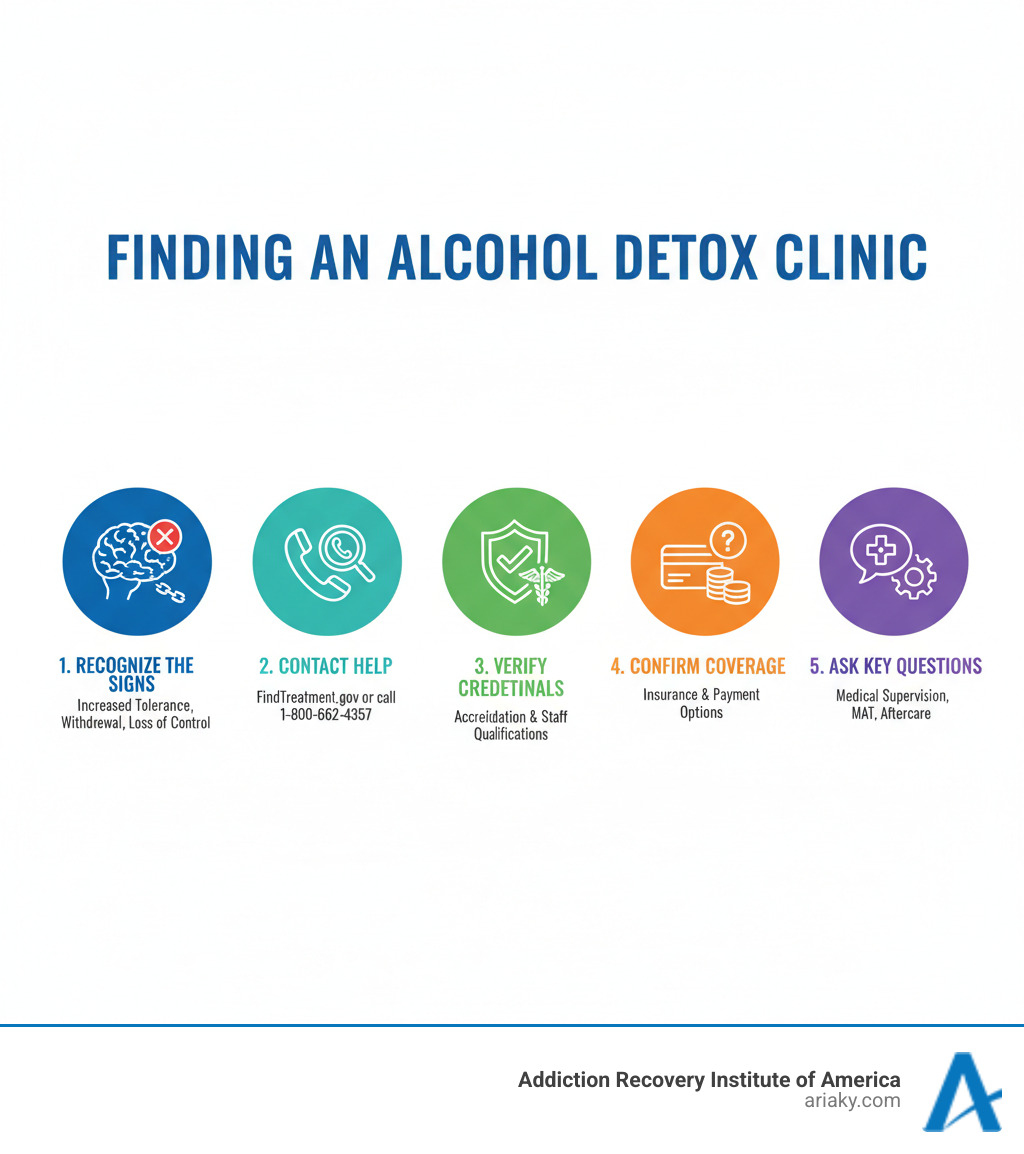
Quick alcohol detox clinics definitions:
Your First Step to Sobriety: Understanding Alcohol Detox
Taking the first step toward sobriety is a brave decision, and for most people with alcohol dependence, it begins with detox. Alcohol detox is the process where your body safely clears itself of alcohol while medical professionals manage withdrawal symptoms.
When you drink heavily for a prolonged period, your body develops a physical dependence. Your brain chemistry and nervous system adapt to alcohol’s presence. This isn’t a matter of willpower; it’s a biological change. Alcohol detox clinics exist to help your body readjust safely.
The Necessity of Detox
When alcohol is suddenly removed, your nervous system, which has been compensating for alcohol’s depressant effects, goes into overdrive. This hyperactivity is known as Alcohol Withdrawal Syndrome (AWS), and it can range from uncomfortable to dangerous. Physical dependence is a medical issue, not a moral failing, and it requires professional care to reverse safely.
The Dangers of Quitting “Cold Turkey”
Quitting alcohol without medical supervision is risky and potentially deadly. The body’s rebound reaction can spiral quickly, leading to severe complications.
- Seizures can occur as soon as 12 to 24 hours after the last drink, even in individuals with no prior history of seizures.
- Delirium Tremens (DTs) is a severe and frightening condition causing confusion, dangerous spikes in heart rate and blood pressure, fever, and vivid hallucinations. Without immediate medical intervention, DTs can be fatal.
Professional help isn’t just an option for many; it’s lifesaving. If you need to talk to someone now, the National Helpline is available 24/7 at 1-800-662-HELP (4357) for free, confidential support.
Recognizing the Signs of Alcohol Use Disorder
How do you know if you need professional detox? It starts with recognizing the signs of Alcohol Use Disorder.
- Increased tolerance: Needing more alcohol to achieve the same effect.
- Withdrawal symptoms: Feeling anxious, shaky, nauseous, or unable to sleep when you try to cut back.
- Loss of control: Planning to have one drink but having many more, or being unable to stop.
- Neglecting responsibilities: Prioritizing drinking over work, family, or other important obligations.
- Continued use despite consequences: Drinking even when you know it’s harming your health, relationships, or career.
If these signs are familiar, it’s time to seek help. Recognizing them is the first courageous step toward getting your life back. For more information, visit our Category: Alcoholism.
What to Expect During Medically Supervised Detox
Walking into an alcohol detox clinic takes courage. Knowing what to expect can help you step forward with confidence. At ARIA Kentucky, we prioritize your safety and comfort throughout the process.

The Detox Process
- Intake and Assessment: Your journey begins with a comprehensive evaluation. We’ll review your medical history, discuss any co-occurring mental health conditions, and understand your history with alcohol. A physical exam and mental health screening help us create a personalized detox plan.
- 24/7 Medical Monitoring: Our experienced nurses and doctors provide round-the-clock monitoring. We continuously observe your vital signs and comfort levels, ready to intervene immediately if complications arise. This constant presence provides medical safety and peace of mind.
- Symptom Management: Alcohol withdrawal is uncomfortable, but it doesn’t have to be unbearable. Our medical staff uses carefully monitored medications to calm anxiety, prevent seizures, reduce nausea, and help you sleep.
- Nutritional and Environmental Support: We provide balanced meals and nutritional supplements to restore your body’s health. Our facilities offer a calm, secure, and trigger-free environment where you can focus entirely on healing with compassionate support from our staff.
The average length of stay for detox is 3 to 8 days, depending on your individual needs. We don’t rush the process; you’ll stay as long as needed to become medically stable. Learn more on our Alcohol Detox Program KY page.
The Alcohol Withdrawal Timeline
While everyone’s experience varies, withdrawal symptoms often follow a general pattern:
- 6-12 hours: Early symptoms like anxiety, nausea, headaches, and tremors (“the shakes”) appear.
- 12-24 hours: Symptoms may intensify, and some people experience hallucinations.
- 24-48 hours: This is the peak risk period for withdrawal seizures, a serious medical emergency.
- 48-72 hours: The risk of Delirium Tremens (DTs) is highest, involving severe confusion, high blood pressure, and fever. DTs can be fatal without medical care.
- Beyond 72 hours: Acute symptoms usually begin to subside. However, some people experience Post-Acute Withdrawal Syndrome (PAWS)—lingering symptoms like mood swings and anxiety that can last for weeks or months but gradually improve.
The Role of Medication-Assisted Treatment (MAT)
Medication-Assisted Treatment (MAT) is an evidence-based approach that combines medications with therapy to support recovery. During detox, MAT helps manage withdrawal, prevent complications, and reduce cravings.
- Benzodiazepines are often used short-term to calm the nervous system and prevent seizures.
- Naltrexone and Acamprosate are non-addictive medications that can be used after detox to reduce cravings and support long-term sobriety.
At ARIA Kentucky, we integrate MAT into our comprehensive treatment plans when clinically appropriate, recognizing that addiction is a medical condition that responds well to medication combined with therapy. Learn more about our Medication Assisted Treatment.
Exploring Different Types of Alcohol Detox Clinics
Finding the right alcohol detox clinic means matching the program to your specific needs. Factors like the severity of your dependence, co-occurring mental health challenges, and your home environment all play a role in determining the best level of care.
At ARIA Kentucky, we use the ASAM criteria to assess your situation and recommend a level of care that gives you the best chance at lasting recovery. For a look at treatment options, visit our Substance Abuse Treatment Kentucky page.
Inpatient vs. Outpatient Detox: Which is Right for You?
One of the biggest decisions is choosing between inpatient and outpatient detox.
Inpatient detox provides 24/7 medical care in a residential facility. It is the safest option for severe alcohol dependence and high risk of complications like seizures. The structured, trigger-free environment allows you to focus completely on healing. Our Residential Treatment Program KY offers this immersive care.
Outpatient detox allows you to live at home while attending regular medical appointments. This option works for mild-to-moderate dependence if you have a stable, supportive home. It offers flexibility but requires strong self-management. Learn more about our Outpatient Treatment Program KY.
| Feature | Inpatient Detox | Outpatient Detox |
|---|---|---|
| Care Level | 24/7 medical supervision and support | Regular clinic visits, live at home |
| Medical Supervision | High, constant monitoring | Moderate, scheduled check-ins |
| For Whom | Severe dependence, high risk | Mild-to-moderate dependence, stable home |
| Environment | Structured, trigger-free | Flexible, maintain responsibilities |
| Safety | Highest, immediate response | Good, requires self-management |
Specialized Alcohol Detox Clinics
When other challenges exist, specialized alcohol detox clinics can provide more effective care.
- Dual-Diagnosis Facilities: Over 40% of people with substance use disorders also have co-occurring mental illnesses like depression or anxiety. These facilities provide integrated care, treating both conditions simultaneously.
- Trauma-Informed Care: Many people use alcohol to cope with past trauma. These programs create a safe environment where staff understand how trauma affects the brain and behavior, integrating this knowledge into your care. Our Trauma Related Addiction Program KY specializes in this approach.
- Programs for Specific Populations: Groups like first responders and veterans often benefit from programs with peers who share similar experiences. Our First Responder Addiction Treatment Program Kentucky honors the unique challenges faced by these professionals.
How to Find and Choose a Reputable Facility
Choosing the right alcohol detox clinic can feel overwhelming, but there are clear signs of quality care. Think of it like choosing a doctor for a serious medical procedure—you want someone qualified, experienced, and trustworthy.

What to Look For in Alcohol Detox Clinics
- Accreditation and Licensure: Look for accreditation from The Joint Commission or CARF, which signifies high standards for patient care. State licensure is non-negotiable and confirms the facility meets state regulations. ARIA Kentucky is an AODE-certified addiction rehab center.
- Qualified Staff: The team should include medical doctors, registered nurses, and licensed therapists who can manage both the medical and psychological aspects of withdrawal.
- Evidence-Based Therapies: Quality facilities use treatment methods backed by scientific research, such as Medication-Assisted Treatment (MAT), Cognitive Behavioral Therapy (CBT), and Dialectical Behavior Therapy (DBT).
- Location and Environment: Consider whether you’d benefit from being close to home or in a new environment away from triggers. ARIA Kentucky has facilities across the state, including Ashland, Bowling Green, Covington, and Louisville.
- Aftercare Planning: Detox is just the first step. A good facility will start planning for your continued recovery from day one, connecting you with ongoing therapy and support groups.
- Family Involvement: Recovery often involves healing family relationships. Look for programs that offer family therapy and education.
A great starting point for your search is FindTreatment.gov. For Kentucky-specific options, explore our Rehab Facilities in Kentucky page.
Understanding the Cost of Detox
Financial concerns should not be a barrier to getting help.
- Insurance Coverage: Most reputable facilities work with major insurance carriers. Our team can help you with Insurance Verification to understand your benefits.
- Other Payment Options: If you don’t have insurance, ask about private pay rates, financing plans, or sliding scale fees based on income.
Don’t let cost stop you from making the first call. For more information, visit our Tag: Paying for Treatment page.
Life After Detox: Building a Foundation for Lasting Recovery
Completing detox is a major accomplishment, but it’s just the beginning. Alcohol detox clinics address the physical side of dependence; the next phase of recovery, comprehensive rehabilitation, addresses the why behind the addiction. Detox clears the fog, allowing you to work on the emotional pain and thought patterns that kept you trapped.
Continuing Care: Your Next Steps
Lasting sobriety requires ongoing support to build resilience and healthy habits. At ARIA Kentucky, we offer a full continuum of care to walk with you through every stage.
- Partial Hospitalization Programs (PHP): These offer intensive, structured treatment during the day while you return home at night, bridging the gap between residential and outpatient care. Learn more about our Partial Hospitalization Program (PHP) Kentucky.
- Intensive Outpatient Programs (IOP): IOP provides structured therapy a few times a week, offering flexibility for work or family while you practice new coping skills. See our Intensive Outpatient Program (IOP) Kentucky.
- Individual and Group Therapy: One-on-one therapy helps you explore personal issues, while group therapy provides connection and the realization that you’re not alone.
- 12-Step Programs: Groups like Alcoholics Anonymous (AA) offer a powerful, peer-supported framework for maintaining sobriety.
These programs help you manage triggers and build confidence. Explore our Alcoholism Treatment Programs for a full view of our options.
The Role of Family in Recovery
Addiction is often called a family disease because it affects everyone involved. Healing relationships is a vital part of recovery. Family therapy provides a safe space for honest conversations, helping everyone learn healthier ways to communicate and support each other. Our Family Therapy Program KY recognizes that when families heal together, recovery is stronger. Educational programs and creating a supportive home environment are also key. For loved ones, groups like Al-Anon Family Groups offer invaluable peer support.
Frequently Asked Questions about Alcohol Detox
What is the difference between detox and rehab?
Think of it this way: detox focuses on the body, while rehab focuses on the mind. Detox is the initial medical process of safely managing physical withdrawal. It stabilizes your body. Rehab is the comprehensive therapy that follows, addressing the psychological and behavioral roots of addiction to help you build a foundation for long-term sobriety.
How long does alcohol detox last?
The acute phase of alcohol detox typically lasts 5 to 7 days, but it can range from 3 to 10 days depending on factors like your history of alcohol use and overall health. While the most intense physical symptoms subside within a week, some psychological symptoms (Post-Acute Withdrawal Syndrome or PAWS) can linger. This is why continuing care after detox is so important.
Can my family be involved in the process?
Yes, and we strongly encourage it. Reputable alcohol detox clinics like ARIA Kentucky recognize that addiction impacts the entire family. We offer family therapy sessions and educational programs to help repair relationships, improve communication, and build a strong support system at home. Involving family is crucial for lasting recovery. Learn more at our Family Therapy Program KY page.
Begin Your Recovery Journey Today
You’ve taken an important step by reading this guide. Whether it’s for you or a loved one, know that seeking help is an act of courage.
Alcohol detox is a critical, life-saving first step toward overcoming addiction. It provides a safe harbor during the vulnerable withdrawal phase, but choosing the right program is key. A facility that offers comprehensive, compassionate care can set the foundation for a life you’re proud of.
Recovery is possible. At Addiction Recovery Institute of America (ARIA Kentucky), we provide a full continuum of care, from medically supervised detox to comprehensive rehabilitation, all custom to you. We don’t use a one-size-fits-all approach because you are a person with a future worth fighting for.
You don’t have to do this alone. Our team is here to answer your questions and walk with you through every stage of recovery. Don’t let fear hold you back another day. The life you want is waiting.
Learn more about our Kentucky Alcohol Detox Program and take that courageous first step. We’ll be here to help.