

Why Alcohol Drug Detox is the Essential First Step
Alcohol drug detox is the medically supervised process of safely clearing substances from your body while managing withdrawal symptoms. If you’re searching for detox services, here’s what you need to know:
Quick Overview: What to Expect from Alcohol Drug Detox
- Duration: Typically 3-7 days for acute withdrawal, though some symptoms can persist for weeks
- Setting Options: Inpatient (24/7 medical care) or outpatient (scheduled visits while living at home)
- Medical Support: Medications like benzodiazepines help manage symptoms and prevent complications
- Safety: Professional supervision prevents life-threatening risks like seizures and delirium tremens
- What Happens Next: Detox transitions you into comprehensive addiction treatment programs
Taking the first step toward recovery is an act of hope, but it can also feel uncertain. You might be wondering what detox actually involves, how long it takes, or whether it’s safe to try on your own.
The truth is simple: detox is not just about getting substances out of your system. It’s about doing so safely, with medical professionals who can manage the unpredictable and sometimes dangerous withdrawal symptoms that occur when your body begins to readjust.
Addiction changes your body’s chemistry. When alcohol or drugs are suddenly removed, your brain and central nervous system go into overdrive trying to restore balance. This can trigger symptoms ranging from mild anxiety and tremors to severe complications like seizures or delirium tremens—a life-threatening condition that requires immediate medical attention.
Research shows that withdrawal symptoms typically begin 6-24 hours after the last drink, with the highest risk period occurring within the first 48-72 hours. For some substances like benzodiazepines, withdrawal can take two weeks or longer. This is why medical supervision isn’t just recommended—it’s essential.
Detox alone isn’t addiction treatment. It’s the critical foundation that makes everything else possible. Once your body is stabilized, you can focus on the psychological aspects of recovery through therapy, counseling, and long-term support programs.
Whether you’re seeking help for yourself or a loved one, understanding the detox process can provide clarity and confidence as you move forward.
Your First Step to Recovery: What is Detox?
When you hear the word “detox,” you might think of juice cleanses or trendy wellness programs. But alcohol drug detox is something entirely different—and far more important. It’s the medically supervised process that helps your body safely adjust after you stop using substances.
Think of it this way: when you’ve been using alcohol or drugs regularly, your body gets used to having them around. It actually changes how it functions to accommodate these substances. Your brain chemistry shifts. Your nervous system adapts. Everything finds a new “normal” that includes the substance.
So when you suddenly stop, your body doesn’t just bounce back. It goes through withdrawal—a period of readjustment that can range from uncomfortable to downright dangerous. That’s where professional detox comes in.
Physical dependence means your body has become so accustomed to a substance that it needs it to feel normal. Without it, you experience physical symptoms—shaking, sweating, nausea, or worse. Psychological dependence is different but equally powerful. It’s when your mind believes it can’t cope with stress, emotions, or daily life without the substance. You might feel anxious, depressed, or overwhelmed when you can’t use.
Detox primarily addresses the physical side of dependence. It’s about getting you through those first critical days when withdrawal symptoms are at their peak. But it also creates a safe, stable environment where you can start thinking clearly again—which is the first step in recovery.
At Addiction Recovery Institute of America, our Detox Programs Florida are designed to guide you through this crucial phase with compassion and expert medical care. We don’t just help your body eliminate substances. We monitor your health around the clock, manage your symptoms, and prepare you for the comprehensive treatment that comes next.
Because here’s the truth: detox alone isn’t treatment. It’s the foundation that makes everything else possible.
Understanding Withdrawal: Symptoms and Timeline
When you’ve been drinking or using drugs regularly, your body doesn’t just notice the substance—it actually changes how it works to accommodate it. This is why alcohol drug detox under medical supervision is so important. Your central nervous system adapts in profound ways, and when the substance is suddenly removed, those adaptations can cause serious problems.
Think of it this way: alcohol is a depressant that slows everything down in your brain. To keep functioning normally, your brain compensates by ramping up its activity level. It’s like turning up the volume to hear over loud music. But when you stop drinking, your brain is still turned up to maximum volume—except now there’s no loud music to drown out. This creates a state of hyperactivity that leads to withdrawal symptoms.
This process involves key chemical messengers in your brain called neurotransmitters—including dopamine, serotonin, and GABA. These chemicals control everything from your mood and sleep patterns to how you experience pleasure and stress. When they’re thrown out of balance during withdrawal, the effects can be intense and sometimes dangerous.
Here’s what makes withdrawal particularly challenging: it’s unpredictable. Two people with similar drinking patterns can have completely different withdrawal experiences. How severe your symptoms will be depends on many factors—how much you’ve been drinking, how long you’ve been drinking, your age, your overall health, your nutrition, and even your genetics. This unpredictability is exactly why professional medical supervision isn’t optional—it’s essential for your safety.

Common Withdrawal Symptoms
Withdrawal can feel overwhelming, but understanding what might happen helps you prepare. More importantly, it reinforces why you shouldn’t face this alone. Our medical teams have seen it all, and we’re here to keep you safe and as comfortable as possible through every stage.
The symptoms you might experience range from uncomfortable to potentially life-threatening. Anxiety and agitation often arrive first—that restless, uneasy feeling that makes it hard to sit still or relax. Your hands might develop tremors, shaking involuntarily even when you try to hold them steady. Nausea and vomiting can make it difficult to keep anything down, while headaches pound relentlessly.
Insomnia is another common challenge—your body wants rest but can’t seem to find it. You might experience excessive sweating, drenching your clothes even in a cool room. Cravings can hit hard, with your brain insisting it needs the substance to feel normal again. Your heart may race, and your blood pressure can spike as your body’s stress response kicks into high gear.
Some symptoms are more concerning. Hallucinations—seeing, hearing, or feeling things that aren’t real—can be frightening, though they typically resolve within 48 hours. Seizures pose a serious medical risk, usually occurring within the first 48 hours after your last drink, with the highest danger point around the 24-hour mark.
The most severe complication is Delirium Tremens, or DTs. This medical emergency affects about 5% of people going through alcohol withdrawal and can be fatal without proper treatment. DTs bring severe confusion, disorientation, fever, rapid heart rate, and potentially deadly seizures. They typically emerge 48 to 72 hours into detox and can persist for a week or longer. This is why medical supervision during alcohol drug detox isn’t just recommended—it can save your life. Learn more about Delirium Tremens.
The General Alcohol Withdrawal Timeline
While everyone’s experience is unique, alcohol withdrawal generally follows a pattern that helps medical professionals anticipate and manage symptoms effectively.
Phase 1 begins 6 to 12 hours after your last drink. This is when you’ll first notice something’s different. Mild symptoms start appearing—anxiety creeps in, your hands might shake slightly, headaches begin, and you may feel nauseous. Sweating and insomnia are common, and you might feel irritable or restless. These early symptoms are your body’s first signal that it’s trying to readjust.
Phase 2 spans 24 to 72 hours after your last drink, and this is when things get more intense. Symptoms that started mild can become much more severe. The risk of seizures jumps significantly during this window, peaking around the 24-hour mark. Hallucinations may occur, and for some people, this is when Delirium Tremens begins to develop, typically peaking around day five. This critical phase is exactly why professional monitoring is so important—medical staff can intervene immediately if complications arise.
Phase 3 covers 3 to 7 days after your last drink. The acute physical symptoms usually start to ease during this period, though some may linger. You might still experience mood swings, anxiety, and trouble sleeping. This is when we focus on managing these remaining symptoms and helping you transition into the next phase of treatment.
Beyond the acute withdrawal phase, some people experience Post-Acute Withdrawal Syndrome, or PAWS. This can last for weeks or even months and includes psychological and emotional symptoms like mood swings, ongoing anxiety, depression, insomnia, and difficulty concentrating. Managing PAWS effectively requires continued support through therapy and support groups—another reason why detox is just the beginning of recovery, not the end.
For a more detailed look at what to expect during each phase, visit our Alcohol Withdrawal Timeline resource.
The Medically Supervised Alcohol Drug Detox Process
When you’re struggling with alcohol or drug dependence, the thought of detox can feel overwhelming. But here’s the truth: having medical professionals by your side makes all the difference. A medically supervised alcohol drug detox isn’t just safer—it’s often the key to actually making it through withdrawal successfully.
Without professional support, moderate to severe alcohol withdrawal can become dangerous quickly. We’re talking about serious risks like severe dehydration, seizures, cardiac complications, and delirium tremens. These aren’t just uncomfortable symptoms—they can be life-threatening. Medical supervision transforms what could be a dangerous situation into a manageable, safer process where you’re monitored every step of the way.
Our team provides 24/7 monitoring throughout your detox journey. This means trained medical professionals are always nearby, ready to respond if symptoms intensify or complications arise. You’re never alone during the hardest moments.
Beyond medical care, we focus on the basics your body desperately needs: proper nutrition and hydration. Heavy substance use disrupts how your body absorbs vitamins and minerals. It throws your metabolism off balance. During detox, we make sure you’re getting the fluids and nutrients essential for healing. It’s not glamorous, but it matters immensely for your recovery and comfort.

The Three Stages of Detox
Every person’s journey is unique, but medically supervised detox follows a clear, structured path designed to keep you safe while preparing you for lasting recovery.
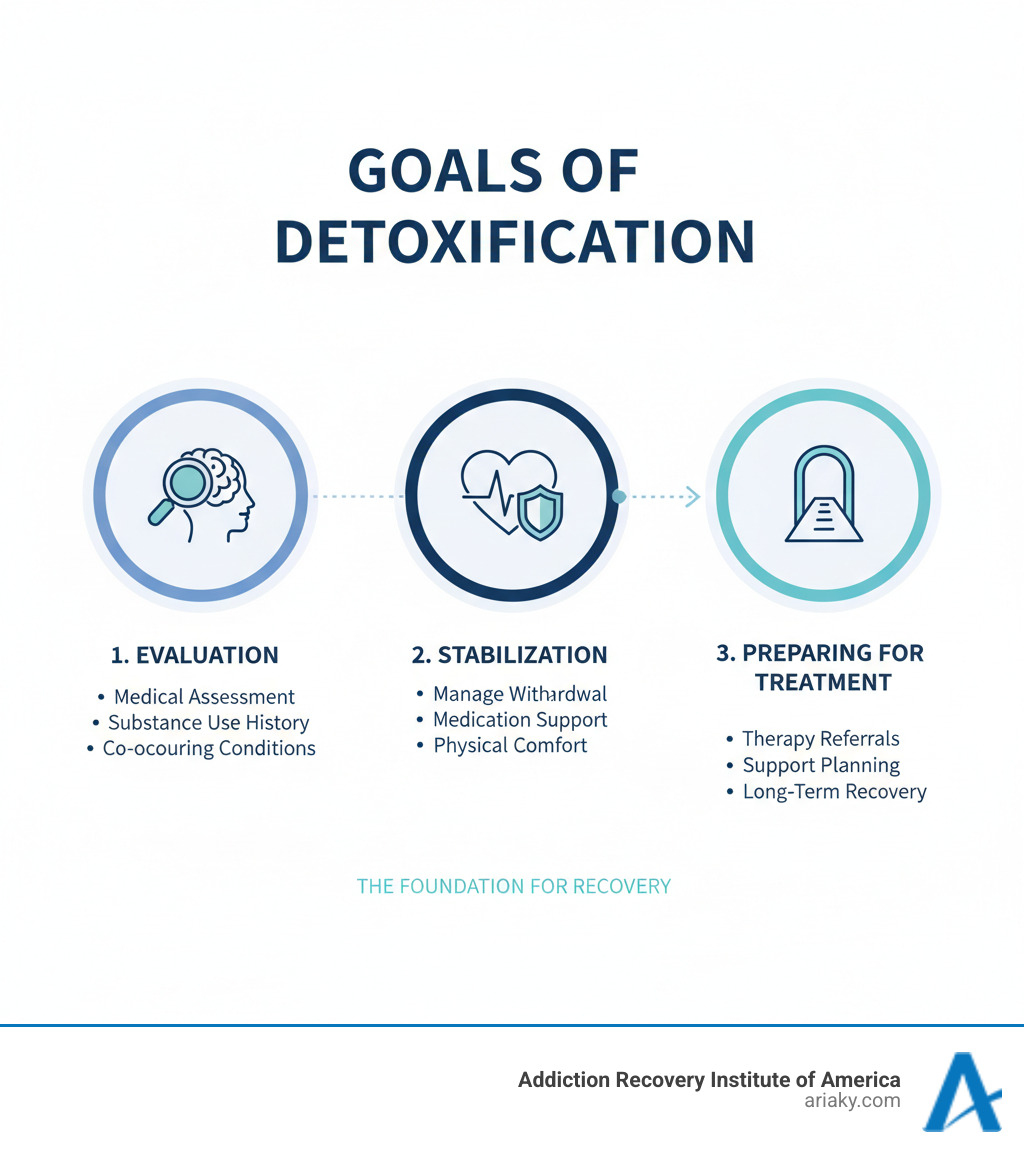
Evaluation is where everything begins. Before we can help you effectively, we need to understand your full picture. Our team conducts a thorough assessment of your physical health and mental wellbeing. We’ll ask about your medical history, the substances you’ve been using, how long you’ve been using them, and whether you’re dealing with any mental health challenges alongside addiction. This isn’t about judgment—it’s about creating a personalized detox plan that addresses your specific needs and identifies potential risks before they become problems.
Stabilization is the heart of the detox process. This is where we help your body become substance-free while managing withdrawal symptoms. We use carefully selected medications to ease discomfort and prevent serious complications like seizures. Our medical team monitors you around the clock, adjusting your care as your body changes throughout withdrawal. We combine medical interventions with psychological support, creating an environment where you can focus entirely on healing. Our goal is simple: keep you safe and as comfortable as possible during this challenging transition.
Preparing for further treatment happens as your body stabilizes. Detox alone isn’t enough to maintain sobriety long-term, and we want you to understand that from the start. As withdrawal symptoms ease, we begin conversations about what comes next. We’ll discuss different treatment options, help you build motivation for the journey ahead, and connect you with appropriate ongoing care. This stage ensures you don’t just complete detox—you transition smoothly into comprehensive treatment that addresses the deeper roots of addiction.
These three stages form the foundation of our Detox Programs Florida and Kentucky locations, providing a complete approach to your initial recovery.
How Long Does Detox Take?
There’s no universal answer to how long detox takes, and anyone who tells you otherwise isn’t being honest. The timeline varies significantly based on several important factors.
The type of substance you’ve been using matters enormously. Alcohol withdrawal typically peaks within the first few days and levels off within a week for most people. Benzodiazepine withdrawal, however, can stretch beyond two weeks. Opioid withdrawal follows its own pattern. Each substance affects your brain and body differently, creating unique withdrawal timelines.
Your duration and amount of use play a major role too. Someone who’s been drinking heavily every day for years will generally face a longer, more intense withdrawal than someone with a shorter history of use. This isn’t about being “stronger” or “weaker”—it’s simply how physical dependence works.
Individual health factors also influence your detox timeline. Your age, overall health, metabolism, and any underlying medical conditions all affect how quickly your body processes and eliminates substances. If you’ve gone through withdrawal before, you might experience a phenomenon called “kindling,” where subsequent withdrawals become more intense.
For alcohol specifically, the acute withdrawal phase often lasts around 3 to 7 days. But here’s what matters most: we keep you in detox until you’re medically stable and truly ready for the next phase of treatment. We never rush this process. Your safety comes first, always. For more information about our individualized approach, visit our Detox Programs Florida page.
Side Effects of the Detoxification Process
Even with excellent medical care, detox comes with side effects. Your body is adjusting to functioning without the substance it’s become dependent on, and that adjustment isn’t always smooth. Understanding what to expect can help you prepare mentally and emotionally.
Physical discomfort is common and can include muscle aches, stomach cramps, nausea, vomiting, diarrhea, and overwhelming fatigue. Your body is working hard to rebalance itself, and that work shows up in these uncomfortable symptoms.
Emotional distress often surprises people with its intensity. Anxiety, irritability, restlessness, and rapid mood swings are all normal parts of detox. Your brain chemistry is recalibrating, and your emotions may feel unpredictable or overwhelming during this time. This is temporary, even when it doesn’t feel that way.
Sleep disturbances affect nearly everyone going through detox. You might struggle with insomnia or find your sleep interrupted throughout the night. These sleep issues can persist even after other acute symptoms subside, which is why ongoing support matters.
Some people also experience increased sensitivity to light, sound, or touch. The world might feel too bright, too loud, or too much in general. Again, this passes as your nervous system settles.
Our medical team knows how to manage these side effects effectively. We use appropriate medications and supportive therapies to reduce your discomfort and keep you safe. You don’t have to white-knuckle your way through this process. We’re here to help you steer what many describe as the hardest part of recovery—getting through Alcohol WD in a supportive, medically supervised environment where healing can truly begin.
Levels of Care and Treatment Approaches
When it comes to alcohol drug detox, there’s no cookie-cutter solution that works for everyone. Your path to recovery is as unique as you are, shaped by the substance you’ve been using, how long you’ve been struggling, your overall health, and what’s happening in your life right now. That’s why we design personalized treatment plans that meet you exactly where you are.
At Addiction Recovery Institute of America, we take time to understand your specific situation. Are you dealing with severe physical dependence that requires round-the-clock medical attention? Or would you benefit from a more flexible approach that allows you to maintain certain responsibilities while getting the help you need? Maybe you’re facing mental health challenges alongside addiction, or you’ve been using multiple substances. All of these factors shape the treatment approach that will give you the best chance at lasting recovery.
Our programs in Kentucky and West Palm Beach, Florida, are built around your individual needs, not the other way around. We consider everything from your medical history to your home environment, from co-occurring mental health conditions to your support system. This personalized approach ensures you receive exactly the level of care and support necessary for safe, effective detox and recovery.
Inpatient vs. Outpatient Detox
One of the most important decisions you’ll make is choosing between inpatient and outpatient detox. Both approaches have their place in addiction treatment, and the right choice depends entirely on your circumstances and the severity of your dependence.
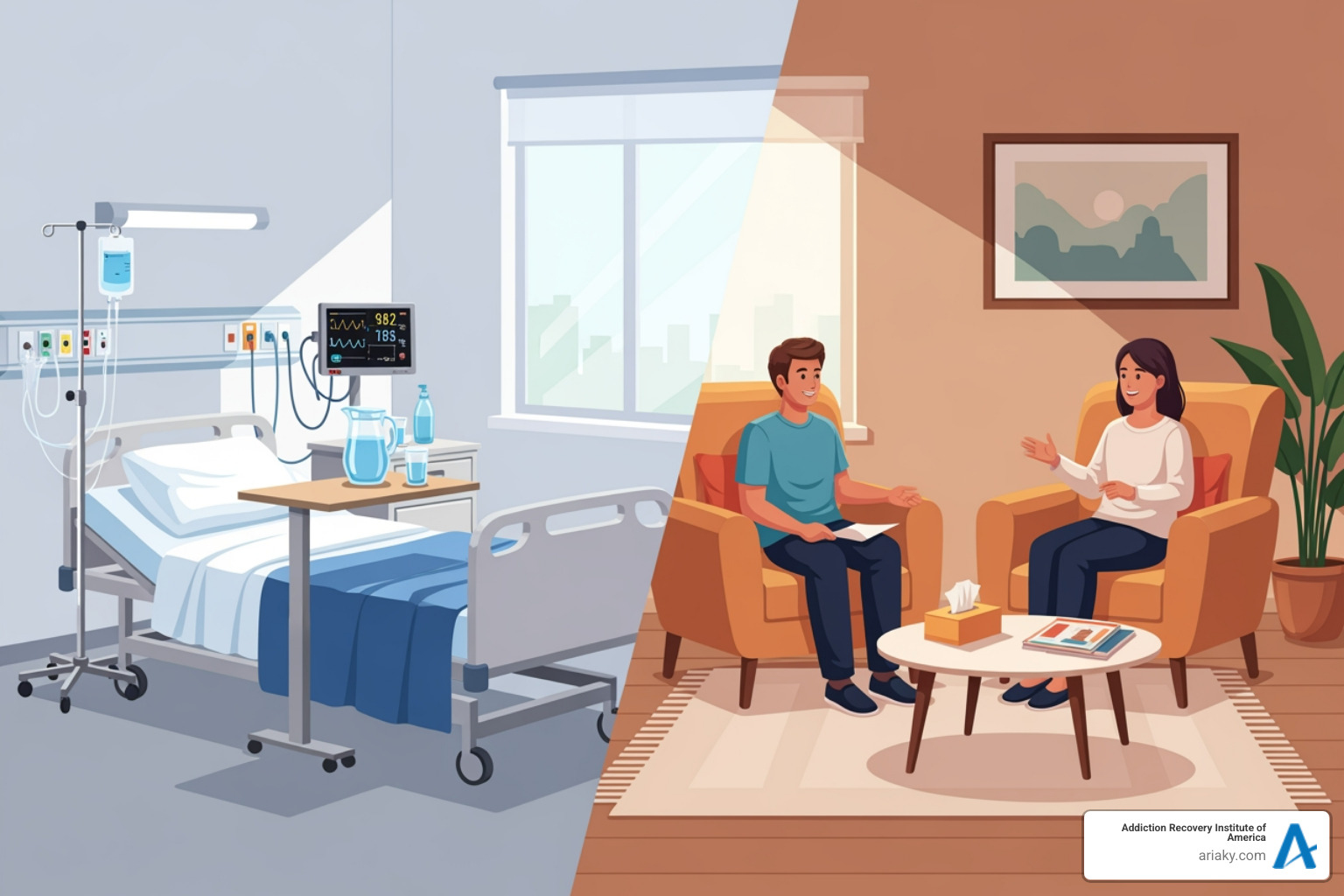
Inpatient detox, also called residential care, means you stay at our facility 24/7 throughout the detox process. You’ll have constant access to medical professionals who monitor your vitals, manage medications, and respond immediately to any complications. This level of supervision is crucial for anyone facing moderate to severe withdrawal, especially from alcohol or benzodiazepines, where serious complications like seizures or delirium tremens can occur. The residential environment also removes you completely from triggers and temptations in your daily life, giving you a safe space focused entirely on healing. While inpatient care requires a bigger commitment of time and resources, it offers the highest level of safety and support during this vulnerable period.
Outpatient detox, sometimes called ambulatory detox, offers a different approach. You live at home and visit our facility for scheduled medical check-ins, medication management, and monitoring. This option works well for individuals with mild to moderate dependence who have a stable, supportive home environment. It allows you to maintain work, family, or school responsibilities while receiving professional care. However, outpatient detox requires strong personal commitment and a safe living situation free from substance access. It’s not appropriate for everyone, particularly those at risk for severe withdrawal symptoms.
The key differences come down to supervision level—inpatient provides 24/7 medical oversight while outpatient involves scheduled visits. The environment differs too, with inpatient offering a controlled setting versus outpatient’s home-based approach. Cost considerations vary, though inpatient typically requires more resources due to the intensive care provided. The ideal candidate for inpatient detox is someone with moderate to severe dependence, previous withdrawal complications, or an unstable home environment. Outpatient works better for those with mild dependence, strong home support, and no history of severe withdrawal.
When you’re trying to decide which path is right for you, we’re here to help. Our team will assess your situation thoroughly and recommend the safest, most effective option. For comprehensive guidance on both approaches, explore our Inpatient vs Outpatient resources, or learn more about our specific Detox Programs Florida offerings.
Medications Used in Alcohol and Drug Detox
Medical supervision isn’t just about having someone watch you—it’s about having access to medications that can literally save your life and make withdrawal far more tolerable. The right medications, administered at the right time, can prevent dangerous complications and significantly reduce your discomfort during detox.
For alcohol withdrawal, benzodiazepines are the gold standard medication. These medications calm the overactive nervous system that causes many withdrawal symptoms, reducing anxiety, preventing seizures, and helping you sleep. They’re carefully dosed and monitored to ensure safety while providing relief. Anticonvulsants may also be used to prevent seizures, particularly in individuals with a history of withdrawal-related seizures.
Medication-assisted treatment (MAT) plays a crucial role, especially for opioid and certain other substance dependencies. These medications don’t just mask symptoms—they help normalize brain chemistry, reduce cravings, and support long-term recovery. For individuals detoxing from benzodiazepines, a gradual tapering approach using specific medications helps prevent the potentially dangerous withdrawal syndrome associated with sudden cessation. You can learn more about this specialized approach through our Benzo Detox Program.
Beyond medications that target withdrawal directly, we also use symptom management medications to address specific discomforts. Anti-nausea medications help with gastrointestinal distress, sleep aids address insomnia, and medications for headaches or muscle aches provide relief. Our goal is to keep you as comfortable as possible while your body heals.
Every medication decision is made carefully, considering your specific situation, medical history, and the substances you’ve been using. We continuously adjust your medication plan based on how you’re responding, ensuring optimal safety and comfort throughout your detox journey.
Special Considerations in Detox
Some situations require extra attention and specialized care during detox. We’re equipped to handle these complexities with expertise and compassion.
Co-occurring mental health conditions are incredibly common among people struggling with addiction. Depression, anxiety, PTSD, bipolar disorder, and other mental health challenges often exist alongside substance dependence, creating what’s known as a dual diagnosis. During detox, these conditions can intensify as your brain chemistry shifts. We provide integrated care that addresses both your addiction and mental health simultaneously, ensuring neither is neglected. Our team includes mental health professionals who understand how these conditions interact and can adjust your treatment plan accordingly.
Pregnant women face unique challenges during detox. The safety of both mother and baby is our absolute priority. Certain withdrawal symptoms and medications can affect pregnancy, so we work closely with obstetric specialists to create a detox plan that protects both lives. Abruptly stopping certain substances during pregnancy can actually be dangerous, so medical supervision is even more critical in these situations.
Polysubstance use—using multiple substances simultaneously—complicates the detox process significantly. Different substances interact in complex ways, and withdrawal from multiple substances at once requires careful management. We assess all substances you’ve been using and create a comprehensive detox plan that safely addresses each one, managing the overlapping and sometimes contradictory withdrawal symptoms.
These special situations are exactly why personalized care matters so much. Our Addiction Treatment Therapy Programs are designed to address the full complexity of your situation, not just the surface-level symptoms. Whatever challenges you’re facing, we have the expertise and resources to guide you safely through detox and into lasting recovery.