

Understanding the Reality of Ativan Withdrawal
Ativan withdrawal symptoms occur when someone who has developed a physical dependence on this medication reduces their dose or stops taking it entirely. If you or someone you care about is facing this challenge, understanding what to expect is the first step toward a safe recovery.
Common Ativan withdrawal symptoms include:
- Physical symptoms: Headaches, sweating, tremors, nausea, muscle pain and stiffness, increased heart rate, liftd blood pressure, abdominal cramps
- Psychological symptoms: Rebound anxiety, insomnia, irritability, panic attacks, mood swings, confusion, difficulty concentrating, depression
- Severe complications (in some cases): Seizures, hallucinations, severe panic attacks
Ativan, known generically as lorazepam, is a benzodiazepine prescribed to treat anxiety disorders, insomnia, seizures, and other conditions. It works by enhancing the calming effects of gamma-aminobutyric acid (GABA) in the brain. While effective for short-term use, the body can develop a dependence on Ativan in as little as a week of regular use.
When someone stops taking Ativan suddenly, their nervous system struggles to readjust to functioning without the drug. This creates what’s called a withdrawal syndrome—a collection of uncomfortable and sometimes dangerous symptoms as the brain and body work to restore their natural balance.
The good news: With proper medical supervision and a structured tapering plan, Ativan withdrawal can be managed safely. Professional detox programs provide 24/7 monitoring, symptom management, and support throughout the process.
The withdrawal experience varies from person to person based on factors like dosage, duration of use, overall health, and whether other substances are involved. Understanding the timeline and symptoms helps you prepare for what lies ahead and recognize when professional help is essential.
Ativan withdrawal symptoms terms to learn:
Understanding Ativan (Lorazepam) and Dependence
Ativan, known by its generic name lorazepam, is a powerful medication belonging to the benzodiazepine class. This group of drugs is primarily known for its sedative and tranquilizing effects. Ativan works by enhancing the activity of a neurotransmitter in the brain called gamma-aminobutyric acid, or GABA. Think of GABA as your brain’s natural “off switch.” By boosting its effects, Ativan helps to slow down excessive nervous system activity, which can reduce anxiety, induce sleep, and prevent seizures.
Physicians commonly prescribe Ativan for several conditions, including:
- Short-term relief of anxiety symptoms and anxiety disorders
- Insomnia, especially when associated with anxiety
- Management of certain seizure disorders
- Premedication for anesthesia to reduce anxiety and promote sedation
- Sometimes, it’s used off-label for rapid tranquilization of agitated patients or to manage alcohol withdrawal delirium.
While incredibly helpful for these conditions, it’s important to understand the regulatory status of Ativan. The United States Drug Enforcement Administration classifies Ativan as a Schedule IV drug. This classification indicates that it has a moderate potential for abuse and for the development of physical dependence. This potential for dependence is precisely what makes Ativan withdrawal symptoms a significant concern if the medication is stopped or reduced.
How Ativan Dependence Develops
Dependence on Ativan isn’t a sign of weakness; it’s a physiological adaptation of the brain and body to the continuous presence of the drug. When we take Ativan regularly, our brain adjusts its chemistry to compensate for the drug’s effects. Over time, the brain starts to rely on Ativan to maintain a sense of balance.
We often see two main types of dependence develop:
- Physical dependence: This occurs when the body acclimates to the drug’s presence and requires it to function “normally.” If the drug is removed, the body reacts with physical Ativan withdrawal symptoms. Research indicates that individual physiology, including genetic factors or existing mental health conditions, can influence this predisposition to dependence.
- Psychological dependence: This refers to the emotional and mental reliance on the drug, often driven by the belief that one cannot cope with anxiety or insomnia without it. The pleasurable side effects, like relaxation and euphoria, can also contribute to this psychological attachment.
Several factors influence how quickly and severely dependence can develop:
- Duration of use: The longer someone takes Ativan, the higher the likelihood of developing dependence. Physical dependence can develop in as little as a week of regular use.
- Dosage factors: Higher doses generally lead to a quicker and more pronounced dependence.
- Individual physiology: As mentioned, each person’s body chemistry is unique. Genetic factors and pre-existing mental health conditions can make some individuals more susceptible to dependence.
As tolerance builds, individuals may find they need higher doses of Ativan to achieve the same therapeutic effect. This escalation can further entrench dependence, making withdrawal more challenging if not managed properly.
Why Ativan Withdrawal Occurs
Ativan withdrawal symptoms occur because the brain’s delicate balance has been altered by the drug. Ativan improves GABA, which calms the central nervous system. When Ativan is suddenly stopped or significantly reduced, the brain is left without this improved calming effect. It’s like abruptly removing a brake pedal from a car that’s been relying on it—the system goes into overdrive.
This leads to what’s known as central nervous system rebound. The brain, which had adapted to the presence of Ativan, now experiences a surge in excitatory neurotransmitter activity. This dysregulation of the GABA system is the root cause of the discomfort and potential dangers of withdrawal. The body has to readjust to functioning without the substance, and this readjustment period is when withdrawal symptoms manifest.
This is why abrupt cessation, often referred to as “cold turkey,” can be particularly dangerous. The sudden shift can overwhelm the nervous system, leading to severe and potentially life-threatening complications. A gradual tapering approach, on the other hand, allows the brain and body to slowly re-establish their natural balance, minimizing the shock and severity of withdrawal.
A Detailed Look at Ativan Withdrawal Symptoms

When someone experiences Ativan withdrawal symptoms, it’s a clear indication that their body has become physically dependent on the medication. These symptoms can range from mild discomfort to severe, life-threatening complications, affecting us both physically and psychologically. The severity and duration of withdrawal are not uniform; they are influenced by several factors:
- Dosage: Higher daily doses of Ativan typically lead to more intense withdrawal symptoms.
- Duration of use: The longer someone has been taking Ativan, the more entrenched the dependence, and generally, the more prolonged and severe the withdrawal.
- Individual health: Overall physical and mental health, presence of co-occurring disorders, and metabolic rate can all play a role.
- Polydrug use: Using Ativan alongside other substances, especially alcohol or opioids, can significantly complicate withdrawal and increase risks.
- Abrupt cessation vs. tapering: Quitting cold turkey almost always results in more severe symptoms than a medically supervised taper.
Common Physical Ativan Withdrawal Symptoms
The physical manifestations of Ativan withdrawal symptoms can be incredibly uncomfortable and, in some cases, dangerous. Our bodies are essentially protesting the absence of a substance they’ve grown accustomed to. Some of the common physical symptoms include:
- Headaches: Often described as tension headaches or migraines.
- Sweating: Excessive perspiration, even in cool environments.
- Tremors: Involuntary shaking, particularly in the hands.
- Nausea and vomiting: Gastrointestinal distress is common, sometimes leading to weight loss.
- Abdominal cramps: Pain and discomfort in the stomach area.
- Muscle aches and tension: Generalized body aches, stiffness, and muscle spasms.
- Increased heart rate (tachycardia): The heart beats faster than normal.
- High blood pressure: Blood pressure can spike as the nervous system becomes overactive.
- Restlessness and agitation: A physical inability to stay still or relax.
- Seizures: In severe cases, especially with abrupt cessation, seizures are a serious and potentially fatal risk.
- Fever: Liftd body temperature.
These symptoms, as noted in research, can include anxiety, trouble sleeping, restlessness, agitation, and irritability. It’s our body’s way of reacting to the sudden absence of the drug, and they can be quite intense.
Common Psychological Ativan Withdrawal Symptoms
Beyond the physical discomfort, Ativan withdrawal symptoms deeply impact our mental and emotional state. Many individuals detoxing from Ativan experience what are known as “rebound symptoms.” These are often the very issues that led someone to take Ativan in the first place, such as anxiety or insomnia, but they return with increased intensity during withdrawal.
Common psychological Ativan withdrawal symptoms include:
- Rebound anxiety: A sudden and severe increase in anxiety, often far worse than the original anxiety it was prescribed for.
- Insomnia: Significant difficulty falling or staying asleep, leading to exhaustion.
- Irritability: Heightened frustration and short temper.
- Panic attacks: Sudden episodes of intense fear, often accompanied by physical symptoms like heart palpitations and shortness of breath.
- Mood swings: Rapid and unpredictable shifts in emotional state.
- Confusion and difficulty concentrating: Brain fog, impaired cognitive function, and an inability to focus.
- Memory problems: Difficulty recalling recent events or information.
- Depression: Feelings of sadness, hopelessness, and lack of motivation.
- Drug cravings: Intense urges to use Ativan again to alleviate the discomfort.
- Hallucinations: Seeing or hearing things that aren’t there (more common in severe cases).
- Paranoia: Feelings of suspicion and distrust.
These psychological symptoms can be incredibly distressing and contribute to the high relapse rates if not managed effectively. It’s crucial to remember that these feelings are a temporary, though challenging, part of the withdrawal process.
The Ativan Withdrawal Timeline: What to Expect

Understanding the typical timeline for Ativan withdrawal symptoms can help us prepare for the journey ahead. However, this is a general guide. The exact timing and intensity can vary significantly based on the factors we’ve already discussed, such as dosage, duration of use, individual metabolism, and overall health.
Ativan has an intermediate half-life, meaning it takes a certain amount of time for half of the drug to be eliminated from the body. For Ativan, this half-life is typically between 10 to 20 hours. This relatively short half-life means that withdrawal symptoms can begin to emerge fairly quickly after the last dose. It usually takes about five half-lives for a drug to be fully cleared from the system.
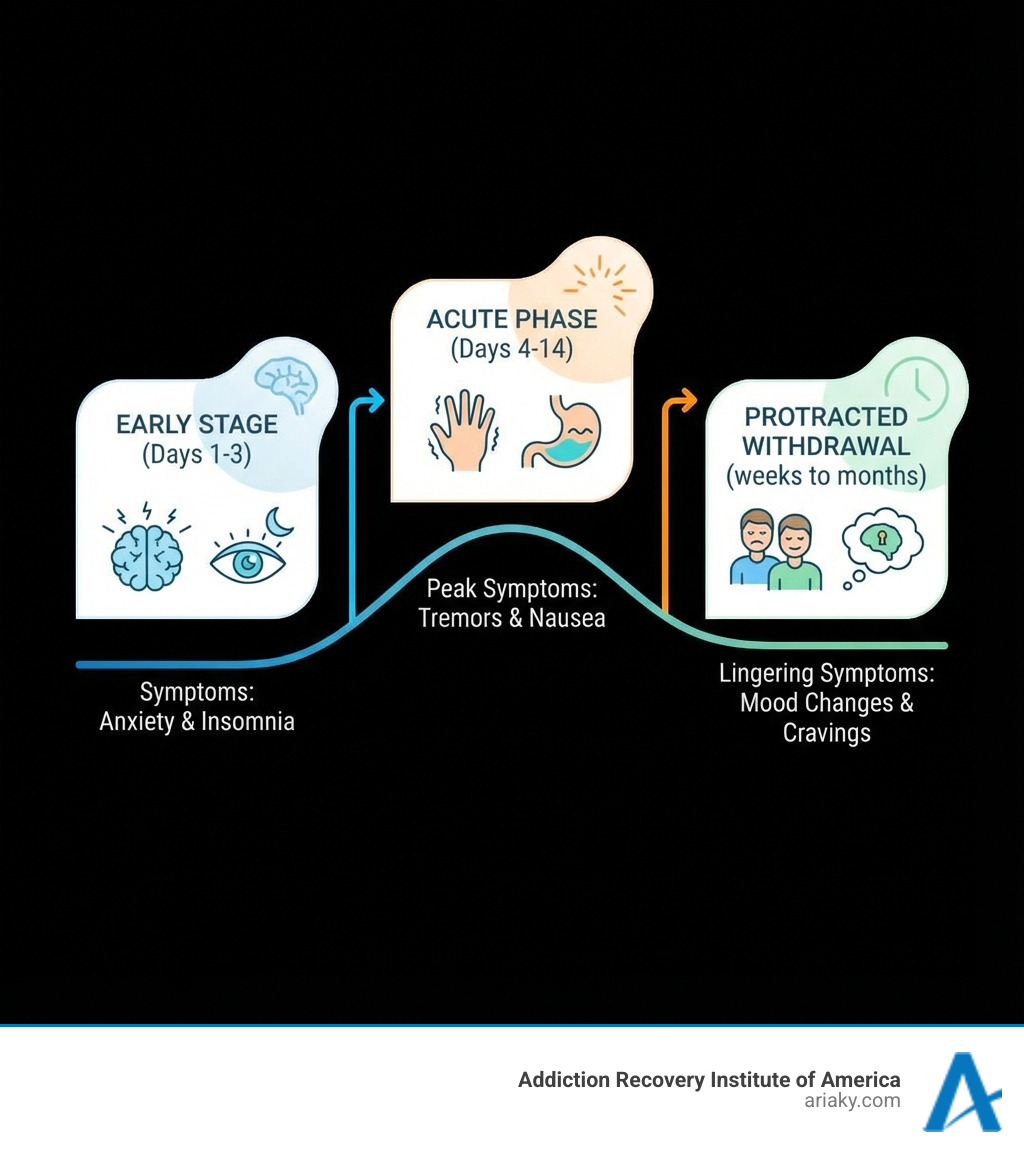
Early Stage & Onset (First 1-3 Days)
The initial phase of Ativan withdrawal symptoms usually begins within hours to a few days after the last dose. This is when the body first starts to react to the decreasing levels of Ativan.
- Onset: Symptoms can start as early as 8 to 12 hours post-last dose, with the average onset of acute withdrawal symptoms being 3-4 days. Some sources indicate symptoms can begin within 24 hours, with early physical symptoms manifesting as early as 4 to 8 hours.
- Common symptoms: During this early stage, we often see the emergence of increased anxiety, restlessness, irritability, and sleep disturbances, including difficulty falling or staying asleep. These early symptoms can last for approximately 3 to 7 days.
- Rebound effects: The symptoms that Ativan was originally prescribed to treat, such as anxiety and insomnia, may return, often with greater intensity. This is known as the “rebound effect.”
Acute Withdrawal Phase (Days 4-14)
The acute phase is typically when Ativan withdrawal symptoms are at their most intense. This period usually starts around day 4 and can last for about 10 to 14 days.
- Peak intensity: Physical symptoms like severe headaches, profuse sweating, intense tremors, nausea, vomiting, abdominal cramps, and muscle aches become more pronounced. Heart rate and blood pressure can be liftd.
- Heightened psychological distress: Psychological symptoms like panic attacks, severe mood swings, confusion, and memory problems can also peak during this time.
- Risk of complications: The risk of seizures and hallucinations is highest during this acute phase, especially if Ativan was stopped abruptly. This is why medically supervised detox is so crucial.
- Duration: Full-blown acute withdrawal symptoms usually last 10 to 14 days and gradually lessen over the next couple of weeks.
Protracted and Post-Acute Withdrawal Syndrome (PAWS)
While the acute phase generally subsides after a couple of weeks, some individuals may experience lingering Ativan withdrawal symptoms for a much longer period. This is known as protracted withdrawal or Post-Acute Withdrawal Syndrome (PAWS).
- Lingering symptoms: PAWS is characterized by a constellation of symptoms that can wax and wane, often occurring in unpredictable waves. These can include mood fluctuations, persistent depression, chronic anxiety, general malaise, lack of motivation, difficulty concentrating, and intense cravings.
- Duration: For certain individuals, PAWS can last for months or even years following the discontinuation of Ativan. While less common, protracted withdrawal symptoms can continue for a few months up to two years for some individuals, particularly those who used very high doses of Ativan.
- Relapse risk: The prolonged nature of PAWS can be incredibly challenging and significantly increases the risk of relapse if not properly managed with ongoing support and therapy.
Safely Managing Withdrawal and Finding Support
Attempting to stop Ativan without medical supervision can be incredibly dangerous. The potential for severe Ativan withdrawal symptoms, including life-threatening seizures, hallucinations, and debilitating panic attacks, makes unassisted withdrawal a high-risk endeavor. This is why professional medical help is not just recommended, but often critical.
We should seek professional medical help for Ativan withdrawal symptoms if we:
- Have been taking Ativan for more than a few weeks.
- Are taking high doses.
- Have a history of seizures or other medical conditions.
- Are experiencing severe anxiety, panic attacks, or suicidal thoughts.
- Are using other substances alongside Ativan.
The Critical Role of Medically Supervised Detox
Medically supervised detox is the safest and most effective way to manage Ativan withdrawal symptoms. In a professional setting like ARIA Kentucky, individuals receive 24/7 medical monitoring, ensuring that any emerging symptoms or complications can be addressed immediately. Our facilities, including those in Kentucky, Ashland, Bowling Green, Covington, Florence, Lexington, Louisville, Morehead, Newport, Owensboro, Paducah, and West Palm Beach, are equipped to provide this level of care.
The benefits of medically supervised detox include:
- 24/7 medical monitoring: Healthcare professionals can track vital signs, manage discomfort, and intervene in emergencies.
- Symptom management: Medications can be provided to alleviate specific withdrawal symptoms, making the process more tolerable.
- Safe environment: A supportive and secure setting removes access to the drug and minimizes external stressors.
- Preventing complications: Medical staff can prevent dangerous outcomes like seizures or severe dehydration.
- Transition to further treatment: Detox is often the first step, preparing individuals for residential, partial hospitalization (PHP), or intensive outpatient (IOP) programs that address the underlying causes of dependence.
Tapering: The Gold Standard Approach
For Ativan withdrawal, tapering is considered the most effective and safest method. Rather than abruptly stopping the medication (“cold turkey”), a tapering plan involves gradually reducing the dosage over weeks or even months. This slow reduction allows the brain and body to slowly adjust to decreasing levels of Ativan, minimizing the severity of Ativan withdrawal symptoms.
A physician-guided tapering schedule is crucial. This personalized plan takes into account the individual’s dosage, duration of use, overall health, and response to the reduction. A 2006 meta-analysis indicated that a tapering approach is the most effective method for addressing benzodiazepine withdrawal. While there isn’t a single universal “Ativan withdrawal medication,” the tapering process itself, often supported by other medications to manage specific symptoms, is the cornerstone of safe withdrawal.
Medical and Therapeutic Interventions
Beyond tapering, various medical and therapeutic interventions can help manage Ativan withdrawal symptoms and support long-term recovery.
-
Symptom-specific medications: While no single drug is approved specifically for benzodiazepine withdrawal, doctors can prescribe medications to alleviate particular symptoms. For instance:
- Melatonin, a hormone that induces sleep, has some research to indicate it can be useful in addressing insomnia during withdrawal.
- Antidepressants, such as Paxil (paroxetine), have some research evidence to indicate they can help ease some withdrawal symptoms and may be associated with increased success rates during withdrawal.
- Other medications may be used to manage nausea, muscle spasms, or blood pressure fluctuations.
- Anticonvulsants may be prescribed to reduce the risk of seizures.
-
Psychotherapy: This is a vital component of recovery, addressing the psychological aspects of dependence and withdrawal. Cognitive Behavioral Therapy (CBT) and Acceptance and Commitment Therapy (ACT) are particularly effective. Research shows that psychotherapy plays a crucial role not only in managing withdrawal symptoms but also in preventing relapse. CBT helps individuals identify and change negative thought patterns and behaviors that contribute to substance use. Psychotherapy is also critical in addressing the psychological effects that follow acute withdrawal, known as Post-Acute Withdrawal Syndrome (PAWS), helping individuals develop coping mechanisms and strategies for long-term sobriety.
-
Support groups: Engaging with peer support groups provides a sense of community, shared experience, and accountability, which are integral to sustained recovery.
Frequently Asked Questions about Ativan Withdrawal
We understand you likely have many questions about Ativan withdrawal symptoms and the recovery process. Here, we address some of the most common concerns.
How long do Ativan withdrawal symptoms last?
The duration of Ativan withdrawal symptoms varies significantly from person to person, but we can outline a general timeline:
- Early Stage: Symptoms can begin within 8 to 12 hours after the last dose, with the average onset of acute withdrawal symptoms being 3-4 days. These initial symptoms, often rebound anxiety and insomnia, can last for approximately 3 to 7 days.
- Acute Phase: The most intense symptoms typically occur during this phase, which usually lasts 10 to 14 days. Full-blown acute withdrawal symptoms lessen over the next couple of weeks.
- Protracted Withdrawal (PAWS): For some individuals, symptoms can linger for weeks, months, or even up to two years. This post-acute withdrawal syndrome can involve fluctuating mood, depression, anxiety, and cognitive issues.
Factors influencing the length include the dosage and duration of Ativan use, individual physiology, and whether a tapering plan is followed.
Can you stop taking Ativan ‘cold turkey’?
No, we strongly advise against stopping Ativan “cold turkey.” Abrupt cessation of Ativan can be extremely dangerous and potentially fatal. When someone stops taking Ativan suddenly, the central nervous system, which has adapted to the drug’s calming effects, can become overstimulated. This can lead to severe and life-threatening Ativan withdrawal symptoms, including:
- Seizures: This is one of the most serious risks and can be life-threatening.
- Hallucinations: Visual or auditory hallucinations.
- Severe panic attacks: Intensified anxiety and panic, far beyond what was experienced before medication.
- Psychotic reactions: Disorientation, confusion, and loss of touch with reality.
Due to these risks, medical supervision is essential for anyone discontinuing Ativan. A medically supervised detox program will implement a gradual tapering schedule, which is the safest way to reduce the medication and manage withdrawal symptoms.
What is the first sign of Ativan withdrawal?
The first signs of Ativan withdrawal symptoms often reflect the very conditions Ativan was prescribed to treat, but with increased intensity. These are typically:
- Rebound anxiety: A noticeable increase in anxiety levels, often more severe than the initial anxiety.
- Insomnia: Difficulty falling asleep or staying asleep, leading to restlessness and fatigue.
These early symptoms can emerge relatively quickly, sometimes within 8 to 12 hours post the last dose, especially given Ativan’s half-life. Other early indicators might include increased irritability and a general sense of restlessness. If you experience these symptoms after reducing or stopping Ativan, it’s crucial to seek medical advice immediately.
Conclusion: Your Path to a Safe Recovery
Navigating Ativan withdrawal symptoms can be a challenging and potentially dangerous process if attempted alone. We’ve seen how dependence develops, the wide range of physical and psychological symptoms that can arise, and the typical timeline of withdrawal, including the possibility of protracted symptoms like PAWS.
The most important takeaway is the critical need for professional medical guidance. Abruptly stopping Ativan carries significant risks, including life-threatening seizures. A medically supervised detox, featuring a carefully managed tapering schedule, is the safest and most effective path to recovery. Alongside this, therapeutic interventions like CBT and supportive medications can significantly ease discomfort and address underlying issues.
At ARIA Kentucky, we are dedicated to providing the comprehensive care needed for a safe and successful withdrawal from Ativan. Our accredited and AODE-certified centers in Kentucky, including Ashland, Bowling Green, Covington, Florence, Lexington, Louisville, Morehead, Newport, Owensboro, Paducah, and West Palm Beach, offer custom drug and alcohol treatment programs. We focus on individualized care to help you achieve lasting sobriety, guiding you through every step of the detox and recovery process.
Your journey to healing and a life free from dependence is possible, and you don’t have to walk it alone. We are here to help you find lasting recovery with a specialized benzo detox program.