

Why Fentanyl Detox Requires Professional Medical Support
Fentanyl detox is the medically supervised process of safely managing withdrawal symptoms when someone stops using fentanyl. Here’s what you need to know:
Quick Answer: Fentanyl Detox Essentials
- What it is: Medical management of withdrawal symptoms after stopping fentanyl use
- Timeline: Symptoms start 8-24 hours after last use, peak at 36-72 hours, acute phase lasts 7-10 days
- Why medical supervision matters: Prevents dangerous complications like dehydration, cardiac issues, and fatal overdose upon relapse
- What happens: 24/7 monitoring, medication management, symptom relief, and transition planning
- Next steps: Detox is just the beginning—comprehensive treatment addresses the root causes of addiction
Fentanyl is a synthetic opioid 50 to 100 times more potent than morphine. Due to its extreme potency, withdrawal can be severe and unpredictable. Regular use causes the brain to adapt, reducing its natural production of feel-good chemicals and becoming dependent on the drug. Stopping suddenly triggers intense physical and psychological withdrawal symptoms that are dangerous without medical care.
The good news is that recovery is absolutely possible. Medically supervised detox offers a safe, comfortable foundation for moving forward. This guide explains the fentanyl withdrawal process, the importance of professional detox for your safety, and the steps that follow to support lasting recovery.
Understanding Fentanyl Withdrawal
Fentanyl binds to opioid receptors in the brain, creating a powerful effect. With regular use, the brain adapts by reducing its own production of feel-good neurotransmitters, relying on the drug instead. This creates physical dependence—a matter of brain chemistry, not a moral failing. When you stop using, the body goes into shock as it tries to rebalance itself, triggering withdrawal. This uncomfortable but necessary recalibration is the first sign of healing. Understanding this process can make it feel less frightening. An Opioid Addiction Treatment Program provides the medical support needed for this first step.

Common Fentanyl Withdrawal Symptoms
Fentanyl detox symptoms are severe and affect both the body and mind.
Physical symptoms are often compared to a severe flu and include:
- Intense muscle and bone aches
- Nausea, vomiting, diarrhea, and abdominal cramping
- Profuse sweating and chills (the “cold turkey” sensation)
- Runny nose, watery eyes, and yawning
- Insomnia and restless legs syndrome
- Increased heart rate, high blood pressure, and dilated pupils
- Muscle spasms and involuntary movements
Psychological symptoms can be equally challenging:
- Severe anxiety and panic attacks
- Crushing depression and feelings of hopelessness
- Irritability and agitation
- Overwhelming cravings for fentanyl
- Mood swings and difficulty concentrating
- Anhedonia (the inability to feel pleasure)
These symptoms, particularly the pain and cravings, make it incredibly difficult to manage withdrawal alone.
The Fentanyl Withdrawal Timeline
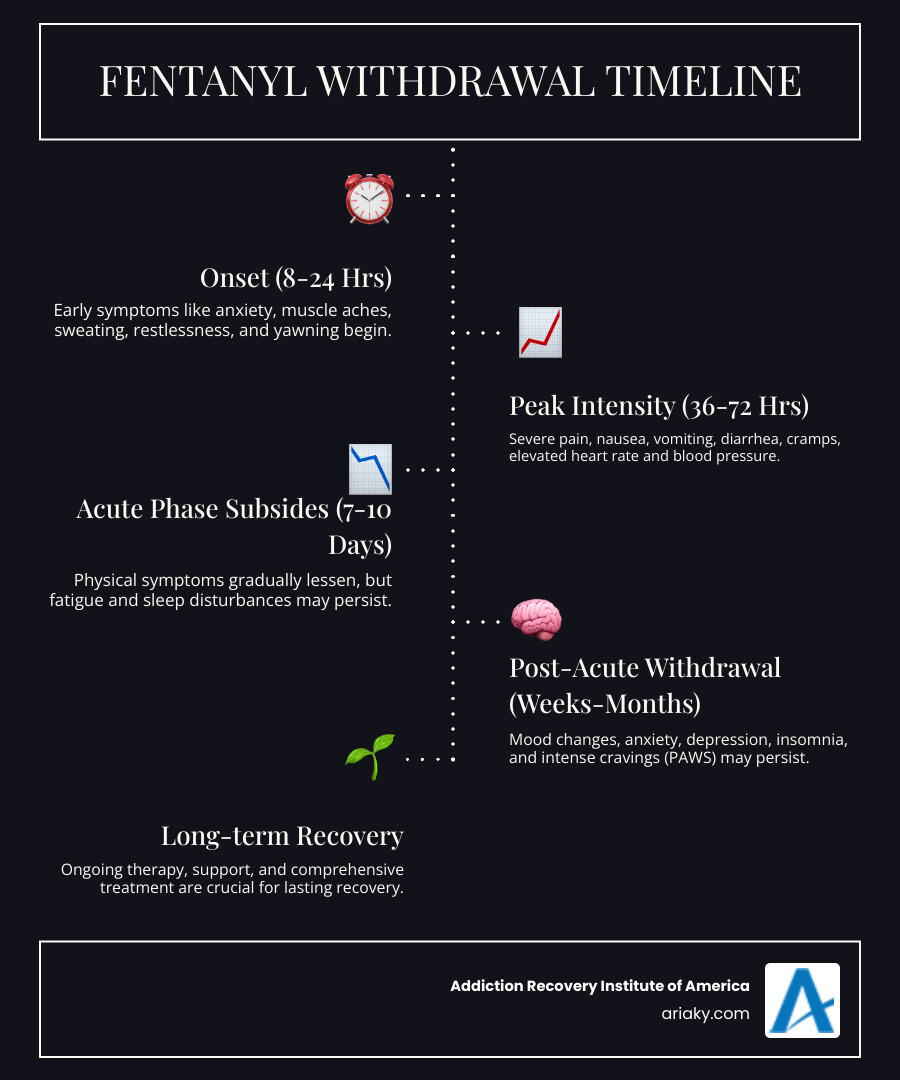
While every person’s fentanyl detox journey is unique, the timeline generally follows a predictable pattern.
- Onset (8-24 hours after last use): Early symptoms like anxiety, muscle aches, and sweating begin.
- Peak Intensity (36-72 hours after last use): This is the most difficult period. Symptoms reach their most severe point, including intense pain, nausea, and vomiting.
- Acute Phase (7-10 days): Physical symptoms continue for about a week to ten days, though they gradually subside after the peak. For some, this phase can last longer. This is similar to the timeline for Heroin Detox, but fentanyl’s intensity can be greater.
- Post-Acute Withdrawal Syndrome (PAWS): After the acute phase, psychological symptoms like mood swings, anxiety, sleep issues, and cravings can persist for weeks or months. PAWS is a major relapse risk, highlighting the need for ongoing support.
Factors Influencing Withdrawal Severity
The severity of fentanyl detox varies based on several factors, which is why personalized treatment is essential.
- Usage History: Higher doses and longer duration of use lead to stronger dependence and more severe withdrawal.
- Polysubstance Use: Using other substances like benzodiazepines or alcohol complicates withdrawal and increases health risks.
- Overall Health: Pre-existing physical and mental health conditions affect your body’s ability to handle the stress of detox.
- Individual Biology: Personal metabolism affects how quickly the drug is processed. A higher Body Mass Index (BMI) can also prolong withdrawal, as fentanyl is stored in fat tissue and released slowly.
- Fentanyl Potency: The strength of illicitly manufactured fentanyl varies, and exposure to more potent forms can lead to more challenging withdrawal.
Cookie-cutter approaches to Substance Use Disorder treatment fail because they don’t account for these individual variables.
Fentanyl vs. Heroin Withdrawal
While both are opioids, fentanyl and heroin withdrawal differ in key ways due to fentanyl’s unique properties.
- Potency: Fentanyl is about 50 times more potent than heroin, creating a more intense physical dependence more quickly.
- Onset: Withdrawal starts faster with fentanyl, often within 6-12 hours, compared to 8-24 hours for heroin.
- Intensity: Users often report that fentanyl withdrawal symptoms, especially pain and psychological distress, are more severe.
- Duration: The acute phase for fentanyl may last slightly longer (7-10 days) than for heroin (5-7 days).
- MAT Challenges: Fentanyl’s high potency and tendency to store in fat cells (lipophilicity) complicate the use of buprenorphine, increasing the risk of precipitated withdrawal. This requires specialized medical protocols.
- Overdose Risk: Fentanyl’s extreme potency makes the risk of a fatal overdose upon relapse significantly higher, especially after tolerance has dropped during detox.
These differences underscore why medically supervised fentanyl detox is essential for safety.
The Critical Role of Medically Supervised Fentanyl Detox
The fear of withdrawal is understandable, but you should not attempt fentanyl detox alone. The intensity and unpredictability of fentanyl withdrawal make professional medical support critical for your safety. This isn’t about willpower; it’s about providing your body with necessary medical care during a vulnerable time. At Addiction Recovery Institute of America, our Kentucky Detox Programs are built on the principle of safe, comfortable, and dignified detox.

Why Unmanaged Detox is Dangerous
Attempting fentanyl detox at home is dangerous. While opioid withdrawal is not typically fatal in the way alcohol withdrawal can be, its complications can be life-threatening.
- Dehydration and Electrolyte Imbalance: Severe vomiting and diarrhea can lead to imbalances that cause serious cardiac complications.
- Aspiration Pneumonia: Inhaling vomit can cause a severe lung infection requiring hospitalization.
- Severe Psychological Distress: The intense anxiety and depression during withdrawal increase the risk of self-harm.
- Fatal Overdose on Relapse: This is the greatest danger. After a few days of abstinence, tolerance drops dramatically. If you use the same amount as before, it can be a fatal dose. Research shows the first week after treatment is the highest-risk period.
Medically supervised fentanyl detox is designed to manage these risks and keep you safe.
What to Expect in a Professional Fentanyl Detox Program
When you arrive at Addiction Recovery Institute of America, our process is designed for your safety and comfort.
- Comprehensive Assessment: We conduct a thorough intake to understand your physical and mental health, addiction history, and use tools like the Clinical Opiate Withdrawal Scale (COWS) to create a personalized plan.
- 24/7 Medical Supervision: Our medical team monitors your vital signs around the clock, ready to respond immediately to any changes. This allows you to rest, knowing you are in safe hands.
- Symptom Management: We use a combination of medications and comfort measures to ease pain, reduce nausea, calm anxiety, and help you sleep.
- Nutritional Support: We provide nourishing meals and IV fluids as needed to help your body heal and regain strength.
- Transition Planning: From day one, we work with you on a plan for what comes next. Our Fentanyl Detox Program is the first step on a longer path to recovery.
Medications Used to Manage a Safe Fentanyl Detox
Medication-Assisted Treatment (MAT) is not “replacing one drug with another”; it is evidence-based medicine that saves lives by easing withdrawal and reducing cravings.
- Buprenorphine (e.g., Suboxone): This partial opioid agonist relieves withdrawal symptoms and cravings without producing a strong high. It helps the brain gradually adjust to functioning without fentanyl.
- Methadone: A full opioid agonist administered in carefully controlled doses, methadone is highly effective. Due to fentanyl’s potency, higher doses are often needed to manage withdrawal.
- Alpha-2 Adrenergic Agonists (Lofexidine, Clonidine): These non-opioid medications are effective at reducing physical symptoms like anxiety, sweating, muscle aches, and rapid heartbeat.
- Comfort Medications: We also use anti-nausea drugs, muscle relaxants, and sleep aids custom to your specific symptoms.
A critical role of our medical team is preventing precipitated withdrawal, a severe reaction that can occur if buprenorphine is given too early. Our experienced team in our Opioid Detox Program knows how to time these medications safely, which is especially important given fentanyl’s unique properties.
Beyond Detox: The Path to Lasting Recovery
Fentanyl detox is the beginning of recovery, not the end. Detox addresses the physical side of addiction, but addiction’s roots run deeper, affecting your thoughts, feelings, and coping mechanisms. Comprehensive treatment after detox is crucial for lasting recovery. This next phase is where you explore the causes of addiction and build the skills for a substance-free life. At Addiction Recovery Institute of America, our approach to Addiction Treatment is custom to your unique journey.

Transitioning to Comprehensive Treatment
After fentanyl detox, we help you find the right level of care.
- Residential Treatment: Offers 24/7 support in a structured, trigger-free environment, ideal for those with severe addiction or co-occurring conditions.
- Partial Hospitalization Program (PHP): Provides intensive daytime treatment while you return home in the evenings, balancing strong support with home life.
- Intensive Outpatient Program (IOP): Offers flexible, structured therapy several times a week, allowing you to maintain work, school, or family duties.
Our Kentucky Substance Abuse Treatment Center provides all these levels of care, ensuring your treatment plan evolves with your needs.
The Role of Therapy and Counseling
Therapy provides practical tools for changing your life.
- Individual and Group Therapy: One-on-one sessions help you understand addiction’s roots using methods like Cognitive Behavioral Therapy (CBT) and Dialectical Behavior Therapy (DBT). Group therapy provides powerful peer support, reminding you that you’re not alone.
- Family Counseling: This helps repair damaged relationships and educates loved ones on how to best support your recovery.
- Integrated Treatment: We incorporate trauma-informed care and treat co-occurring disorders like depression or anxiety simultaneously with addiction. Addressing both is essential for success. Our Rehab Centers in Kentucky provide this integrated care for your whole health.
Building a Support System for Relapse Prevention
Long-term recovery depends on a strong support system.
- Peer Support Groups: Programs like Narcotics Anonymous (NA) and non-12-step alternatives like SMART Recovery offer community, accountability, and proven frameworks for staying sober.
- Aftercare and Alumni Programs: We develop a detailed aftercare plan with you before you leave, connecting you to therapists and support groups. Our alumni programs keep you connected to a supportive community.
- Sober Living and Healthy Habits: Sober living environments can provide a structured, drug-free transition back to independent life. Building healthy habits like exercise, mindfulness, and new hobbies creates a strong foundation for your new life.
Recovery is possible. With comprehensive care that goes beyond detox, you can build a life you’re proud of.
Frequently Asked Questions about Fentanyl Detox
You probably have a lot of questions swirling around in your mind right now. That’s completely natural. We hear similar concerns from nearly everyone who reaches out to us about fentanyl detox. Let’s address some of the most common questions we receive, with honest, straightforward answers.
How long does fentanyl detox typically last?
The acute phase of fentanyl detox, with the most intense physical symptoms, typically lasts 7 to 14 days. Symptoms usually peak around days two to three. However, psychological symptoms known as Post-Acute Withdrawal Symptoms (PAWS)—like mood swings, anxiety, and cravings—can last for weeks or months. The exact timeline is unique to each person and depends on factors like usage history, metabolism, and overall health.
Can you safely detox from fentanyl at home?
No, we strongly advise against at-home fentanyl detox. The risks are too high. Unmanaged withdrawal can lead to dangerous complications like severe dehydration, electrolyte imbalances causing cardiac issues, and aspiration pneumonia. The psychological distress can be overwhelming. Most importantly, the intense discomfort makes relapse highly likely. Because your tolerance drops quickly, using your previous dose after a few days of abstinence can be fatal. Medically supervised detox is the only safe way to manage these risks.
Is detox enough to overcome fentanyl addiction?
No. Fentanyl detox is a critical first step, but it is not a cure. Detox addresses the body’s physical dependence, but addiction is a complex psychological condition. It involves ingrained behaviors, thought patterns, and emotional responses. Without addressing these underlying issues through comprehensive treatment, the risk of relapse is extremely high. True, lasting recovery requires therapy, counseling, and building a strong support system to learn new coping skills and address the root causes of addiction. One study showed a 91% relapse rate among those who did not participate in aftercare services after inpatient treatment.
Take the First Step Towards a New Life
If you’re reading this, you’ve already taken a courageous step. Recovery from fentanyl addiction is absolutely possible, and you don’t have to do it alone.
At Addiction Recovery Institute of America, we’ve guided countless individuals through fentanyl detox and into lasting recovery. Our medically supervised detox programs in Kentucky and West Palm Beach are designed to keep you safe and comfortable. But we know detox is just the beginning.
We offer a full continuum of care, from residential and outpatient programs to individual and family therapy, to address the whole person. We help you understand the roots of addiction, develop healthy coping skills, and build a strong foundation for a substance-free future.
The hardest part is often making the first call. If you or a loved one is struggling, don’t wait. We’re here to answer your questions and help you take that first step toward the life you deserve.
Begin your recovery journey with our fentanyl detox program in Kentucky