

Finding Hope and Healing in the Bluegrass State
Kentucky rehab centers offer a lifeline for individuals and families struggling with substance use disorders. With over 530 drug and alcohol treatment facilities across the state, Kentucky provides a wide range of recovery options—from medical detox and residential programs to outpatient care and faith-based recovery.
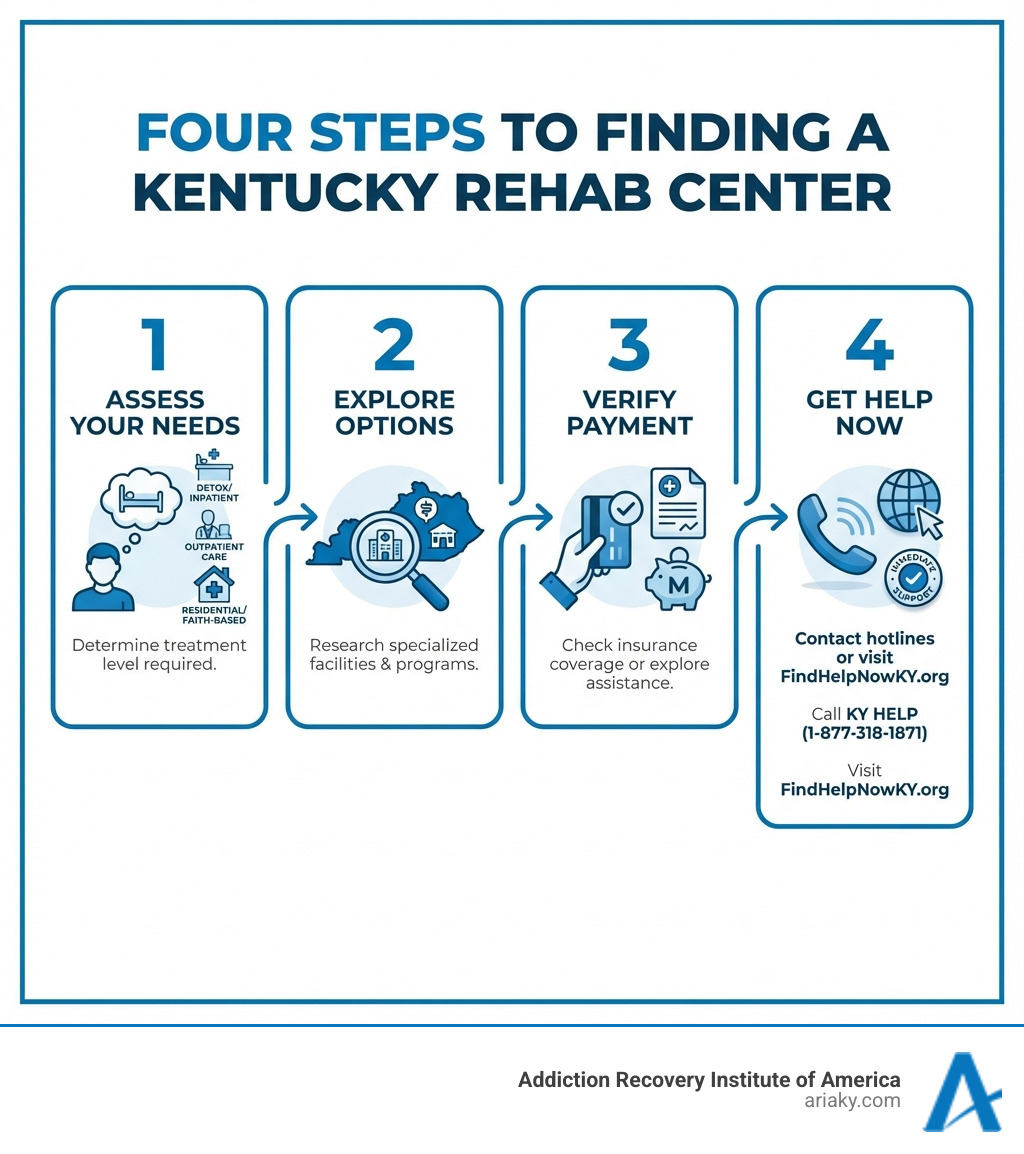
Quick Answer: Finding a Kentucky Rehab Center
- Assess Your Needs – Determine the level of care required (detox, inpatient, outpatient)
- Explore Your Options – Research facilities that specialize in your substance of concern
- Verify Payment – Check insurance coverage or explore Medicaid, sliding-scale, and free options
- Get Immediate Help – Call statewide hotlines like KY HELP (1-877-318-1871) or use FindHelpNowKY.org
The need for accessible addiction treatment in Kentucky is real and urgent. Between 2021 and 2022, 6.4% of adolescents ages 12-17 reported using illicit drugs monthly. During the 2022-2023 school year alone, over 28,370 behavior incidents in Kentucky schools involved drugs, alcohol, or tobacco.
But there is hope. Kentucky has built a robust network of treatment resources, from nationally recognized centers to state-funded programs and innovative recovery initiatives. Whether you’re seeking help for yourself or a loved one, understanding your options is the first step toward lasting recovery.
The journey from crisis to sobriety starts with finding the right support. Kentucky’s treatment landscape includes facilities that accept most major insurance plans, offer same-day admissions, and provide specialized care for co-occurring mental health disorders. Many centers feature holistic approaches that address not just the addiction, but the whole person—physically, emotionally, and spiritually.
Kentucky rehab centers vocab to learn:
Understanding Addiction Treatment Programs in Kentucky
When starting on the path to sobriety, understanding the different types of addiction treatment programs available is crucial. Addiction is a complex condition, and what works for one person may not work for another. That’s why Kentucky rehab centers offer a comprehensive continuum of care, designed to provide individualized treatment that addresses the unique needs of each person. This continuum typically begins with detoxification and can extend through various levels of inpatient and outpatient care, culminating in robust aftercare and sober living support.
Finding the right level of care is a deeply personal decision, often made in consultation with addiction professionals. The goal is always to equip individuals with the tools and support necessary for lasting sobriety. For general information and a starting point, the SAMHSA’s National Helpline is an excellent resource, offering confidential help for mental health and substance use disorders.

Medical Detoxification
The very first step for many on their recovery journey is medical detoxification, often simply called “detox.” This crucial phase involves safely managing the physical withdrawal symptoms that occur when someone stops using drugs or alcohol. For substances like alcohol, opioids, and benzodiazepines, withdrawal can be not only uncomfortable but also medically dangerous.
In a medical detox setting, individuals receive 24/7 medical supervision. Our experienced medical teams monitor vital signs, administer medications to alleviate discomfort and prevent complications, and ensure a safe and stable transition. This controlled environment is essential for a comfortable and effective start to treatment. While detox can be the most intensive and often the most expensive phase of treatment due to the constant medical care, it lays the groundwork for all subsequent recovery efforts.
Inpatient and Residential Treatment
After detox, or as an initial step for those not requiring immediate medical stabilization, inpatient and residential treatment programs offer an immersive and structured environment for recovery. These programs provide 24/7 care and support, removing individuals from their daily triggers and allowing them to focus entirely on healing.
In a residential setting at Kentucky rehab centers, days are filled with therapy sessions—individual, group, and family—educational workshops, and holistic activities. This intensive structure helps individuals develop coping mechanisms, address underlying issues contributing to their addiction, and build a strong foundation for a sober life. This type of long-term care is often ideal for individuals with severe substance use disorders or those who have experienced multiple relapses, as it offers the highest level of support and supervision.
Outpatient Programs (PHP & IOP)
For those who have completed a residential program, or whose addiction severity allows for a less intensive approach, outpatient programs offer a flexible yet structured path to recovery. These programs allow individuals to attend therapy and receive support while living at home and maintaining work, school, or family responsibilities.
- Partial Hospitalization Programs (PHP) are the most intensive form of outpatient care, often involving several hours of therapy per day, multiple days a week. While not requiring overnight stays, PHP provides a robust treatment schedule similar to inpatient care.
- Intensive Outpatient Programs (IOP) offer a step down from PHP, with fewer hours per week but still providing significant therapeutic engagement.
- Standard outpatient programs offer the lowest level of structured care, with weekly individual or group sessions.
These programs are vital for integrating recovery into daily life, allowing individuals to practice new skills in real-world settings with ongoing professional support.
Aftercare and Sober Living
Recovery is a lifelong journey, not a destination. That’s why aftercare and sober living options are critical components of a comprehensive treatment plan at Kentucky rehab centers. After completing a formal treatment program, individuals need continued support to prevent relapse and solidify their sobriety.
Aftercare services can include ongoing therapy, support groups (like 12-step programs or SMART Recovery), alumni programs, and mentorship. Sober living homes provide a supportive, drug- and alcohol-free environment where individuals can gradually transition back into independent living. These homes often have house rules, peer support, and accountability structures that reinforce the principles learned in treatment. Programs like Recovery Kentucky also address the critical need for stable housing as part of the recovery process, helping individuals rebuild their lives from the ground up.
Navigating the Cost of Rehab and Payment Options
Understanding the financial aspects of addiction treatment can feel overwhelming, but it shouldn’t be a barrier to seeking help. While Kentucky is ranked 34th nationwide in terms of addiction treatment affordability, a wide array of payment options exist to make recovery accessible. The total cost of rehab can vary significantly based on the type of program, its duration, the amenities offered, and the facility’s location.

Using Private Health Insurance
Many Kentucky rehab centers, including our own, work with most major private health insurance providers. If you have private health insurance, it’s highly probable that a significant portion of your addiction treatment will be covered. Key insurance carriers in Kentucky often include United Healthcare, Humana, Aetna Better Health of Kentucky, and Elevance Health.
It’s important to understand your policy’s specifics, including in-network versus out-of-network benefits, deductibles, co-pays, and any pre-authorization requirements. Our admissions team can help you verify your benefits and understand your coverage, making the process smoother and less daunting.
State-Funded and Low-Cost Options
For those without private insurance or with limited financial resources, Kentucky offers numerous state-funded and low-cost treatment options. These resources are designed to ensure that financial constraints do not prevent individuals from accessing life-saving care.
- Medicaid: Many Kentucky rehab centers accept Medicaid insurance coverage, providing access to comprehensive treatment for eligible individuals.
- Sliding-Scale Fees: A significant number of facilities offer sliding-scale fees, adjusting the cost of treatment based on an individual’s income and ability to pay.
- Free or Low-Cost Treatment: Over 190 facilities in Kentucky offer free or low-cost treatment, with a handful even providing free treatment for all clients. These programs are often supported by state funding and grants.
- UNITE Treatment Vouchers: Operation UNITE provides treatment vouchers to help low-income individuals in its 32-county service area cover the costs of residential treatment.
- Recovery Kentucky: This state initiative, often in partnership with the Kentucky Housing Corporation, provides housing and recovery services, targeting individuals struggling with substance abuse and chronic homelessness.
These options demonstrate Kentucky’s commitment to making recovery accessible to all its residents, regardless of their economic situation.
How to Verify Insurance and Get Immediate Help
When you’re ready to seek help, getting started should be as straightforward as possible. Many Kentucky rehab centers offer same-day admissions, recognizing the urgency of addiction.
To verify your insurance, you can often do so directly through the rehab center’s website or by calling their admissions line. Our team, for example, is available 24/7 to guide you through the process, answer your questions, and help you understand your coverage.
For immediate assistance and to explore available treatment openings across the state, several statewide resources are at your fingertips:
- KY HELP Statewide Call Center: Available Monday through Friday (7:00 am – 10:00 pm EST/EDT) and Saturday/Sunday (8:30 am – 5:30 pm EST/EDT) at 1-877-318-1871.
- Kentucky Opioid Assistance and Resource Hotline (KY-OAR): For after-hours assistance, call 1-800-854-6813.
- FindHelpNowKY.org: This website provides near real-time availability of treatment openings for substance use disorder facilities, recovery houses, and mental health providers across Kentucky.
- Operation UNITE’s Treatment Referral & Help Line: Call 1-866-908-6483 during business hours for assistance and to inquire about UNITE Treatment Vouchers.
- KSP Angel Initiative: A truly unique program, you can walk into any of the 16 Kentucky State Police Posts across the Commonwealth and ask for help. An “Angel” will connect you with treatment centers and health professionals.
These resources ensure that help is always within reach, bridging the gap between crisis and a path to recovery.
Specialized Programs in Kentucky Rehab Centers
Addiction is rarely a one-size-fits-all problem, and neither is its solution. Kentucky rehab centers excel in offering specialized programs custom to address the unique complexities of each individual’s journey. These programs often incorporate holistic treatment approaches and evidence-based therapies, recognizing that true healing extends beyond merely stopping substance use.
Treating Co-Occurring Disorders (Dual Diagnosis)
It’s common for individuals struggling with addiction to also experience co-occurring mental health disorders, such as anxiety, depression, or PTSD. This is known as a “dual diagnosis,” and it requires integrated care that addresses both conditions simultaneously. Treating one without the other often leads to incomplete recovery and a higher risk of relapse.
Many Kentucky rehab centers, including our own, are equipped to provide comprehensive dual diagnosis treatment. This means that while you’re receiving care for your substance use disorder, you’re also getting expert mental health support. The Department for Behavioral Health, Developmental and Intellectual Disabilities in Kentucky also provides resources for integrated mental health and substance use disorder treatment, highlighting the state’s commitment to this critical area.
Substance-Specific Programs
Certain substances require specialized treatment approaches due to their unique physiological and psychological effects. Kentucky rehab centers offer targeted programs for a range of substances, ensuring that individuals receive the most effective care for their specific addiction.
For example, specialized programs exist for:
- Fentanyl addiction: Addressing the potent and highly addictive nature of this opioid.
- Methamphetamine addiction: Focusing on the intense cravings and psychological aspects.
- Opiate addiction: Often incorporating Medication-Assisted Treatment (MAT) alongside therapy.
- Cocaine addiction: Tailoring interventions to the stimulant’s impact on the brain.
Kentucky has also implemented initiatives like the Kentucky Opioid Response Effort (KORE) to combat the opioid crisis specifically, expanding access to evidence-based prevention, treatment, and recovery services across high-risk regions of the state.
The Role of Faith-Based Recovery
For many, spirituality plays a profound role in healing and recovery. Kentucky rehab centers recognize this, with several prominent programs offering faith-based or Christian-rooted approaches to addiction treatment. These programs integrate spiritual wellness into the recovery process, believing that a connection to a higher power can be a powerful catalyst for change. Many facilities offer programs that combine evidence-based therapies with spiritual guidance, prayer, and community support grounded in faith. This holistic approach aims to address the mind, body, and spirit, providing a deeper sense of purpose and resilience in recovery.
Innovative Recovery Models
Beyond traditional therapy, Kentucky rehab centers are at the forefront of innovative recovery models that focus on long-term sustainability and reintegration into society. A compelling example is the focus on workforce development, vocational training, and job placement, helping individuals transition from a state of crisis to a stable and fulfilling career.
These programs equip individuals with essential life skills, educational opportunities, and practical job training, fostering independence and self-sufficiency. For instance, partnerships like the South Eastern Beauty Academy Peer Support Program demonstrate creative ways to engage individuals in vocational paths. The Reentry Service Center (RSC) program within the Department of Corrections also focuses on job responsibilities and daily living skills, aiding former inmates in successful reintegration. By addressing occupational needs and providing real-world skills, these innovative models help individuals build a new, sober life with purpose and opportunity.
Finding the Right Rehab Center Across Kentucky
Choosing the right Kentucky rehab center is a pivotal decision on the road to recovery. Fortunately, our state boasts a robust network of treatment facilities, particularly well-served in several key cities. Whether you’re seeking care close to home or prefer a change of scenery, options abound.
Key cities in Kentucky with strong treatment networks include:
- Louisville
- Lexington
- Bowling Green
- Covington
- Ashland
- Florence
- Morehead
- Newport
- Owensboro
- Paducah
These areas offer a range of services, from medical detox to comprehensive residential and outpatient programs, ensuring that quality care is accessible throughout the Commonwealth.
What to Look for in Quality Kentucky Rehab Centers
When evaluating Kentucky rehab centers, knowing what constitutes quality care can make all the difference. We believe that certain standards are non-negotiable for effective and lasting recovery:
- Accreditation and Certification: Look for facilities that are accredited by recognized bodies like CARF (Commission on Accreditation of Rehabilitation Facilities) and are AODE-certified (Alcohol and Other Drug Entity). These certifications indicate adherence to high standards of care and ethical practices. Our own center, ARIA Kentucky, is proud to be both accredited and AODE-certified.
- Individualized Care Plans: Effective treatment is never generic. A quality center will develop a personalized treatment plan custom to your specific needs, history, and goals.
- Licensed and Qualified Staff: Ensure the center employs licensed therapists, medical professionals, and addiction counselors with appropriate credentials and experience.
- Evidence-Based Practices: Treatment should be grounded in scientific research, utilizing therapies like Cognitive Behavioral Therapy (CBT), Dialectical Behavior Therapy (DBT), and Motivational Interviewing, which have proven efficacy in treating addiction.
- Comprehensive Services: A good center offers a full continuum of care, from detox through aftercare, and can address co-occurring mental health disorders.
Statewide Resources and Crisis Support
Kentucky has established a comprehensive web of resources and crisis support systems to help individuals and families steer the complexities of addiction. These resources are designed to provide immediate help, facilitate access to treatment, and offer ongoing support throughout the recovery journey.
Here are some invaluable statewide resources:
- KY HELP Statewide Call Center: 1-877-318-1871
- Kentucky Opioid Assistance and Resource Hotline (KY-OAR): 1-800-854-6813
- Operation UNITE: Offers a Treatment Referral & Help Line at 1-866-908-6483 and provides UNITE Treatment Vouchers.
- KSP Angel Initiative: Walk into any Kentucky State Police Post for immediate connection to treatment.
- FindHelpNowKY.org: An online portal for finding available treatment openings.
- UNSHAME Kentucky: A statewide campaign to destigmatize opioid use disorder by providing education and sharing recovery stories.
- Kentucky Opioid Response Effort (KORE): A comprehensive state initiative to combat the opioid crisis.
- Recovery Kentucky: Provides housing and recovery services for individuals facing substance abuse and homelessness.
- Drug Court Programs: Offer an alternative to incarceration for individuals with substance use disorders, integrating treatment with the justice system.
- SAMHSA Behavioral Health Treatment Services Locator: A national tool to find treatment facilities.
- Department for Behavioral Health, Developmental and Intellectual Disabilities Provider Directory: A comprehensive list of behavioral health providers in Kentucky.
These resources underscore Kentucky’s proactive approach to addressing the addiction crisis and ensuring that no one has to face recovery alone.
How to Choose Between Kentucky Rehab Centers
Making the final choice among the many excellent Kentucky rehab centers can feel daunting. We recommend a thoughtful approach, focusing on what truly matters for your or your loved one’s long-term success:
- Assess Personal Needs: Start by clearly identifying your specific needs. Do you require medical detox? Is dual diagnosis treatment essential? Are you seeking a faith-based program?
- Location Considerations: While staying close to home offers family support, some find a change of environment beneficial. Consider your comfort level with travel and how location might impact your recovery.
- Program Philosophy: Research the center’s treatment philosophy. Does it align with your values and beliefs? Do they emphasize holistic care, evidence-based practices, or spiritual growth?
- Staff Qualifications: Inquire about the credentials, experience, and licensing of the clinical and medical staff. A highly qualified team is crucial for effective treatment.
- Asking the Right Questions: Don’t hesitate to ask about success rates, aftercare planning, family involvement, and the daily schedule. A transparent center will welcome your questions.
The goal is to find a place where you feel safe, supported, and empowered to heal. Trust your instincts and choose the environment that feels right for you.
Frequently Asked Questions about Kentucky Rehab Centers
We understand you likely have many questions as you explore options for recovery. Here are some of the most common inquiries we receive regarding Kentucky rehab centers:
How long does rehab in Kentucky typically last?
The duration of rehab programs in Kentucky can vary significantly, as it’s highly individualized to each person’s needs and the severity of their substance use disorder.
- Detox: Typically lasts a few days to a week.
- Residential/Inpatient: Commonly ranges from 30, 60, or 90 days, with some long-term options extending for several months or even a year.
- Outpatient (PHP/IOP): Can last from a few weeks to several months, depending on the intensity and progress.
The length of stay is determined by clinical assessments, individual progress, and aftercare planning, aiming to provide the most effective path to lasting sobriety.
Can someone be forced to go to rehab in Kentucky?
While voluntary admission is always preferred, Kentucky law does provide provisions for involuntary commitment to treatment under certain circumstances, particularly when an individual poses a danger to themselves or others due to their substance use. This is often facilitated through mechanisms like Kentucky’s Drug Court programs, which integrate treatment with the justice system, offering an alternative to incarceration.
These measures are typically a last resort, used when a loved one’s addiction has reached a critical point where their judgment is severely impaired, and they are unwilling or unable to seek help on their own. The process involves legal proceedings and clinical evaluations to ensure the individual’s rights are protected while prioritizing their health and safety.
What happens after I complete a rehab program?
Completing a rehab program is a monumental achievement, but it’s just one chapter in the lifelong journey of recovery. Effective Kentucky rehab centers emphasize robust aftercare planning to support long-term sobriety and prevent relapse. This crucial phase often includes:
- Sober Living Homes: Providing a structured, drug- and alcohol-free transitional living environment.
- Support Groups: Participation in 12-step programs (like AA or NA) or other peer-led groups (like SMART Recovery) offers ongoing community and accountability.
- Continued Therapy: Regular individual or group therapy sessions can help reinforce coping skills, address new challenges, and provide continued emotional support.
- Alumni Programs: Many rehab centers offer alumni networks, fostering a sense of community and providing continued connection to the treatment facility and its support systems.
- Building a Sober Network: Cultivating relationships with supportive, sober individuals is vital for sustained recovery.
The goal of aftercare is to empower individuals to apply the tools learned in treatment to their everyday lives, building a strong foundation for a fulfilling and sober future.
Conclusion: Take the First Step on Your Recovery Journey
The journey to sobriety is a testament to resilience, courage, and hope. In Kentucky, a vast and compassionate network of Kentucky rehab centers stands ready to guide you or your loved one toward lasting recovery. From comprehensive medical detox and immersive residential programs to flexible outpatient care and innovative workforce development initiatives, the resources are here.
We understand that taking the first step can be daunting, but remember: recovery is possible. The importance of personalized care, custom to your unique needs, cannot be overstated. At centers like Addiction Recovery Institute of America Kentucky, our focus is on providing accredited, individualized care for lasting sobriety, empowering you to reclaim your life. We are committed to being a guide of hope, offering a path to healing for every individual who walks through our doors.
Don’t let another day pass in the shadow of addiction. Reach out, explore your options, and find the path to a brighter, healthier future.