

Understanding Your Options for Lasting Sobriety
Is outpatient addiction treatment effective? Yes, research shows that outpatient programs are as effective as inpatient treatment for many individuals with substance use disorders. Studies indicate that outpatient care can achieve comparable outcomes in treatment completion, abstinence rates, and long-term recovery—particularly for those with mild to moderate addiction and a stable support system.
Key effectiveness factors:
- Treatment completion: Patients in outpatient programs who stay for 90+ days show significant improvements in recovery outcomes
- Cost-effective care: Outpatient treatment costs nearly half that of inpatient care while delivering similar results for appropriately matched individuals
- Real-world application: Clients can immediately practice recovery skills in their daily environment while maintaining work, school, and family responsibilities
- Comparable outcomes: For alcohol and opioid use disorders, outpatient care demonstrates similar or better detoxification completion and abstinence rates in several studies
- Success depends on fit: The most effective treatment matches the individual’s severity of addiction, support system, and personal circumstances
While addiction and substance misuse are major problems in the United States, a survey by the Substance Abuse and Mental Health Services Administration found that more than 95% of people who needed drug rehab in 2023 didn’t receive it. This gap highlights a critical need for accessible treatment options.
Outpatient treatment bridges this gap by offering flexibility and lower costs while still providing structured, evidence-based care. It allows individuals to receive therapy, medical support, and peer connection without leaving their homes or taking extended time away from their responsibilities.
The effectiveness of outpatient care isn’t about it being universally “better” than inpatient treatment. It’s about finding the right level of care for your specific situation. Some people need the intensive, 24-hour structure of residential treatment. Others thrive with the flexibility and real-world integration that outpatient programs provide.
Understanding what makes outpatient treatment work—and for whom—is essential for making an informed decision about your recovery path.
Understanding Outpatient Addiction Treatment
When we talk about outpatient addiction treatment, we’re referring to programs that allow you to receive comprehensive care for substance use disorder while continuing to live at home. Unlike inpatient or residential programs, you don’t stay overnight at a facility. Instead, you attend scheduled therapy sessions, group meetings, and other treatments during the day or evening, fitting them around your daily responsibilities like work, school, or family commitments.
This model provides structured support and therapeutic interventions, enabling you to maintain a sense of normalcy in your life while actively pursuing recovery. It’s about integrating healing into your existing routine, building resilience in the environment where you live. For a deeper dive into what this means, explore our guide on What Is Outpatient Addiction Treatment?.

Types of Outpatient Programs
Outpatient treatment isn’t a one-size-fits-all solution; it encompasses a spectrum of intensity levels to meet diverse needs. The primary types of outpatient programs we offer include:
- Partial Hospitalization Program (PHP): Also known as “day treatment,” PHP is the most intensive form of outpatient care. It typically involves 5-6 hours of treatment per day, 5-6 days a week. While you return home at night, PHP provides a high level of clinical support and structure, often serving as a step-down from inpatient care or an initial treatment for those needing significant support without 24/7 supervision. Learn more about PHP Drug Treatment.
- Intensive Outpatient Program (IOP): IOP offers a significant level of care, usually involving 3 hours of treatment per day, 3-5 days a week. It’s a step down from PHP, providing flexibility for individuals to balance treatment with work, school, or family obligations. IOPs focus on relapse prevention, coping skills, and building a supportive community. We’re proud to offer a Best Intensive Outpatient Program Kentucky residents can rely on.
- Standard Outpatient Care: This is the least intensive level of outpatient treatment, typically involving fewer hours per week (e.g., 1-2 hours) of individual or group therapy. It’s suitable for individuals with mild substance use disorders, those transitioning from more intensive programs, or as ongoing support in long-term recovery.
- Continuing Care: These programs, sometimes called aftercare, provide ongoing support once primary treatment is completed. They might include weekly group meetings, individual counseling, or connections to community resources, helping maintain sobriety and prevent relapse.
What to Expect During Treatment
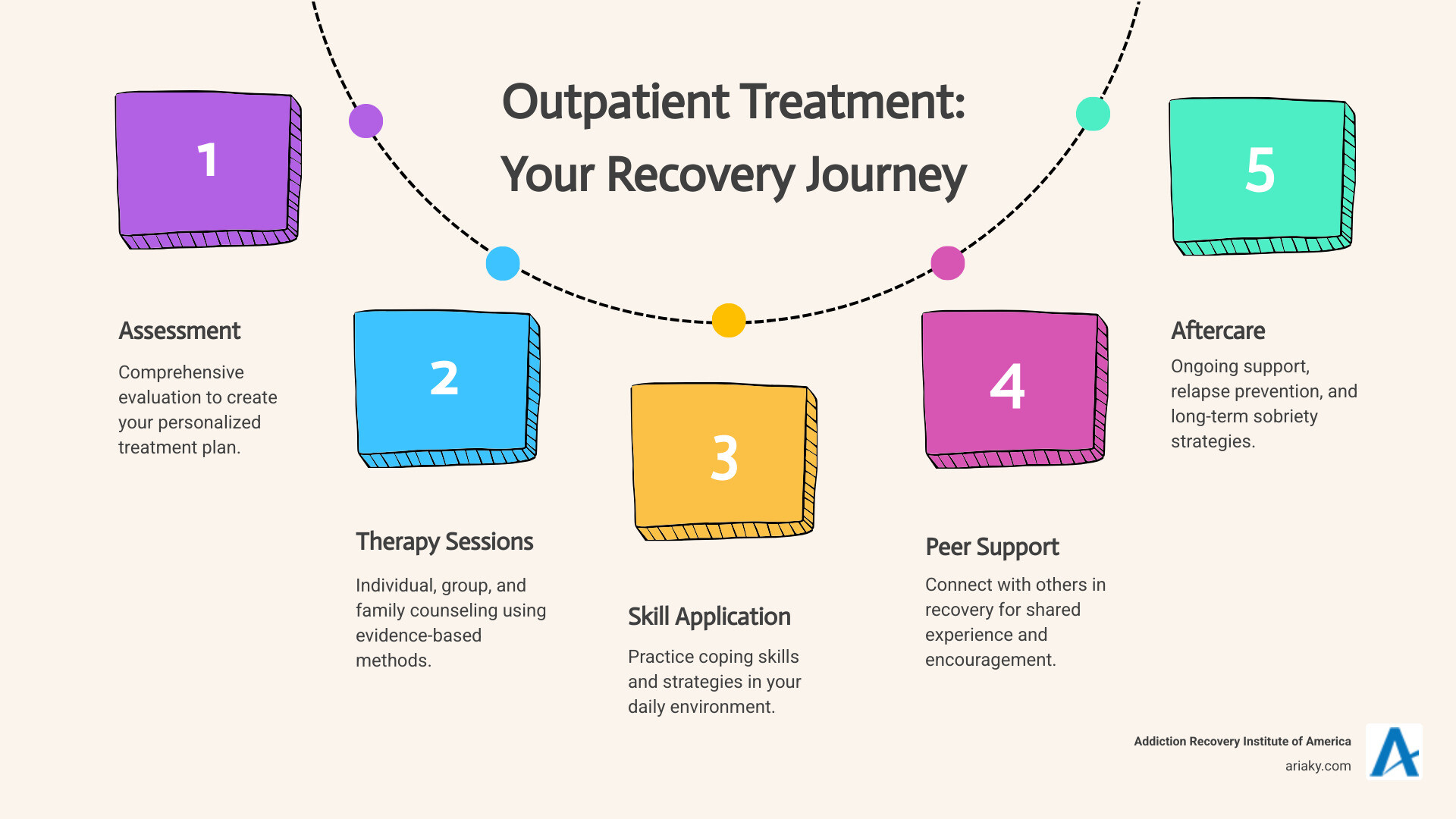
Starting on an outpatient treatment program with us begins with a thorough initial assessment. This helps our team understand your unique needs, the severity of your substance use disorder, any co-occurring mental health conditions, and your personal circumstances. Based on this, we’ll develop an Individualized Addiction Treatment plan custom specifically for you.
During your program, you can expect a variety of therapeutic services:
- Individual Therapy: One-on-one sessions with a therapist to explore the root causes of your addiction, develop coping mechanisms, address trauma, and set personal recovery goals.
- Group Counseling: A cornerstone of outpatient treatment, group sessions provide a supportive environment where you can share experiences, learn from peers, and practice new skills in a safe setting.
- Family Therapy: Addiction impacts the whole family. Family therapy sessions help mend relationships, improve communication, and educate loved ones on how to support your recovery journey.
- Evidence-Based Therapies: We use proven therapeutic approaches such as Cognitive Behavioral Therapy (CBT), Dialectical Behavior Therapy (DBT), and Motivational Interviewing to equip you with effective tools for long-term sobriety. Explore more about our Addiction Therapy Kentucky offers.
- Medication-Assisted Treatment (MAT): For some, MAT, which combines FDA-approved medications with counseling and behavioral therapies, can be a vital component of treatment, especially for opioid and alcohol use disorders.
- Case Management: Our case managers help coordinate your care, connect you with community resources, and assist with practical needs like housing, employment, or legal support, ensuring a holistic approach to your recovery.
- Peer Support: Engaging with peer support specialists—individuals with lived experience in recovery—provides invaluable guidance, empathy, and a powerful sense of connection.
- Regular Drug Screening: To ensure accountability and monitor progress, regular drug screenings are typically part of an outpatient program.
Evaluating the Effectiveness: Outpatient vs. Inpatient Treatment
When considering treatment options, a common question arises: is outpatient addiction treatment effective compared to its inpatient counterpart? Both models aim for lasting sobriety, but they achieve it through different structures and support levels. Understanding these differences helps us determine the best fit for your unique journey.
| Feature | Inpatient/Residential Treatment | Outpatient Treatment |
|---|---|---|
| Environment | 24/7 supervised facility, removed from triggers | Live at home, steer daily life, practice skills in real-time |
| Intensity | Highly structured, constant medical/emotional support | Structured sessions, varying intensity (PHP, IOP, standard OP) |
| Flexibility | Limited; requires time away from work, family, etc. | High; allows continuation of daily responsibilities |
| Cost | Generally higher due to 24/7 care, accommodation, and staffing | Generally lower, often nearly half the cost of inpatient |
| Support Level | Immersive, immediate access to staff and peers | Regular sessions, access to support network, self-help groups |
| Ideal For | Severe SUD, unstable home, co-occurring disorders, failed OP | Mild-moderate SUD, strong support, stable environment, high motivation |
For a more comprehensive look at these distinctions, please refer to our guide on Inpatient vs. Outpatient.
Is outpatient addiction treatment effective compared to residential care?
Research consistently demonstrates that is outpatient addiction treatment effective for many individuals, with outcomes often comparable to inpatient care. A review of Treatment Programs for Substance Use Disorder highlighted several key findings:
- Alcohol Use Disorder Outcomes: For patients with alcohol use disorders, some studies with short follow-up periods (one to two months) found better detoxification completion and abstinence rates in outpatient care compared to inpatient care. While a longer-term study showed inpatients consumed less alcohol post-treatment, the initial advantage of inpatient care for severe alcohol dependence tended to decrease over time.
- Opioid Use Disorder Guidelines: Evidence-based guidelines, such as those from the British Columbia Ministry of Health, recommend that withdrawal management for most patients with opioid use disorder can be provided more safely in an outpatient rather than inpatient setting. This suggests that for certain conditions, outpatient care is not just effective but potentially preferable.
- Treatment Completion: While moderate to weak evidence suggests residential treatment patients might be more likely to complete treatment and be abstinent for general SUDs, this doesn’t diminish the effectiveness of outpatient programs for appropriately selected individuals. For instance, our 2024 KORTOS Fact Sheet on Opioid Treatment Programs in Kentucky shows significant reductions in illicit drug use, prescription opioid misuse, and severe substance use disorder criteria among clients over approximately six months of outpatient care. Clients also reported improved mental health and quality of life.
- Patient Preference: Interestingly, the majority of patients often prefer outpatient treatment over inpatient treatment. This preference, when incorporated into shared decision-making, can significantly improve engagement and retention, which are crucial for positive outcomes.
- Long-term vs. Short-term Studies: The nuances of effectiveness often depend on the follow-up period and the severity of the substance use disorder. While inpatient care might show initial benefits for more severe cases, outpatient care, especially when integrated into a robust continuum of care, can yield similar long-term results.
The goal isn’t to declare one treatment universally “better” than the other, but rather to match the individual with the most appropriate level of care. To understand more about how these two primary treatment modalities differ, check out How Residential Treatment Drug Addiction Differs From Outpatient.
Key Benefits of the Outpatient Approach
The effectiveness of outpatient addiction treatment is significantly bolstered by its unique advantages, particularly for individuals who meet the appropriate criteria. We find that these benefits contribute greatly to sustainable recovery:
- Affordability: Outpatient rehab programs are generally more affordable than inpatient care because clients don’t have to pay for accommodation costs and 24/7 supervision. This financial accessibility can allow for longer durations of care, which is often linked to better long-term outcomes.
- Flexibility for Work and School: One of the most compelling benefits is the ability to continue with daily life. Outpatient programs are flexible, with schedules that can work around employment, educational pursuits, and other commitments. This means you can pursue recovery without putting your life on hold.
- Maintaining Family Responsibilities: Staying at home allows individuals to remain connected to their families and continue fulfilling parental or spousal duties. This access to your family and support network can be a powerful motivator and a critical component of your recovery journey.
- Access to Real-World Support Networks: By living at home, you maintain access to your existing support system—family, friends, and community. This immediate, real-world support is invaluable as you steer the challenges of recovery.
- Applying Coping Skills Immediately: Outpatient treatment provides a unique opportunity to practice newly learned coping mechanisms and relapse prevention strategies in your everyday environment. This immediate application of skills in real-life situations helps solidify healthy behaviors and builds confidence in managing triggers outside the treatment setting.

Is Outpatient Addiction Treatment Effective for You? Key Considerations
Choosing the right treatment path is a deeply personal decision. While we’ve established that is outpatient addiction treatment effective for many, it’s crucial to assess if it’s the right fit for you. This involves a careful self-assessment of your addiction’s severity, your personal motivation, and the stability of your home environment.
Who Is the Ideal Candidate for Outpatient Treatment?
Outpatient treatment is not for everyone, but for the right individual, it can be incredibly powerful. We generally find that the ideal candidates for outpatient treatment possess several key characteristics:
- Mild to Moderate Substance Use Disorder (SUD): Individuals whose addiction is not yet severe enough to require 24-hour medical supervision or a highly structured environment often thrive in outpatient settings.
- Strong Support System: Having supportive family members or friends who are committed to your recovery and can provide a safe, drug-free home environment is a significant advantage.
- Stable Living Environment: A stable and supportive home life, free from significant stressors or individuals actively using substances, is crucial for success in an outpatient program.
- High Motivation to Recover: Your commitment and internal motivation to achieve sobriety are paramount. Outpatient treatment requires a high degree of personal accountability and active participation.
- Not Experiencing Severe Withdrawal: If you are at risk of severe or complicated withdrawal symptoms, a medical detox program is typically necessary before transitioning to outpatient care. We offer comprehensive Medical Detox services to ensure your safety and comfort.
- Prior Treatment Experience: For some, outpatient treatment serves as a step-down from a more intensive inpatient program, providing continued support as they reintegrate into daily life.
The Substance Abuse and Mental Health Services Administration (SAMHSA) advisory notes that clients suitable for Intensive Outpatient Treatment (IOP) typically have little risk of acute intoxication or withdrawal, manageable physical health conditions, mild or outpatient-treatable emotional/behavioral/cognitive conditions, and an environment that, while perhaps not fully supportive, can be managed with added structure.
Addressing Challenges and Co-Occurring Conditions
While the benefits are clear, we also acknowledge the potential challenges of outpatient treatment. The lack of 24/7 supervision means you’ll be navigating triggers and cravings in your daily life, which can be difficult. This is why a strong support system and the immediate application of coping skills are so vital.
A critical aspect of effective outpatient treatment is addressing co-occurring mental health conditions. Many individuals struggling with substance use disorder also experience mental health challenges such as anxiety, depression, or trauma. These “dual diagnoses” require integrated treatment, where both conditions are addressed simultaneously.
Our outpatient programs are designed to provide this integrated care. We offer specialized therapies, including those for Womens Trauma Treatment, to ensure that underlying mental health issues are treated alongside the addiction. By treating the whole person—mind, body, and spirit—we reinforce the effectiveness of the addiction treatment and build a stronger foundation for lasting recovery. This holistic approach is essential because mental illnesses and addictions are rooted in a complex interplay of biology, psychology, and life experience.
The Crucial Role of Aftercare in Sustaining Recovery
We often emphasize that addiction recovery is a marathon, not a sprint. Treatment doesn’t end when you complete your outpatient program; it’s a lifelong process that requires ongoing commitment and support. This is where aftercare, also known as the Continuum of Care, plays an absolutely crucial role in reinforcing the effectiveness of outpatient addiction treatment.
Addiction is considered a chronic disease, much like hypertension or diabetes. Just as these conditions require ongoing management, so too does addiction. Research indicates that relapse rates for drug and alcohol use resemble those of other chronic diseases, with an estimated 40-60% of individuals relapsing while in recovery. This statistic isn’t a sign of failure; it simply means that ongoing support and vigilance are necessary. For a comprehensive understanding of this journey, explore our Addiction Recovery Journey: Ultimate Guide.
How aftercare reinforces the effectiveness of outpatient addiction treatment
Aftercare programs are designed to provide the tools and support needed to steer the challenges of long-term sobriety and prevent relapse. They reinforce the skills learned during primary treatment and help individuals build a robust sober community.
Key components of effective aftercare include:
- Alumni Programs: Many treatment centers offer alumni programs that connect individuals who have completed treatment. These programs provide a supportive community, opportunities for shared experiences, and a sense of belonging.
- Ongoing Therapy: Continuing with individual or group therapy sessions, even after completing an intensive program, can help process new challenges, strengthen coping skills, and address any emerging issues.
- Sober Living Arrangements: For some, transitioning to a sober living home after treatment provides a structured, drug-free environment that bridges the gap between treatment and fully independent living.
- Peer Support Groups: Participation in peer-led support groups is a cornerstone of long-term recovery. Organizations like Alcoholics Anonymous, Narcotics Anonymous, and SMART Recovery offer invaluable peer support, sponsorship, and a sense of community that can be instrumental in preventing relapse. The research highlights that attending self-help groups is one of the most predictive factors for both longer length-of-stay and successful treatment completion in outpatient SUD programs.
- Educational Opportunities: Engaging in educational opportunities, whether through the treatment center or other community resources, can help individuals continue to learn about addiction, recovery, and personal growth.
- Healthy Activities: Finding new, healthy ways to occupy time—such as volunteering, pursuing hobbies, or engaging in physical activity—replaces old habits and builds a fulfilling life in recovery.
By actively engaging in aftercare, individuals can apply the strategies they learned in their outpatient program to real-world situations, building confidence and resilience. This continuous support system helps reinforce the effectiveness of the initial outpatient treatment, making long-term recovery a more attainable and sustainable reality.
Conclusion: Take the Next Step in Your Recovery Journey
So, is outpatient addiction treatment effective? Absolutely, for many individuals, it is a highly effective path to lasting recovery. It offers a unique blend of structured support, therapeutic intervention, and the flexibility to maintain essential life responsibilities. We’ve seen how outpatient programs, from PHPs to IOPs, can lead to significant reductions in substance use, improvements in mental health, and improved quality of life, especially when combined with a strong aftercare plan.
The key to success lies in a personalized approach—matching the right level of care to your specific needs, the severity of your addiction, and your personal circumstances. If you’re considering treatment and believe an outpatient program might be the right fit, we encourage you to explore your options.
At ARIA Kentucky, we are dedicated to providing custom drug and alcohol treatment programs, including detox, residential, PHP, and IOP. Our focus is on individualized care, ensuring you receive the support and tools necessary for your unique recovery journey.
Don’t let the challenges of addiction hold you back. Take the first courageous step towards a healthier, sober future. Find your path to recovery with our outpatient treatment programs in KY. We are here to walk with you.