

Your Guide to the Financial Side of Recovery
Alcohol detox cost is a major concern for anyone considering treatment, and understanding what you’ll pay is the first step toward getting help. Here’s what you need to know:
Quick Answer: Average Alcohol Detox Costs
- Outpatient Detox: $1,000 – $1,500 total
- Inpatient Detox (per day): $250 – $1,500
- Standard 3-7 Day Program: $1,000 – $5,000
- Medically Supervised Detox: $3,000 – $10,000
- Insurance Coverage: Often covers 60-80% of costs
When facing alcohol dependence, the decision to seek treatment is life-changing. But for many people, the question “how much will this cost?” creates a barrier to getting help.
The truth is, alcohol detox costs vary widely. A medically supervised program can range from a few hundred dollars per day to several thousand for a complete program. The final price depends on factors like the level of medical care needed, where you receive treatment, and how long you stay.
Here’s the good news: Most insurance plans now cover substance abuse treatment, including detox. The Affordable Care Act requires mental health and addiction services to be treated the same as physical health conditions. This means your out-of-pocket costs may be much lower than you think.
Beyond insurance, there are payment plans, sliding scale fees, state-funded programs, and scholarships available. The financial side of recovery doesn’t have to stop you from taking the first step.
Understanding your costs upfront helps remove uncertainty and lets you focus on what matters most—your health and sobriety. This guide breaks down the numbers, explains what influences pricing, and shows you how to access affordable care.
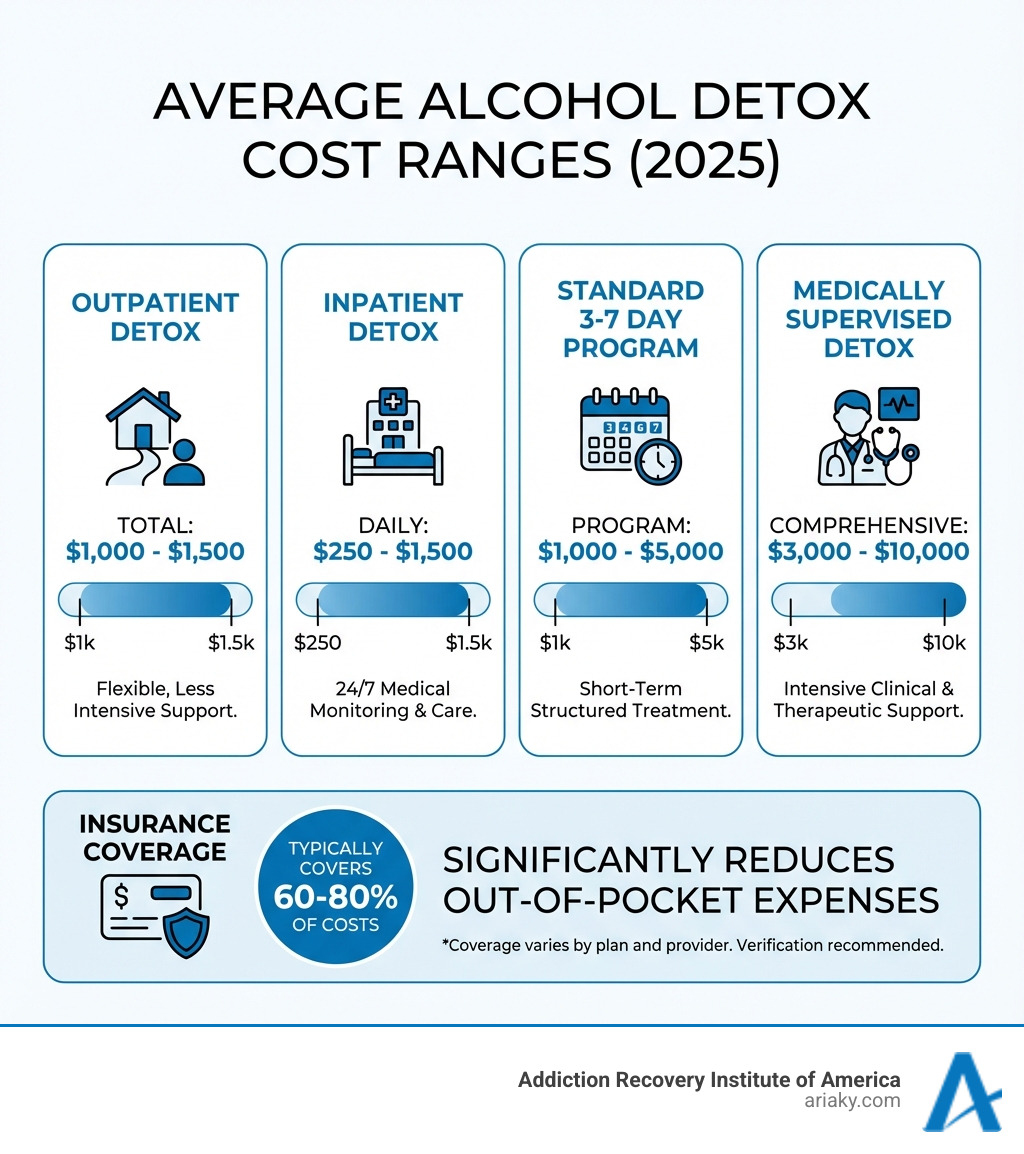
Alcohol detox cost terms at a glance:
The Price of Safety: A Look at Average Detox Costs
Overcoming alcohol addiction without professional treatment isn’t usually possible. A professional alcohol rehab program helps someone work toward sobriety and address the underlying contributors to their addiction. Untreated alcohol addiction can lead to devastating health consequences and a diminished quality of life. The first crucial step for many is detoxification. But what does this essential step cost?
The alcohol detox cost varies significantly, depending on the program’s type and intensity. We understand daily rates and program totals can seem daunting, but these costs reflect the critical medical supervision and support needed for safe alcohol withdrawal.
To give you a clearer picture, let’s compare the general cost ranges for inpatient versus outpatient detox programs.
| Feature | Outpatient Detox | Inpatient Detox |
|---|---|---|
| Daily Rates | Typically lower, often $250 – $800 per day | Higher, often $500 – $1,500 per day |
| Program Totals | Generally $1,000 – $1,500 for the full program | Can range from $3,000 – $10,000 for a 3-7 day stay |
| Level of Care | Medically monitored, but not 24/7 | 24/7 medical supervision and support |
| Environment | Home-based, with scheduled clinic visits | Residential facility, round-the-clock care |
| Suitability | Mild to moderate withdrawal symptoms | Moderate to severe withdrawal symptoms, high risk |
These figures are general estimates, and actual costs will depend on individual needs, the facility chosen, and the specific services provided. Our goal is to ensure you understand the investment involved in a safe and effective detox.
Breaking Down the Alcohol Detox Cost by Program Type
The type of program you choose will significantly influence the overall alcohol detox cost. We offer a range of programs custom to different levels of need and support, ensuring that everyone can find a path to recovery that fits their circumstances.
- Inpatient Detox: This is the most intensive form of detox, where individuals reside at a facility 24/7. It’s recommended for those with moderate to severe alcohol dependence or a history of complicated withdrawals. The cost here covers round-the-clock medical monitoring, medication management, meals, accommodation, and often the initial therapeutic interventions. For many, the cost of inpatient detox is integrated into the overall price of an inpatient rehab program.
- Outpatient Detox: For individuals with mild to moderate withdrawal symptoms who have a stable and supportive home environment, outpatient detox can be a more flexible and often more affordable option. You attend scheduled medical appointments for supervision and medication, but return home afterward. This model can be particularly beneficial for those who need to maintain work or family responsibilities.
- Residential Programs: While distinct from detox, many residential rehab programs include detox as the initial phase. These programs involve living at a facility for an extended period, typically 30, 60, or 90 days. The cost covers not only detox but also comprehensive therapy, counseling, and supportive services designed for long-term recovery.
- Partial Hospitalization Programs (PHP): PHPs offer a high level of care without requiring overnight stays. Patients attend treatment for several hours a day, multiple days a week, then return home. This can be a step down from inpatient care or a more intensive option than standard outpatient services, impacting the alcohol detox cost by offering structured support without the full residential overhead.
- Intensive Outpatient Programs (IOP): IOPs provide structured therapy and support for fewer hours per week than PHPs. They are ideal for individuals who need significant support but can manage their daily lives. While detox itself is usually completed before entering an IOP, the cost of an IOP contributes to the overall treatment journey after detox.
What you can expect from each program type in terms of care is directly tied to its cost. More intensive medical supervision, comprehensive therapeutic services, and residential amenities naturally lead to higher expenses. However, each option is designed to provide the safest and most effective path to sobriety.
Medical Detox Pricing
When we talk about alcohol detox cost, a significant portion of that expense is often attributed to medical detox. This isn’t just about comfort; it’s about safety. Alcohol withdrawal can be dangerous, even life-threatening, and professional medical supervision is crucial.
Our medically supervised detox programs ensure that you receive continuous care from healthcare professionals. This includes:
- 24/7 Medical Monitoring: Our medical teams are on hand around the clock to monitor vital signs, assess symptoms, and respond to any complications that may arise during withdrawal. This constant oversight is a primary driver of cost but provides invaluable peace of mind and safety.
- Medication-Assisted Treatment (MAT): We use FDA-approved medications to manage severe withdrawal symptoms and reduce cravings. These medications, prescribed and administered by our medical staff, help make the detox process more comfortable and safer, but they do add to the overall alcohol detox cost.
- Safety Protocols: Implementing strict safety protocols to prevent complications like seizures or delirium tremens (DTs) requires specialized staff and equipment. This level of medical readiness is a non-negotiable part of our commitment to your well-being.
The investment in medically supervised detox is an investment in your life. It minimizes risks, alleviates discomfort, and sets a strong foundation for long-term recovery.
What’s Behind the Price Tag? Factors Influencing Alcohol Detox Cost

The alcohol detox cost isn’t a fixed number; it’s influenced by a variety of factors, much like buying a car. You can opt for a basic model or a luxury sedan, and the price tag will reflect those choices. Similarly, detox programs offer different levels of care, amenities, and locations, all of which contribute to the final bill.
Here are the key factors that impact the overall cost of detox:
- Level of Care: As we’ve discussed, inpatient detox, with its 24/7 medical supervision and residential setting, will naturally be more expensive than an outpatient program. The intensity of medical monitoring and the staff-to-patient ratio play a big role.
- Program Duration: The longer you stay in a program, the higher the total cost. Whether it’s a 3-day rapid detox or an extended 7-day or longer medical detox, the length of your stay directly impacts the bill.
- Geographic Location: Just like real estate, the cost of healthcare services varies significantly by location. A detox facility in a major metropolitan area like Louisville or West Palm Beach might have different operating costs than one in a smaller community in Kentucky, influencing the pricing.
- Facility Amenities: Think of it like a hotel stay – a basic room will cost less than a suite with a spa. High-end facilities offering private rooms, gourmet meals, holistic therapies, and recreational activities will have a higher price point.
- Staff-to-Patient Ratio: A higher ratio of medical and therapeutic staff to patients means more personalized care, which is invaluable but also contributes to the overall cost.
- Specialized Treatments: If you have co-occurring mental health disorders or complex medical needs, your detox program might require specialized interventions, which can also affect the price.
Understanding these variables helps you make an informed decision about the type of detox program that best fits your needs and budget.
How Length of Stay Impacts Your Bill
The duration of your detox stay is a significant determinant of the overall alcohol detox cost. While it might seem straightforward – more days equals more money – the reasoning behind varying lengths of stay is rooted in medical necessity and individual needs.
- 3-Day Detox: For some individuals with very mild alcohol dependence and no significant health complications, a shorter, 3-day detox might be sufficient. This typically focuses on stabilizing the body through the initial, most acute withdrawal symptoms. These shorter programs will naturally incur a lower overall cost.
- 7-Day Detox: A more common duration for medically supervised alcohol detox is around 7 days. This allows for a more thorough stabilization process, better management of withdrawal symptoms, and the opportunity for medical staff to ensure the individual is safely past the most critical phase. The majority of our research suggests that a detox program is at least 7 days in duration.
- Extended Detox Needs: In cases of severe dependence, polysubstance abuse, or co-occurring medical conditions, an individual may require an extended detox period. This longer stay, while increasing the total alcohol detox cost, is crucial for safety and effective symptom management. Per-diem rates will apply for each additional day, making the total higher.
The length of stay is primarily determined by medical necessity, not just a preference. Our medical professionals assess each individual to determine the safest and most effective duration for their detox, balancing your well-being with financial considerations.
How Location and Amenities Affect the Alcohol Detox Cost
Where you receive treatment and the comforts you enjoy during your stay are significant factors in the total alcohol detox cost. It’s not just about the medical care; it’s about the environment in which that care is delivered.
- Cost of Living: Facilities located in areas with a higher cost of living, such as West Palm Beach, will generally have higher operating expenses, which can translate to higher detox costs. Even within Kentucky, a facility in a busy city like Lexington or Louisville might differ in price from one in a more rural setting.
- Luxury Facilities vs. Standard Facilities: Just like hotels, detox centers can range from standard, comfortable environments to luxury resorts. Luxury facilities often offer private rooms, gourmet meals prepared by chefs, state-of-the-art fitness centers, spa services, and a wider array of holistic therapies (like yoga, meditation, or equine therapy). These improved amenities significantly increase the alcohol detox cost. While they can provide a more comfortable and appealing environment, they are not always medically necessary for effective detox.
- Therapies and Activities: Beyond basic medical care, some facilities might include a broader range of therapeutic activities or specialized programs. This could include individual therapy, group counseling, family therapy, or even recreational activities like art therapy or outdoor excursions. The inclusion and intensity of these services can impact the overall cost.
At ARIA Kentucky, we strive to offer high-quality, medically supervised detox programs in a supportive environment, focusing on effective treatment rather than unnecessary luxury. We believe that a comfortable and healing setting is important, but the core of our service is safe and effective medical care.
Covering the Cost: Insurance, Financing, and Free Options

The thought of the alcohol detox cost can be overwhelming, but it’s crucial to remember that financial barriers don’t have to prevent you from seeking life-saving treatment. There are numerous ways to make detox more affordable, and we’re here to help you steer them.
Here are some common payment methods and options to explore:
- Health Insurance: This is often the first and most effective way to cover a significant portion of detox costs.
- Payment Plans: Many facilities, including ours, offer flexible payment plans to spread the cost over time.
- Sliding Scale Fees: Some programs adjust their fees based on your income and ability to pay, ensuring access to care for those with limited financial resources.
- Scholarships and Grants: Various organizations and even some treatment centers offer scholarships specifically for addiction treatment.
- Government Funding: State-funded programs and federal initiatives can provide low-cost or free options.
Does Insurance Cover Alcohol Detox?
Yes, in most cases, insurance does cover alcohol detox cost. We’re not kidding! Thanks to significant legislative changes, many health insurance plans are now mandated to provide coverage for substance use disorder treatment, including detox.
- Affordable Care Act (ACA): Under the Affordable Care Act (ACA), addiction treatment is considered an “essential health benefit.” This means all Marketplace health insurance plans must cover substance use disorder and mental health treatment services.
- Mental Health Parity and Addiction Equity Act (MHPAEA): This federal law requires most health insurance plans to offer comparable coverage for mental health and substance use disorder treatment as they do for physical health conditions. Simply put, your insurance can’t impose higher co-pays or more restrictive limits on detox than it would for a broken arm.
- In-network vs. Out-of-network: Your out-of-pocket expenses will generally be lower if you choose an “in-network” provider. If you go “out-of-network,” your insurance might still cover a portion, but your deductible and copayments could be higher.
- Deductibles and Copayments: Even with insurance, you’ll likely be responsible for deductibles, copayments, or coinsurance, just as you would for any other medical service. These amounts vary widely by plan.
We strongly encourage you to verify your benefits directly with your insurance provider or let our admissions team assist you. We can help you understand your specific coverage and estimate your out-of-pocket expenses. This way, you can focus on your recovery without unnecessary financial stress.
Finding Free or Low-Cost Detox Programs
We firmly believe that financial limitations should never be a barrier to life-saving alcohol detox. While our programs at ARIA Kentucky are committed to providing high-quality care, we also want you to be aware of the array of free or low-cost options available if our services don’t align with your financial situation.
- State-Funded Programs: Many states, including Kentucky, offer publicly funded addiction treatment programs. These are often run by state health departments and provide services at no or very low cost to eligible residents. While they may have waiting lists or specific eligibility criteria, they are a vital resource. You can explore available government benefits and programs through resources like Benefits.gov.
- Non-Profit Organizations: Numerous non-profit organizations are dedicated to helping individuals overcome addiction. These centers often receive grants and donations, allowing them to offer reduced-cost or even free services. They operate on a mission-driven model, reinvesting funds into patient care.
- Scholarships and Grants: It might surprise you, but many treatment centers, non-profits, and charitable foundations offer scholarships or grants specifically for addiction treatment. These can cover a portion or even the entire alcohol detox cost. Resources like Scholarship For Drug And Alcohol Rehab can help you find these opportunities.
- Faith-Based and Community Initiatives (FBCI): Religious organizations and institutions frequently offer addiction treatment services to people in need, often at little to no cost. These programs can be particularly beneficial for someone interested in a spiritual approach to recovery. More than 800 community Faith-Based and Community Initiatives (FBCI) programs receive grants from SAMHSA for addiction treatment.
- Sliding Scale Fees: As mentioned earlier, many facilities offer a sliding scale, adjusting treatment costs based on your income. Don’t hesitate to ask about this when contacting a center.
The key is to ask questions and explore all your options. We encourage you to reach out to various resources and not give up if the first option doesn’t fit. Your recovery is worth the effort to find an affordable solution.
The Real Financial Equation: Detox vs. Addiction
It’s easy to focus on the immediate alcohol detox cost as a daunting expense. However, we urge you to consider it an investment—one that offers profound long-term financial and personal benefits, far outweighing the ongoing, often hidden, costs of untreated alcohol addiction.
Think of it this way: what does addiction truly cost you?
- The Cost of Alcohol Itself: The daily or weekly purchase of alcohol adds up significantly. An alcoholic consuming a 12-pack a day, for example, spends over $3,000 annually. Over a lifetime, this can amount to tens of thousands, or even hundreds of thousands of dollars. You can learn more about this hidden expense at What Drinking Costs You Over the Course of Your Life.
- Lost Productivity and Income: Alcohol addiction often leads to missed workdays, decreased job performance, and even job loss. This results in lost wages, career stagnation, and a significant reduction in earning potential over the years.
- Legal Fees (DUIs and Other Charges): Driving under the influence (DUI) and other alcohol-related legal troubles can incur thousands of dollars in fines, court costs, lawyer fees, and increased insurance premiums. These financial penalties can be crippling.
- Healthcare Expenses: Untreated alcohol addiction is a major contributor to a myriad of health problems, including liver disease, heart issues, certain cancers, and weakened immune systems. The medical bills for treating these chronic conditions can quickly accumulate, often far exceeding the cost of detox and rehabilitation.
- Damaged Relationships and Emotional Toll: While harder to quantify, the emotional and relational costs of addiction are immense. Strain on family, loss of friendships, and the personal suffering associated with addiction take a heavy toll that money cannot truly measure.
When you weigh these ongoing and escalating costs against the one-time, albeit significant, investment in alcohol detox and recovery, the financial benefits of seeking treatment become clear. Studies consistently show that every dollar invested in addiction treatment yields significant returns through reduced crime rates, improved public health, and increased economic productivity. It’s an investment not just in your own future, but in the future of your loved ones and your community. Choosing detox isn’t just about saving your life; it’s about reclaiming your financial stability and building a healthier, more prosperous future.
Frequently Asked Questions about Detox Costs
We know you have questions, and we’re here to provide clear, straightforward answers about the alcohol detox cost. It’s a complex topic, but understanding the details can help you make the best decision for your recovery journey.
What is the difference in cost between inpatient and outpatient detox?
The difference in alcohol detox cost between inpatient and outpatient programs is primarily driven by the level of care, supervision, and resources provided.
- Inpatient Detox: This option is generally more expensive because it includes 24/7 medical supervision. You are residing at the facility, so the cost covers housing, meals, and continuous access to medical and support staff. This intensive care is crucial for those with severe dependence, a history of complicated withdrawals, or co-occurring medical conditions. The daily rates are higher because of the constant monitoring, medication management, and immediate access to emergency care.
- Outpatient Detox: This is typically a more affordable option. You attend scheduled appointments at a clinic for medical monitoring and medication, but you return home afterward. The cost savings come from not requiring residential services like accommodation and meals. Outpatient detox is suitable for individuals with mild to moderate withdrawal symptoms who have a stable and supportive home environment. While it offers flexibility, it doesn’t provide the continuous oversight of an inpatient setting, which reduces its cost.
Inpatient detox offers a comprehensive, highly controlled environment, while outpatient detox provides medical support with more personal autonomy. Your specific needs and the severity of your alcohol dependence will largely determine which option is safer and more appropriate for you, and thus, which price point you’ll be looking at.
Are there payment plans or financing options for alcohol detox?
Absolutely! We understand that even with insurance coverage, the alcohol detox cost can still present a challenge. That’s why many facilities, including ours at ARIA Kentucky, are committed to making treatment accessible through various payment and financing options. Don’t let upfront costs deter you from seeking help.
Here are some common payment plans and financing options available:
- Facility Financing: Many treatment centers offer their own in-house payment plans. These plans allow you to pay the balance of your treatment cost over a period of time, often with manageable monthly installments. It’s always worth discussing this directly with the admissions team.
- Third-Party Loans: There are specialized healthcare lending companies that offer loans specifically for medical and addiction treatment. These loans can cover the full cost of treatment and often come with various interest rates and repayment terms.
- Credit Cards: While not always the ideal long-term solution due to potentially high-interest rates, credit cards can be an immediate option for covering initial costs or smaller balances.
- Sliding Scale Fees: As mentioned earlier, some programs offer fees adjusted based on your income, making treatment more affordable for those with limited financial means.
- Scholarships and Grants: Don’t forget to explore these options from non-profits and foundations dedicated to helping individuals afford addiction treatment.
Our best advice is to have an open and honest conversation with our admissions specialists. We can explore your insurance benefits, discuss available payment plans, and help you understand all the options to ensure that the alcohol detox cost doesn’t stand in the way of your recovery. We’re here to help you find a solution that works for you.
Take the First Step Towards Recovery
Understanding the alcohol detox cost is an important part of your journey, but it’s just the first step. We hope this guide has demystified the financial aspects of alcohol detox and shown you that effective, affordable treatment is within reach.
Choosing to undergo detox is an investment in your health, your future, and your overall well-being. The potential long-term financial benefits of recovery—reclaiming lost income, avoiding legal fees, and reducing healthcare costs—far outweigh the initial investment in treatment. More importantly, the return on investment in terms of a healthier, happier, and more fulfilling life is immeasurable.
At ARIA Kentucky, we are dedicated to providing individualized care for lasting sobriety. Our accredited and AODE-certified addiction rehab centers in Kentucky and West Palm Beach offer custom drug and alcohol treatment programs, including detox, residential, PHP, and IOP. We believe that overcoming financial barriers should not prevent anyone from starting their journey to recovery.
If you or a loved one is struggling with alcohol dependence, please don’t hesitate to reach out. We are here to support you every step of the way, helping you steer the options and find a path to lasting sobriety.